How Intraoral Scanning Is Changing the Denture Experience
Understanding Your Denture Options
Choosing dentures is an important decision because it affects far more than appearance alone. The right denture should support comfort, function, speech, and confidence in daily life. For many patients, the question is whether a traditional option will meet their needs well or whether digital dentures offer advantages worth considering.
Both traditional and digital dentures are designed to restore the smile and improve day to day function. The difference lies in how they are designed and made, and that difference can influence the overall fit, feel, and experience of treatment. Some patients prefer a more familiar, conventional approach. Others are drawn to a modern process that places greater emphasis on precision and advanced denture technology.
A decision like this should not be based on trends or buzzwords. It should be based on what will provide the best result for comfort, stability, appearance, and long term satisfaction.
What Traditional Dentures Are
Traditional dentures have been used successfully for many years and continue to be a dependable solution for many patients. They are made through a more conventional process that typically involves physical impressions, models, try-ins, and adjustments before the final denture is completed.
This approach remains effective because it is well established and capable of producing strong results when handled properly. Many patients feel comfortable with traditional dentures because the process is familiar and trusted. A well-made traditional denture can restore chewing ability, improve speech, support facial appearance, and help patients feel more confident in everyday life.
Traditional dentures are often chosen by patients who want a reliable and time-tested solution. They may be especially appropriate for those exploring complete dentures or partial dentures and looking for a more conventional treatment path.
What are Digital Dentures?
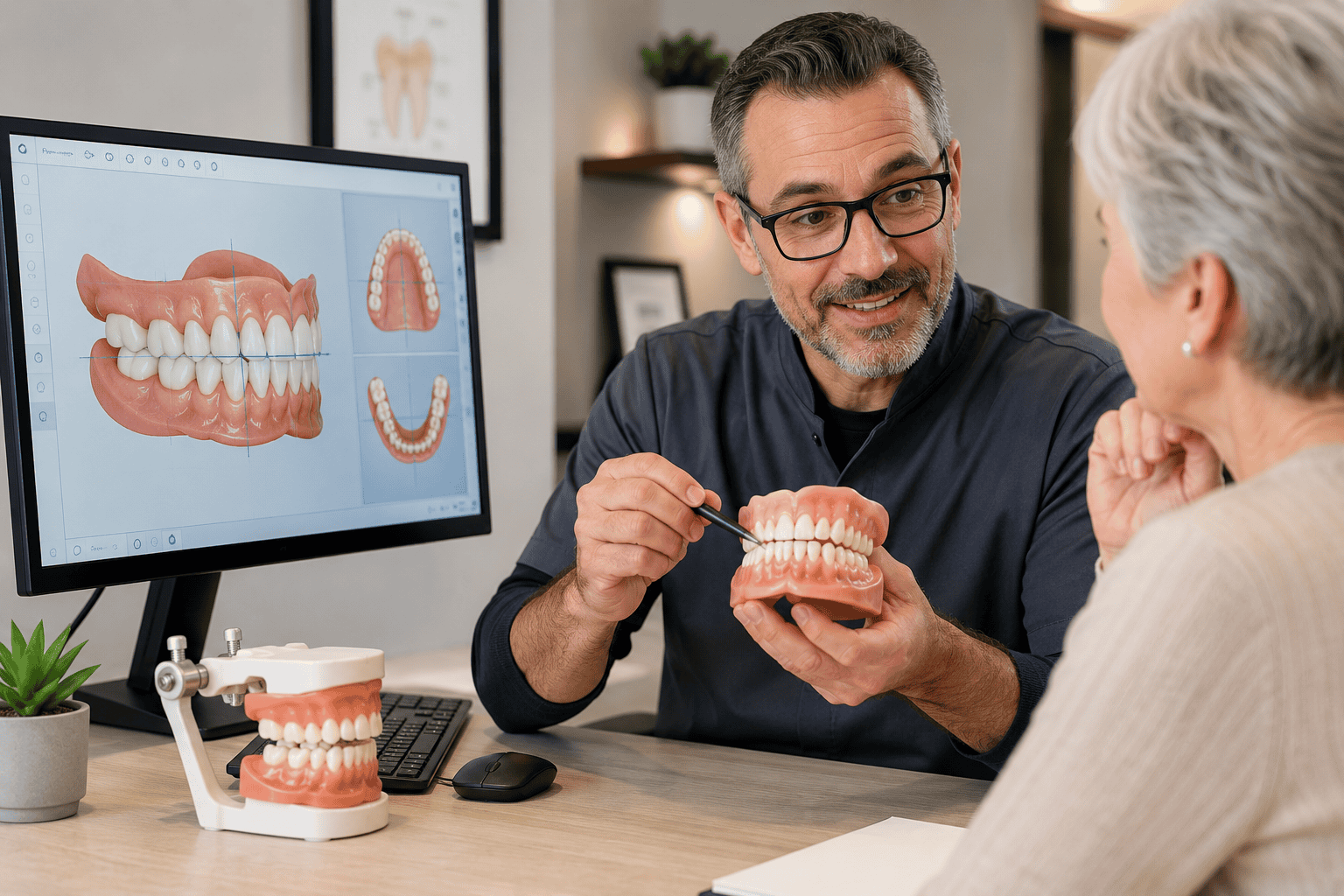
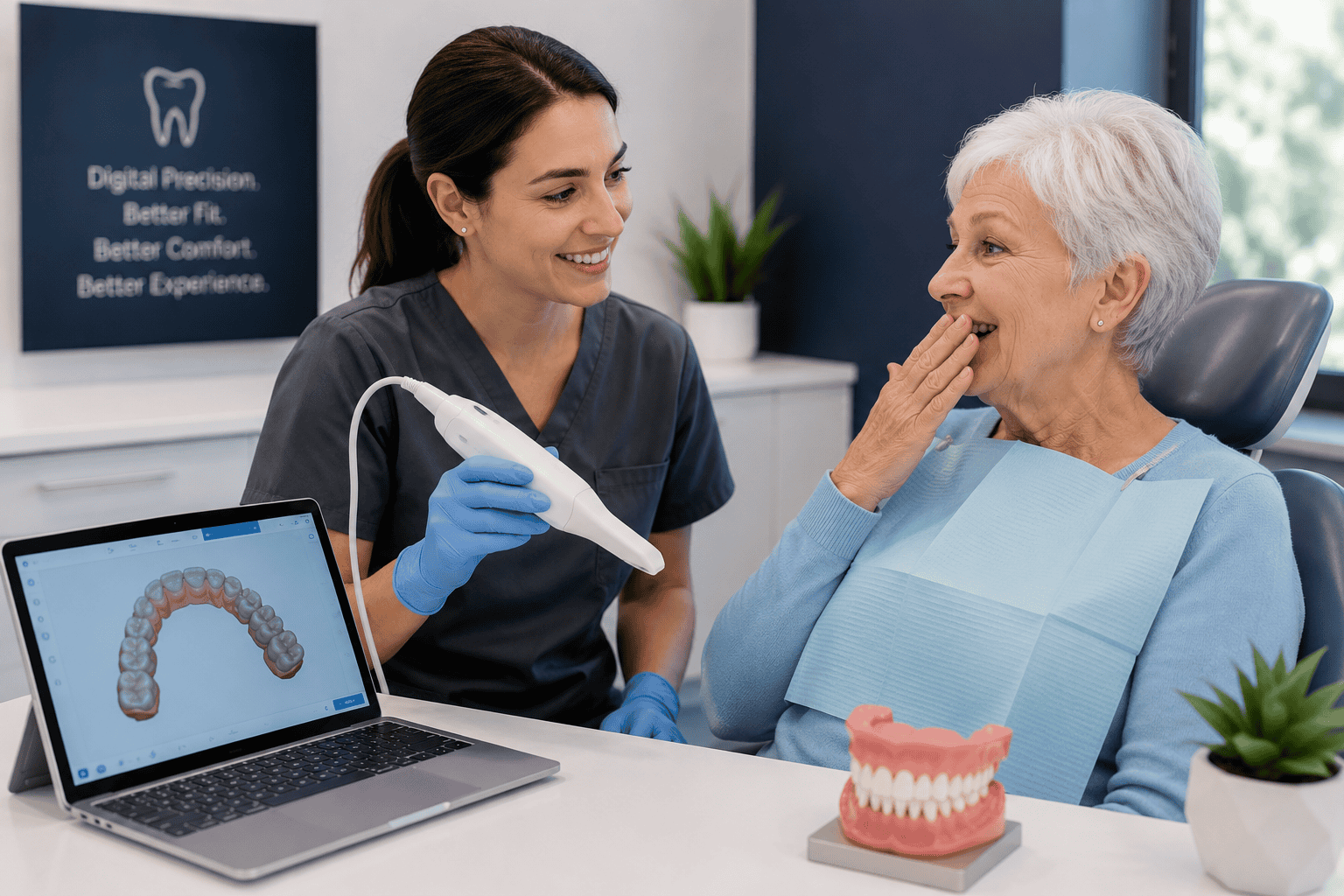
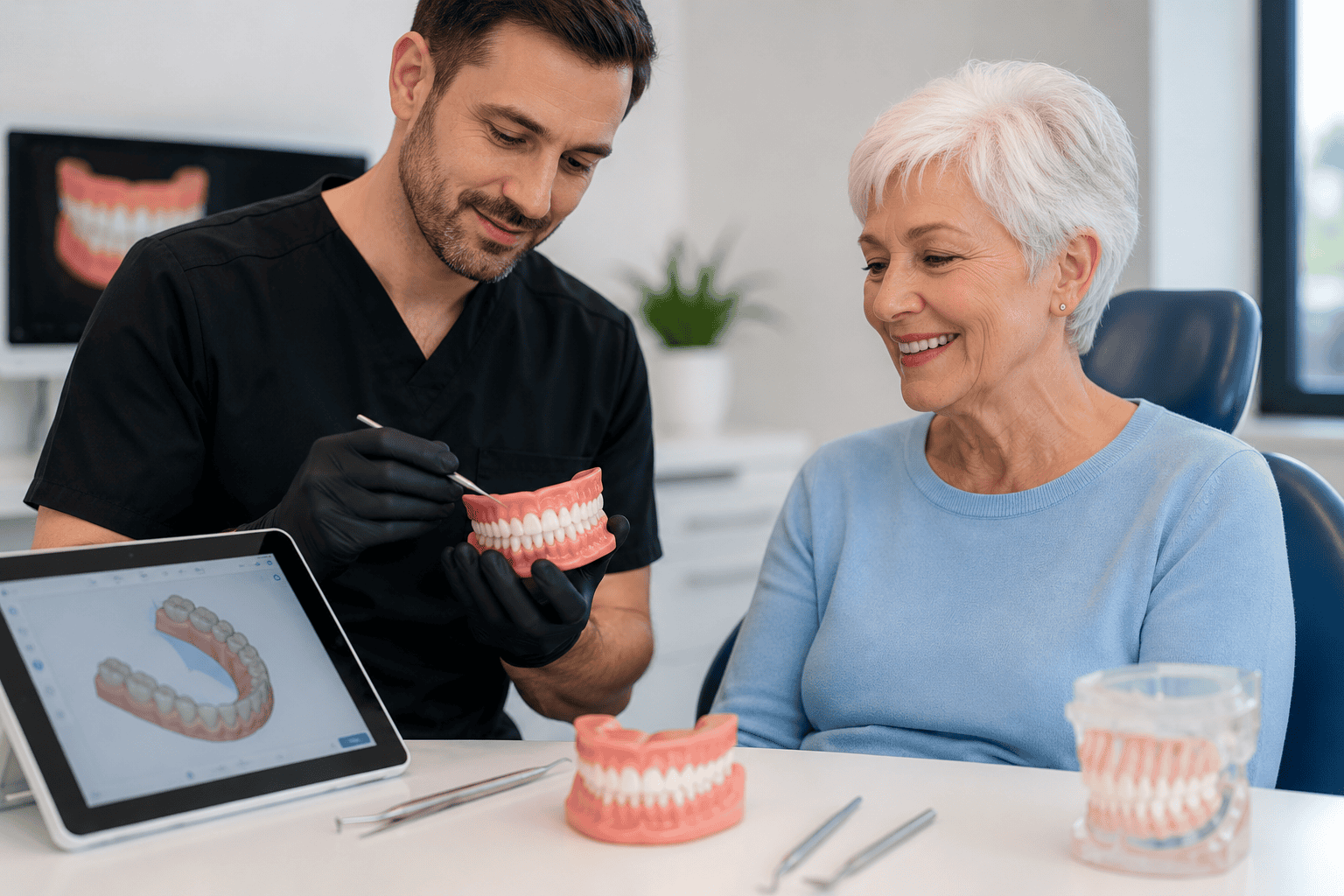
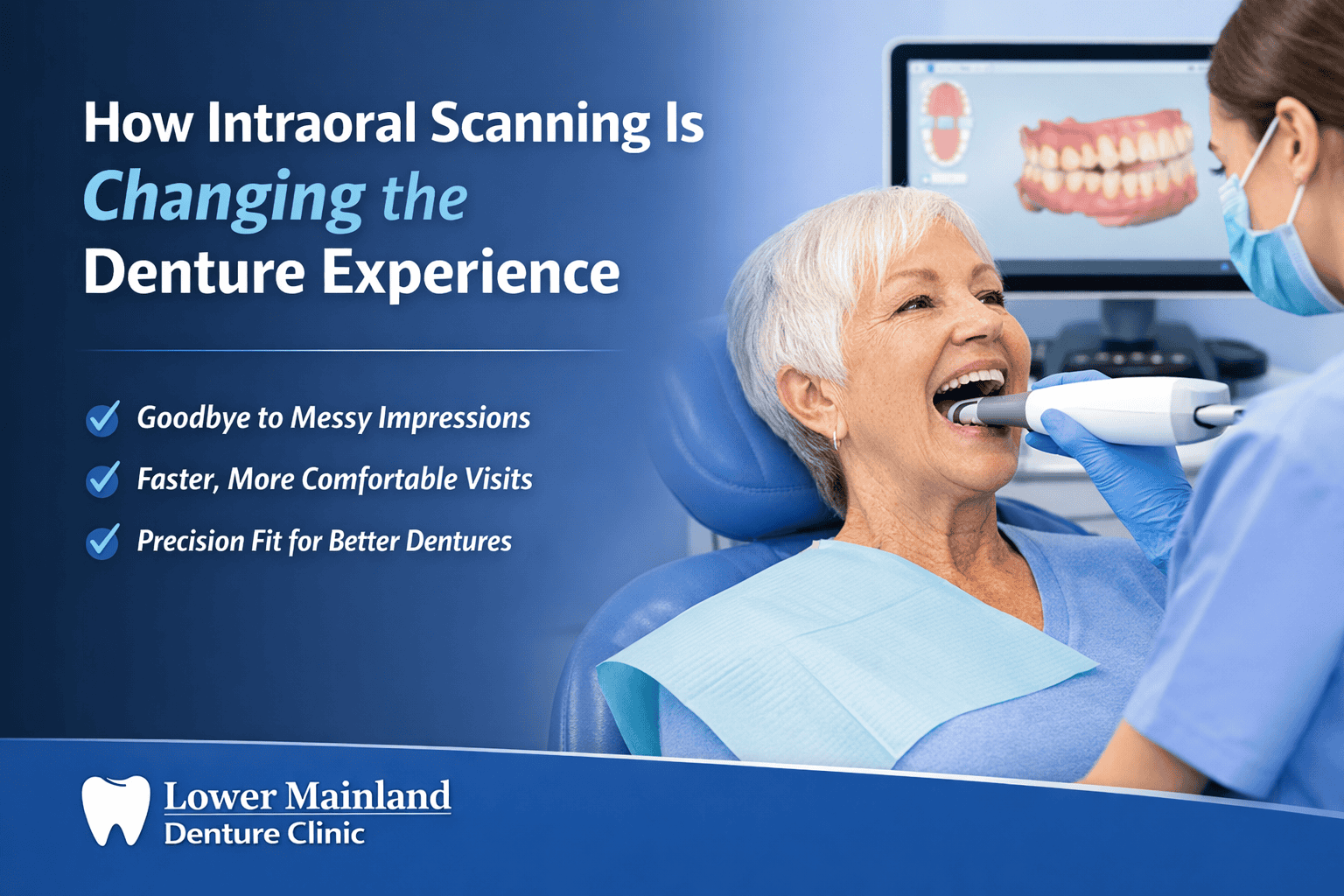
Digital dentures are a more modern denture option created with the support of advanced digital technology like intraoral scanners. Rather than relying only on traditional manual methods like messy impressions, the process uses digital tools to improve design accuracy and consistency.
For patients, the appeal of digital dentures is usually straightforward. They want dentures that feel more precise, more comfortable, and more in line with today’s treatment standards. The digital process is often associated with a more refined workflow and a greater focus on exact fit.
This option can be especially attractive for patients who have worn dentures before and were never fully satisfied with how they felt. A denture that moves too much, creates sore spots, or never seems to sit quite right can become a daily frustration. In those cases, a more precision-based option often deserves a closer look.
Fit Is Often the Most Important Difference
Why Fit Matters So Much
Appearance is important, but fit is what shapes the day to day experience of wearing dentures. A denture can look natural and still be frustrating if it shifts while eating, moves while speaking, or causes rubbing throughout the day.
That is why fit matters so much in this comparison. A denture that feels more stable usually feels easier to live with. Meals can feel more natural. Speech can feel more secure. Daily wear can feel less distracting.
Traditional dentures can provide a good fit, but patients who want a treatment option built around a more accuracy-focused process often take a strong interest in digital dentures.
Precision Can Improve Everyday Comfort
Even small differences in fit can affect how dentures feel. When a denture sits more accurately, there is often less movement and less pressure in the wrong places. That can make a real difference in comfort over the course of the day.
A more precise fit can also support confidence. Patients who feel secure in their dentures are often more comfortable speaking, eating, and smiling without second-guessing how their dentures will behave. That added sense of ease is one of the reasons modern denture technology continues to attract attention.
Comfort Should Never Be Overlooked
Comfort is not a minor detail in denture care. It is one of the clearest signs that a denture is working well. If dentures feel awkward, loose, or irritating, the problem usually becomes part of daily life very quickly.
Patients often begin asking about digital dentures because they want something that feels more natural and less difficult to wear. They may already know what it is like to deal with sore spots, instability, or the feeling that their dentures never fully settled in the way they should have.
At the same time, it is important not to assume that discomfort automatically means a full replacement is necessary. In some situations, the issue may be related to the fit of an existing denture rather than the denture itself. Problems like looseness or irritation may sometimes be improved through denture relines or same day denture repairs and relines when the existing denture is still otherwise serviceable.
The Process Often Feels Different
Traditional Dentures Follow a Familiar Path
One reason traditional dentures remain popular is that the process is familiar and well understood. Many patients appreciate that it has been used successfully for years and continues to deliver dependable results.
A traditional denture process usually unfolds in stages, with impressions, models, try-ins, and adjustments helping shape the final result. For many people, that process feels straightforward and reassuring. It reflects an established way of doing things that has helped many patients restore their smile and function.
Digital Dentures Offer a More Modern Workflow
Digital dentures appeal to many patients because the process often feels more current and more streamlined. There is a stronger sense of precision built into the workflow, and that can shape the overall treatment experience in a positive way.
For patients who feel uncertain about dentures, a more modern process can feel easier to trust. There is often greater confidence in the idea that the denture is being designed with more exact planning from the beginning. That does not make traditional dentures outdated or ineffective. It simply means that some patients prefer a process that feels more aligned with today’s advancements in denture care.
Patients comparing options across full denture services may also be weighing other solutions such as complete dentures, partial dentures, relines, repairs, and implant-supported options.
Appearance Still Matters
Patients want dentures that look natural and suit their face. They want a smile that feels comfortable, balanced, and appropriate for them. No one wants dentures that look artificial or draw attention for the wrong reason.
Both traditional and digital dentures can be designed with appearance in mind. The final result should always be shaped around the individual, including facial structure, smile line, and overall preferences. A denture should not simply replace missing teeth. It should help restore confidence in a way that feels personal and natural.
Patients drawn to digital dentures often like the idea of a more refined design process. Patients who prefer traditional dentures may feel equally confident in a more familiar path. In either case, appearance should be approached with care, planning, and attention to detail.
Cost Is Only One Part of the Decision
Cost naturally comes up when comparing denture options, but the real issue is how well the denture will perform once treatment is complete. A lower price means very little if the denture does not feel stable, comfortable, or natural in daily use.
That is why value matters more than price alone. Comfort, fit, appearance, and long term function all shape whether a patient feels satisfied with the result. A more premium option may be worth considering when it delivers a better overall experience. A more conventional option may be the right choice when it provides the needed result without unnecessary complexity.
The point is not to treat one option as universally better. It is to understand what each option offers and choose the one that best supports real life after treatment.
Who May Be a Good Candidate for Digital Dentures
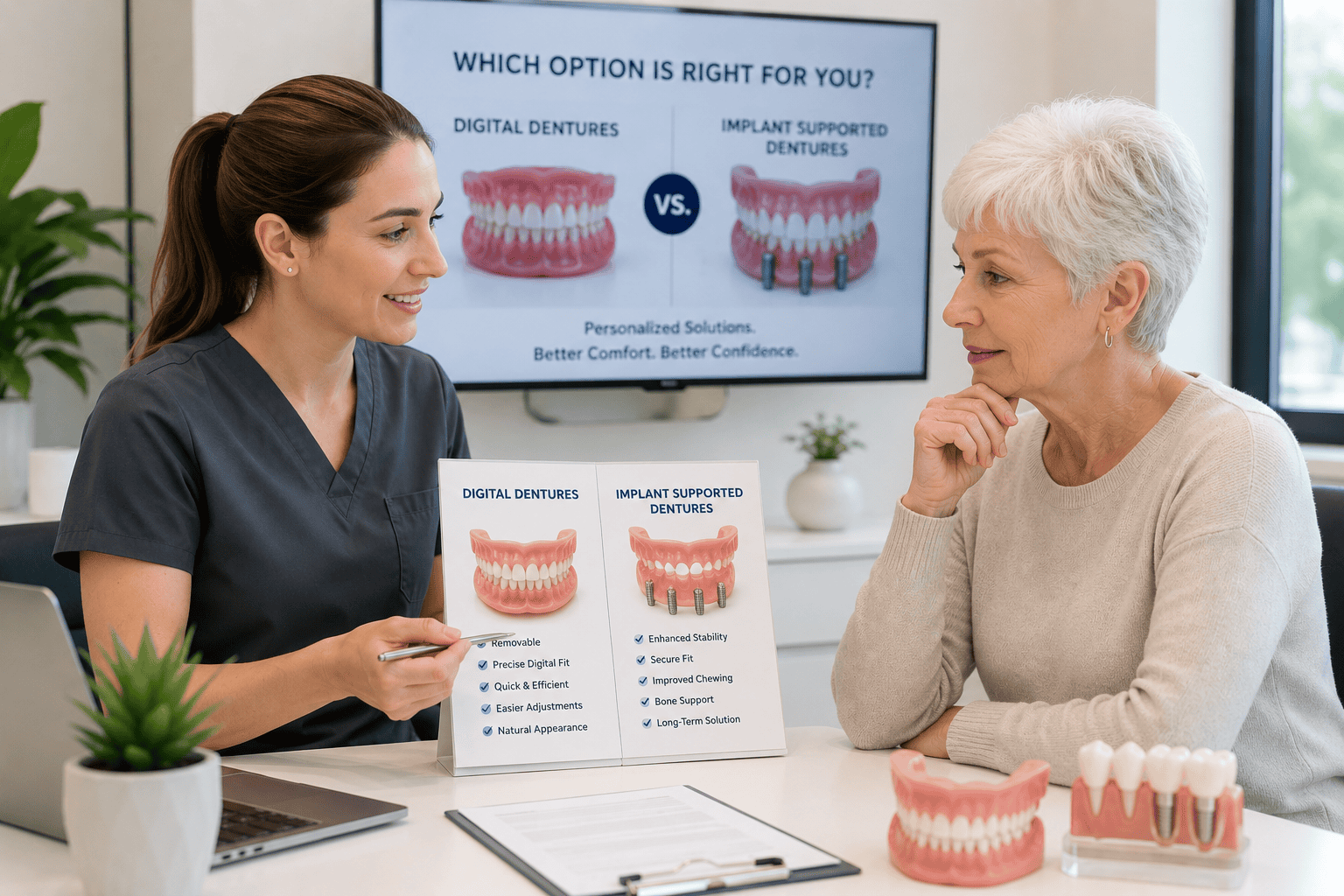
Digital dentures can be a strong fit for patients who place a high priority on comfort, precision, and modern denture technology. They may also appeal to people who have had dentures in the past and were never fully satisfied with the stability or overall feel.
They are often worth considering for first-time denture patients who want a more modern treatment experience and for patients who want to explore a solution that feels more tailored from the beginning.
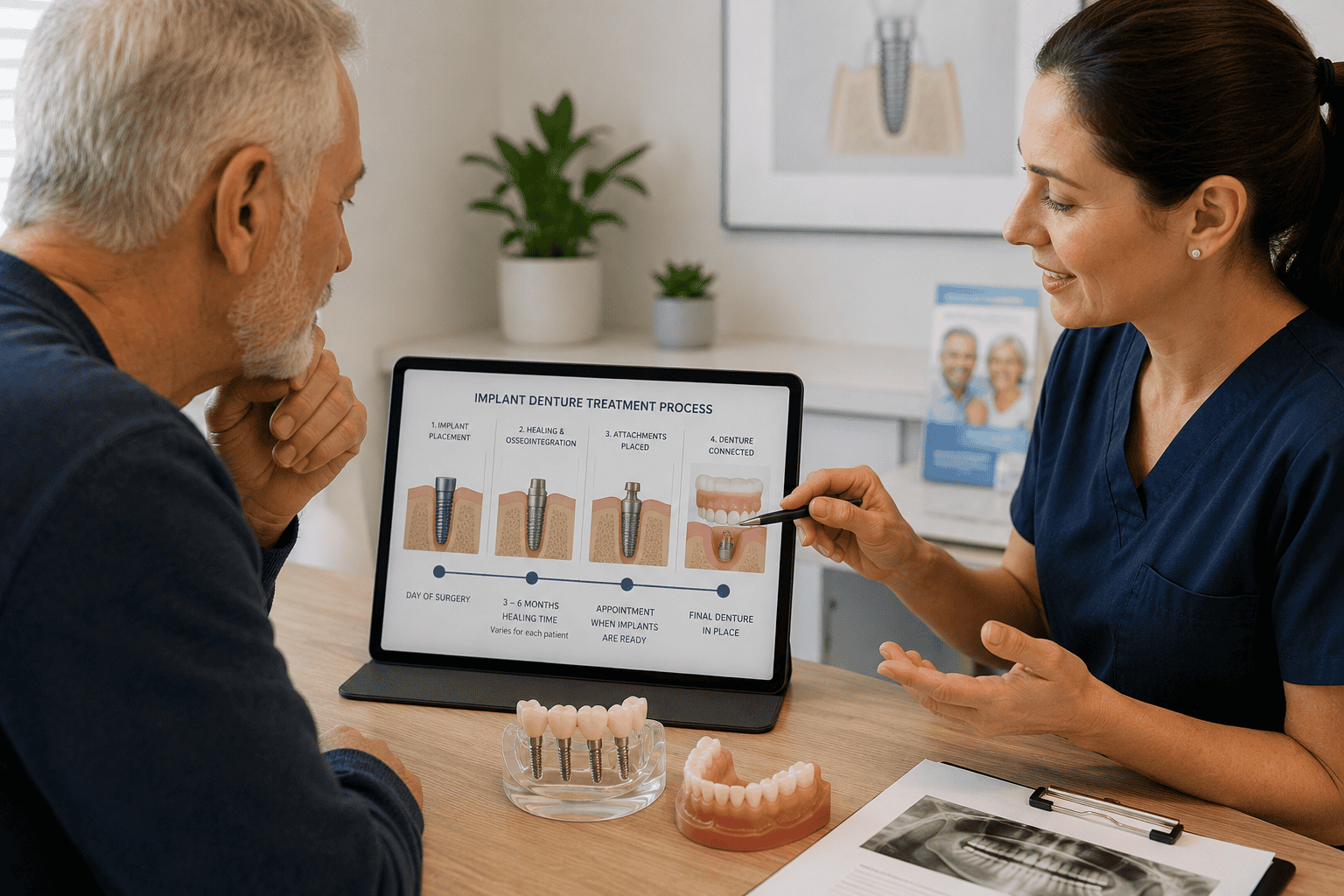
In some cases, patients who want greater stability may also be comparing digital dentures with dentures over implants or other advanced treatment options depending on their needs and oral condition.
Who May Prefer Traditional Dentures
Traditional dentures remain an excellent option for many patients. Some people prefer a more familiar approach and feel perfectly comfortable with a conventional denture process. Others may decide that a traditional option suits their budget, expectations, and treatment goals more appropriately.
There is nothing outdated about choosing a proven solution that continues to work well. When traditional dentures are thoughtfully planned and properly fitted, they can provide excellent results.
The right decision is not about choosing the newest option by default. It is about choosing the option that is most appropriate for the patient.
The Right Choice Should Be Personal
No single denture option is right for everyone. One patient may value a more modern and precision-focused process. Another may want a trusted, conventional approach that feels straightforward and familiar.
What matters most is that the choice is made with clear information and proper professional guidance. Dentures affect everyday life in a very real way, so the treatment plan should reflect the individual rather than forcing every patient into the same path.
That is why a consultation matters. A proper assessment helps determine whether digital dentures, complete dentures, partial dentures, or even implant-supported dentures are the most appropriate direction.
Book a Consultation With Lower Mainland Denture Clinic
Choosing between traditional dentures and digital dentures becomes much easier when the decision is guided by a proper assessment. Lower Mainland Denture Clinic offers digital dentures, complete dentures, denture relines, same day denture repairs and relines, and other denture solutions designed to improve comfort, function, and confidence.
Call 604-457-3763 to book a consultation and find out which denture option is the best fit for your needs.