How to Care for Implant Supported Dentures and Their Attachments
Implant Supported Dentures Still Need Consistent Care
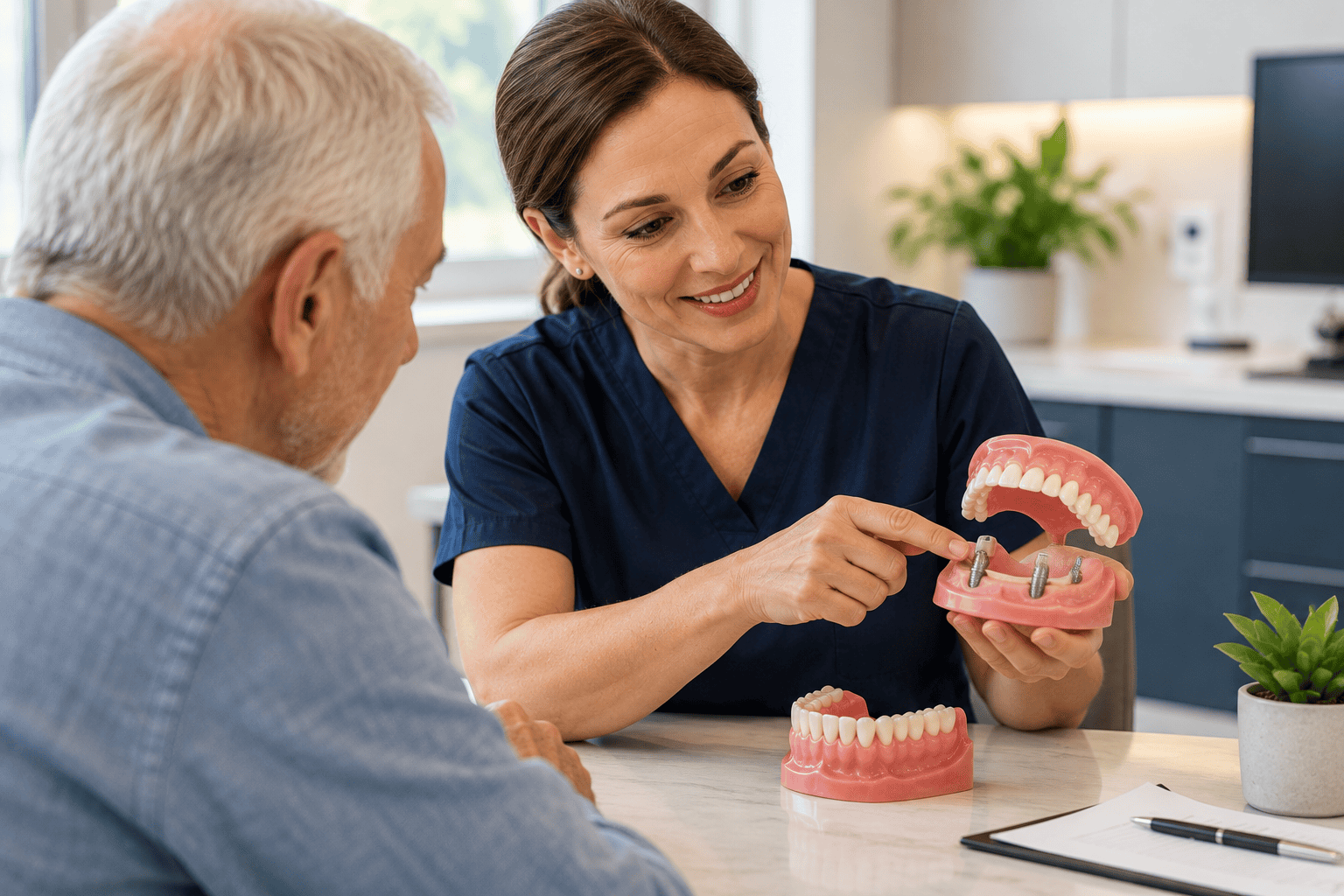
Implant supported dentures can provide a level of stability that traditional removable dentures may not offer on their own. They can feel more dependable while eating, more secure during conversation, and easier to trust throughout the day. However, that improved stability does not mean the dentures or their attachments are maintenance-free.
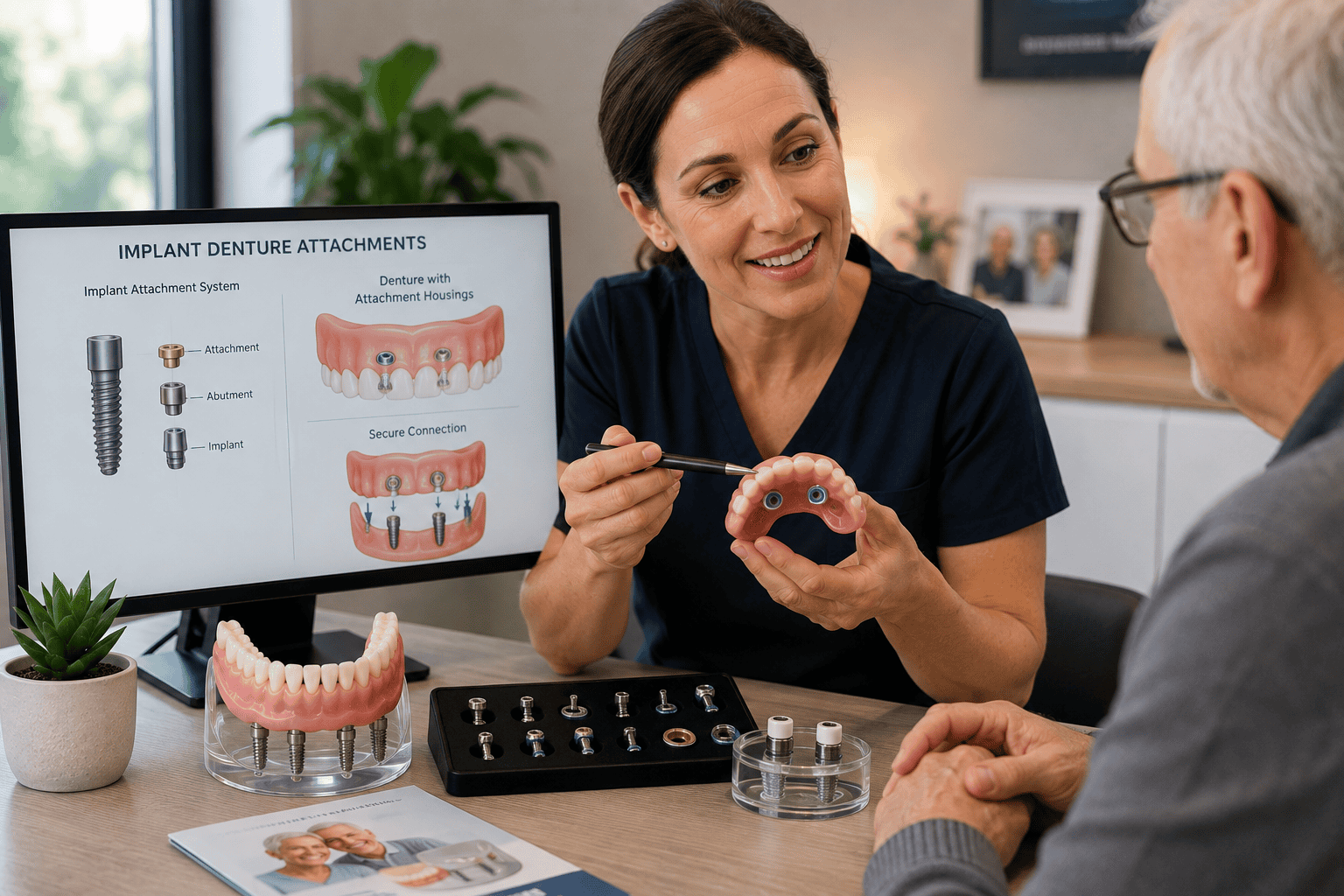
Daily cleaning and professional follow-up remain essential. Implant supported dentures include more than the visible denture teeth. Depending on the design, there may also be attachment inserts, housings, implant connectors, bars, or other components that help hold the denture securely in place. Each part needs to stay clean and function properly for the denture to continue feeling comfortable and stable.
A good care routine protects more than the appearance of the denture. It helps manage plaque and food buildup, supports the health of the tissues around the implants, and makes it easier to identify wear before it affects retention. Regular maintenance is part of protecting the long-term value of implant supported dentures.
Understand Whether Your Denture Is Removable or Fixed
The first step is understanding exactly what type of implant denture you have. Implant-supported treatment can include removable dentures that connect to implants and fixed prostheses that are only removed professionally.
A removable implant denture is designed to be taken out according to the instructions provided during treatment. The denture itself is cleaned outside the mouth, while the implants, connectors, and surrounding tissues are cleaned separately.
A fixed implant-supported prosthesis stays in place and requires a different cleaning routine. Special brushes, flossing aids, or other tools may be needed to clean underneath and around areas that cannot be reached with an ordinary toothbrush.
Never assume that an implant denture should be removed simply because another patient’s denture is removable. Trying to force a fixed prosthesis out of place can damage components. At the same time, leaving a removable denture in continuously may allow plaque and debris to accumulate in areas that should be cleaned regularly.
Following the specific instructions provided for your treatment is always more important than copying someone else’s routine.
Why Cleaning Around the Implants Matters
The implants provide support underneath the denture, but the tissues around them still require daily care. Food particles and plaque can collect around implant connectors, abutments, attachment housings, and the edges of the denture.
If these areas are difficult to reach or are not cleaned consistently, the surrounding tissues may become irritated. Redness, tenderness, bleeding, swelling, or persistent discomfort should not be ignored.
Cleaning around the implants helps keep these areas comfortable and allows you to notice changes earlier. Depending on the design and the amount of space available, the recommended cleaning tools may include:
- a soft toothbrush
- a small interdental brush
- a specially designed implant brush
- floss or a floss threader
- a water irrigator
- another tool recommended specifically for the attachment design
The correct tool depends on the type of implant denture and the patient’s ability to use it comfortably. Implant maintenance should always be personalized to the design of the prosthesis and the areas that need to be reached.
How to Clean a Removable Implant Supported Denture
Remove the Denture Carefully
A removable implant denture should be taken out using the technique demonstrated during treatment. Avoid pulling sharply from one side or twisting the denture unnecessarily. Uneven force may place stress on the attachment components.
If the denture has suddenly become difficult to remove, do not force it. A change in how it connects may indicate an issue with an attachment, insert, or the fit of the denture. Contact the clinic for guidance rather than using tools or excessive pressure.
Rinse Away Loose Debris
Begin by rinsing the denture with cool or lukewarm water. This helps remove loose food particles before brushing.
Avoid very hot water. Excessive heat can affect denture materials and may distort the shape of the appliance.
Brush Every Surface
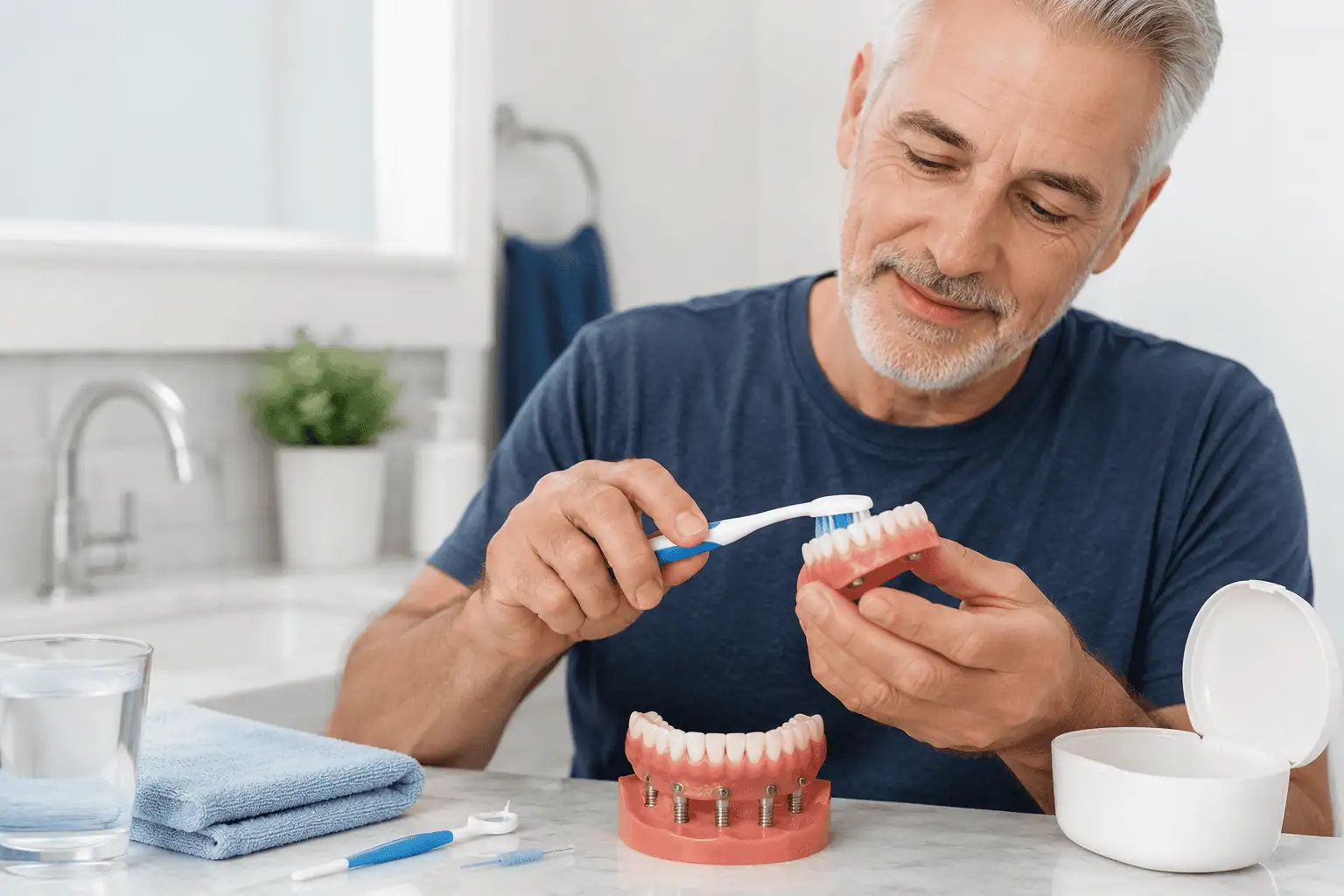
Use a denture brush or another soft brush recommended for the appliance. Clean the teeth, outer surface, fitting surface, and the areas around the attachment housings.
Food and plaque can collect in small spaces around the components underneath the denture. These areas may not be obvious when looking at the smile, but they are an important part of daily cleaning.
Use gentle pressure. Aggressive scrubbing is not necessary and may scratch the denture surface.
Avoid Abrasive Toothpaste
Many ordinary toothpastes contain abrasive ingredients intended for natural enamel. Denture materials can be softer and may become scratched when cleaned with abrasive products.
Small scratches can make the surface harder to keep clean because plaque and stains have more places to collect. Use a denture-safe cleaner or the product recommended during your appointment.
Clean the Mouth Separately
After cleaning the denture, clean the implant connectors and surrounding tissues inside the mouth. A soft brush can be used gently around accessible areas, while smaller brushes or flossing aids may help clean between and underneath components.
The denture and the mouth should be treated as two parts of the same routine. Cleaning the denture while ignoring the implant sites leaves an important part of the job unfinished.
How Often Should Implant Supported Dentures Be Cleaned?
A removable implant denture should generally be cleaned every day, along with the implant sites and surrounding tissues. It may also be helpful to rinse the denture after meals when food collects underneath it.
Consistency is more important than aggressive cleaning. A gentle routine performed every day is more effective than occasional heavy scrubbing.
Patients should also follow the specific instructions they receive regarding overnight wear. Some removable dentures should be removed while sleeping to give the tissues a rest and allow the appliance to be cleaned properly. Individual recommendations may vary, particularly when the denture is being used during a healing period.
Implant Attachments Can Wear Over Time
The attachments that help an implant denture snap or connect into place are used repeatedly. Every time the denture is inserted and removed, the retentive components experience some wear.
Over time, the denture may begin to feel easier to remove, less secure during meals, or different when it connects. This does not necessarily mean that the implants have failed or that the entire denture needs to be replaced.
In many cases, reduced retention may be related to a worn insert or another serviceable attachment component. These parts can sometimes be replaced or adjusted professionally to restore a more dependable connection.
Attachment maintenance is a normal part of long-term implant denture ownership. The frequency will vary based on the attachment system, how often the denture is removed, the patient’s bite, and the amount of wear placed on the components.
Signs That an Attachment May Need Attention
Changes in attachment performance often develop gradually. Watch for signs such as:
- the denture no longer snapping into place as firmly
- one side feeling more secure than the other
- increased movement while eating or speaking
- difficulty seating the denture fully
- clicking or unusual sounds
- visible wear or damage around an attachment housing
- the denture lifting more easily than before
- food collecting underneath more often
- rocking rather than moving evenly
Do not respond to reduced retention by biting down forcefully or trying to tighten anything at home. Implant attachment systems use specific components and instruments. Household tools can damage the denture, attachment, or implant connector.
A professional assessment can identify whether the change is coming from attachment wear, fit changes, a damaged component, or another issue.
Do Not Ignore a Denture That Starts Rocking
A denture that feels slightly less retentive is different from one that rocks noticeably. Rocking can place uneven pressure on the denture base and the areas around the attachment housings.
The problem may be related to changes in the tissues underneath the denture, wear in the attachment components, or a change in how the denture fits against the gums. Simply making the attachments tighter without assessing the fit may not correct the real cause.
When the denture itself remains in good condition, an appropriately planned denture reline may sometimes improve how the base fits the supporting tissues. Implant dentures require additional planning during relining because space must be maintained around attachment housings and other components.
Any reline or fit adjustment involving implant attachments should be completed professionally.
Avoid Trying to Repair Attachments at Home
Implant denture attachments may look simple from the outside, but the components are designed to work together with specific dimensions and levels of retention.
Do not attempt to:
- tighten screws yourself
- remove attachment housings
- reshape worn areas
- apply household glue
- replace inserts with parts purchased online
- scrape around implants with metal tools
- force a denture that is not seating correctly
- add ordinary denture adhesive around attachments without advice
A home repair may change how the denture seats or create excess pressure on one implant. It can also make the professional repair more complicated.
If something feels different, place the denture in a safe container if it cannot be worn comfortably and contact Lower Mainland Denture Clinic for an assessment.
Cleaning Products Should Be Chosen Carefully
The products used on implant supported dentures should be suitable for both the denture material and the components it contains.
Avoid bleach unless it has been specifically recommended for the exact appliance. Some cleaning chemicals can affect metal components, denture colour, or the surface of the material. Strong household cleaners should never be used.
Avoid boiling water, dishwashers, and microwave cleaning. Heat can damage the appliance.
If using a denture-soaking solution, confirm that it is appropriate for an implant denture with metal or attachment components. Follow the recommended soaking time rather than leaving the denture in a strong solution for longer than directed.
Professional Maintenance Is Still Necessary
Home care is essential, but it cannot replace professional maintenance. Implant supported dentures include areas and components that are difficult to assess without the appropriate training and equipment.
During a maintenance appointment, the denture and implant system may be checked for:
- plaque and buildup around the implants
- tissue irritation or inflammation
- attachment wear
- loss of retention
- cracks around the denture housings
- changes in the bite
- denture movement or rocking
- wear on the denture teeth
- changes in the fit against the gums
- areas that are difficult for the patient to clean
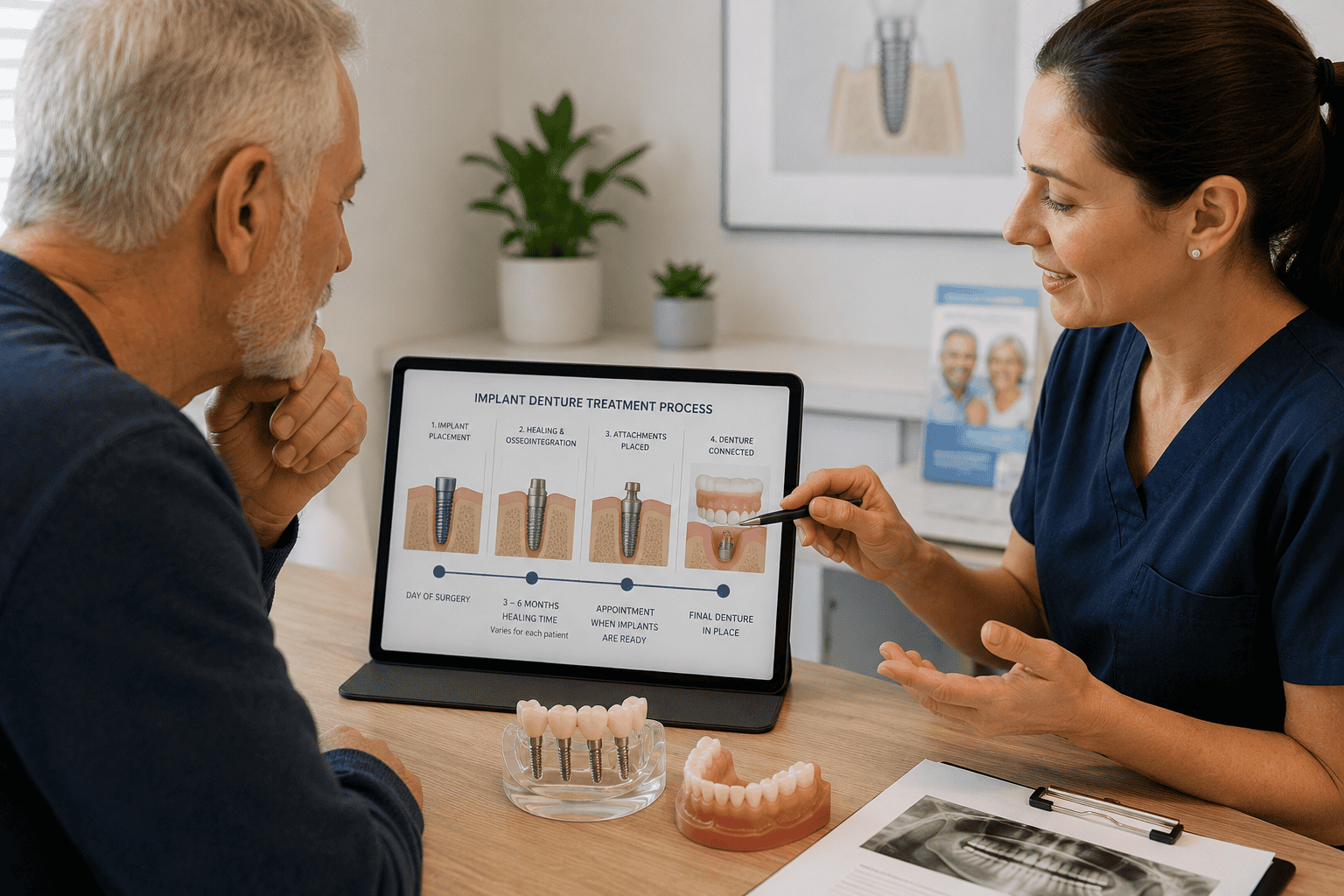
The patient’s cleaning technique may also be reviewed so that the home routine can be adjusted when necessary. Long-term maintenance is recognized as a core stage of implant-supported denture treatment, not an optional extra after the prosthesis is delivered.
How Often Should Professional Appointments Be Scheduled?
There is no single recall schedule that is right for every implant denture patient. The timing depends on tissue health, plaque control, the attachment system, the patient’s dexterity, medical factors, and how quickly the components show wear.
Some patients may need more frequent visits while adapting to a new implant denture or while improving their cleaning routine. Others may move to a regular maintenance schedule once the tissues are healthy and the denture is functioning consistently.
The most appropriate schedule should be established during treatment and adjusted when the patient’s needs change.
Waiting until the denture becomes noticeably loose or uncomfortable can allow a smaller maintenance issue to develop into a larger problem.
Caring for the Denture During Travel
Travel can interrupt normal routines, so it helps to prepare in advance.
Bring:
- the usual denture brush
- appropriate cleaning products
- interdental brushes or flossing aids
- a protective denture container
- any written care instructions
- the clinic’s contact information
Never place a removable implant denture loose in a bag or suitcase. Avoid wrapping it in a napkin during meals, since dentures are easily discarded accidentally.
If an attachment begins to feel different while travelling, avoid forcing the denture into place. Contact the clinic when possible and use the denture only if it remains comfortable and stable.
Protecting Implant Dentures From Accidental Damage
Removable implant dentures can still break when dropped. Clean them over a folded towel or a sink partly filled with water to create a softer surface.
Keep dentures away from pets, which may be attracted to their scent. Store the denture in a secure container when it is not being worn.
If the denture cracks, breaks, or loses a tooth, collect all pieces and avoid using household glue. Same day denture repairs and relines may be available depending on the type and extent of the damage.
Damage around an attachment housing requires particular care because the repair must preserve the correct relationship between the denture and the implant components.
A Change in Retention Does Not Always Mean Implant Failure
Patients can become understandably worried when an implant denture starts feeling looser. However, reduced retention does not automatically mean there is a problem with the implant itself.
The cause may be:
- a worn attachment insert
- a denture that is no longer seating fully
- buildup around a connector
- wear in the denture housing
- changes in the supporting tissues
- a denture-base fracture
- a bite-related issue
The important step is to have the source identified. Replacing a worn component may be relatively straightforward, while a fit problem may require a different solution.
Persistent pain, swelling, bleeding, or movement that appears to come from the implant rather than the denture should be assessed promptly.
Good Care Protects Comfort and Confidence
The purpose of implant supported dentures is to make daily life feel more secure and manageable. Proper maintenance helps protect that result.
A clean denture feels fresher and is easier to wear confidently. Healthy tissues around the implants support long-term comfort. Well-maintained attachments allow the denture to connect and release as intended.
Small daily habits make a meaningful difference:
- clean the denture and implant sites every day
- use products suitable for the appliance
- handle the denture carefully
- do not adjust components at home
- pay attention to changes in retention
- attend professional maintenance appointments
- ask for help when the denture feels different
Implant dentures may provide greater stability, but that stability is best protected through consistent care.
Book an Implant Denture Maintenance Appointment
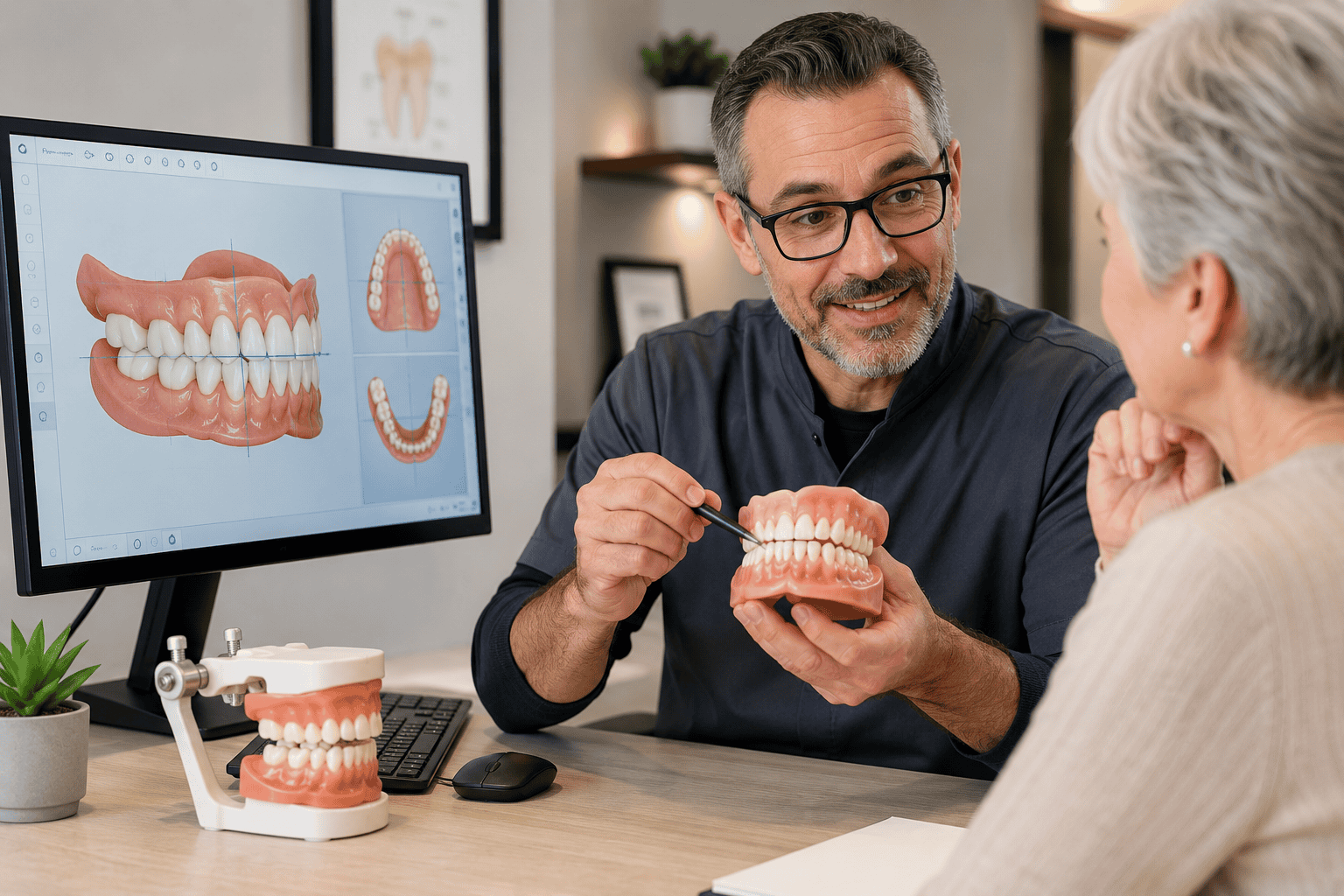
Lower Mainland Denture Clinic provides implant supported dentures, dentures over implants, digital dentures, denture relines, and same day denture repairs and relines.
If your implant denture feels less secure, is becoming difficult to clean, or has not been professionally checked recently, call 604-457-3763 to arrange an appointment.
Proper maintenance can help protect the denture, its attachments, and the comfort you depend on every day.