Can Digital Dentures Help If You Have a Small Mouth or Limited Opening?
Getting dentures should not feel more difficult simply because opening your mouth widely is uncomfortable.
Some patients naturally have a smaller mouth. Others have limited jaw opening because of muscle tightness, previous dental work, jaw discomfort, arthritis, temporomandibular joint concerns, or other physical limitations. Whatever the reason, traditional denture procedures can sometimes feel more challenging when large impression trays need to be positioned inside the mouth.
This is one area where modern digital dentures can offer an important advantage.
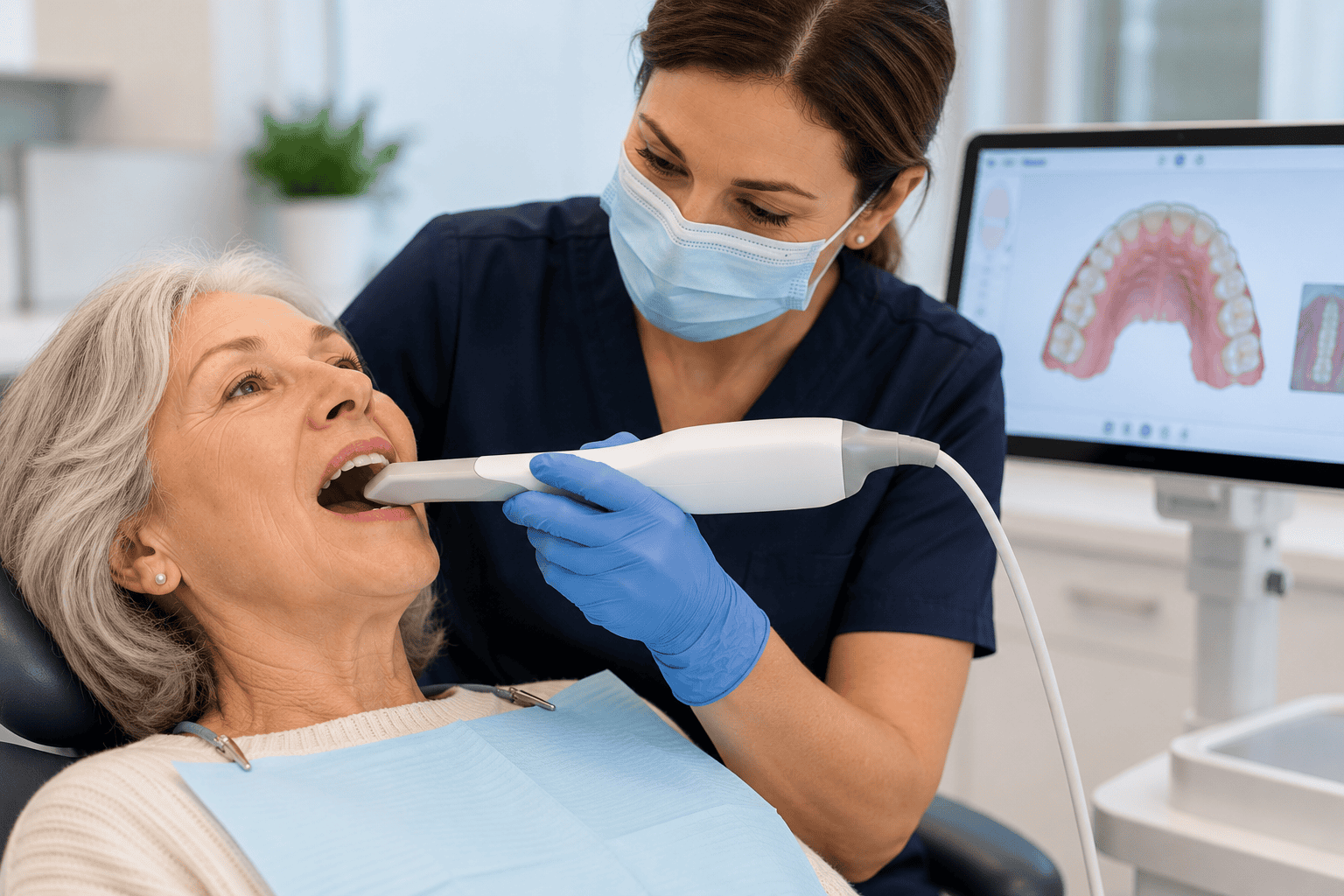
At Lower Mainland Denture Clinic, intraoral scanning has become an important part of the digital denture process. Instead of relying entirely on conventional trays filled with impression material, a handheld scanner can capture detailed information about the mouth digitally in many cases.
For someone who finds traditional impressions uncomfortable because of limited space or difficulty opening widely, this can make the experience feel much more manageable.
Why a Smaller Mouth Can Make Traditional Denture Impressions More Difficult
Traditional denture impressions have been used successfully for many years. They typically involve placing impression material inside a tray that fits over the gums and surrounding tissues.
For many patients, this process is straightforward.
For someone with a smaller mouth or limited jaw opening, however, positioning the tray can be more difficult.
The patient may need to open wider than feels comfortable. The tray may feel bulky as it passes between the lips and teeth or gums. Keeping the mouth open while the impression material sets can also become tiring.
This does not mean conventional impressions cannot be completed successfully. It simply means the procedure may require additional care and patience.
Digital scanning provides another option for suitable patients.
What Is an Intraoral Scanner?
An intraoral scanner is a small handheld device used to capture digital images of the mouth.
The scanning tip is moved carefully around the gums, palate, remaining teeth if present, and other important areas. The scanner captures a series of images that are combined to create a detailed three-dimensional digital model.
Instead of removing a physical impression from the mouth, the information appears digitally.
This digital record can then be used as part of the design and planning process for the denture.
For patients who dislike impression trays, this can make a noticeable difference in how the appointment feels.
Why Scanning May Be Easier When Mouth Opening Is Limited
One of the advantages of an intraoral scanner is that the scanning tip can be moved around the mouth gradually.
The entire arch does not necessarily need to accommodate a large impression tray at the same time.
That can make scanning easier for some patients who struggle to open widely.
The clinician can work section by section, repositioning the scanner as needed.
There may still be areas that require the patient to open or move the tongue and cheeks, but the process can often feel less bulky than placing a full conventional tray.
This can be especially helpful for patients who become tired quickly when holding their mouth open.
A Smaller Mouth Does Not Mean You Need Smaller Teeth
Patients sometimes hear the phrase “small mouth” and assume their dentures will automatically need unusually small teeth.
That is not necessarily true.
Mouth opening and smile design are different considerations.
The size and shape of denture teeth should be selected according to the patient’s facial proportions, jaw relationship, smile, available space, and overall treatment plan.
Someone may have difficulty opening widely while still having completely normal dimensions once the denture is in place.
The denture should be designed around the individual rather than based on one characteristic alone.
Digital Planning Can Help When Space Is Limited
Digital denture treatment is useful for more than capturing scans.
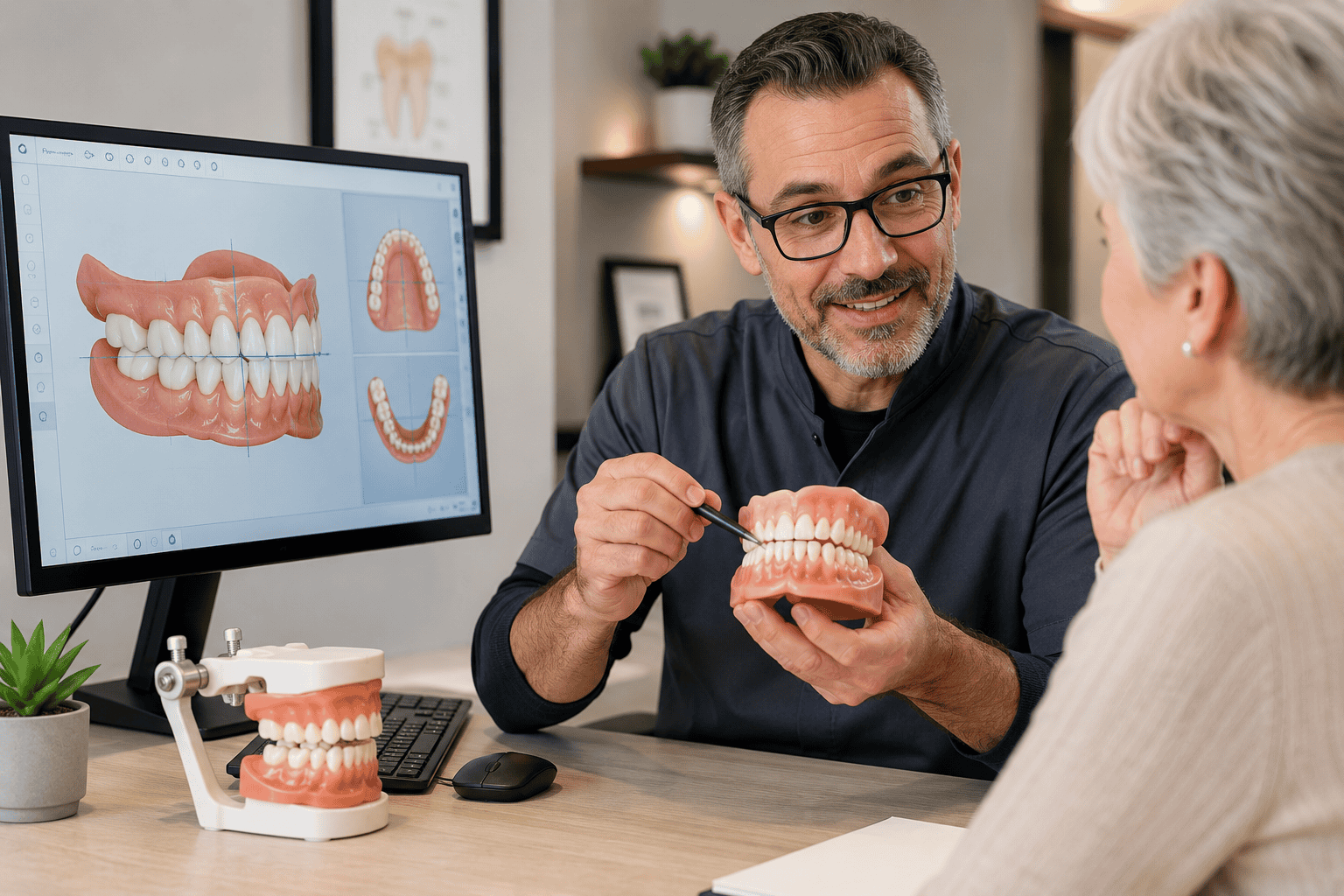
Once the information has been recorded, the denture can be designed digitally.
This allows the position of the teeth, thickness of the denture, bite relationship, and overall shape to be considered before fabrication.
When space inside the mouth is limited, these details become especially important.
A denture that is unnecessarily bulky can feel intrusive.
A poorly positioned tooth can reduce tongue space.
Excess material in the wrong area can interfere with comfort.
Digital design provides an opportunity to plan these areas carefully rather than relying entirely on adjustments after the denture has already been made.
Denture Thickness Matters
A denture needs enough material to be strong, but it should not feel unnecessarily bulky.
This is especially important for patients who already feel they have limited room inside the mouth.
If the denture is too thick, the tongue may feel crowded. Speech may feel different. Swallowing can seem less natural, and the patient may become more aware of the appliance throughout the day.
Digital planning can help control contours and thickness within the limitations of the material and treatment design.
The goal is not to make the denture as thin as possible.
The goal is to create the appropriate balance between strength, fit, comfort, and available space.
Limited Mouth Opening Can Affect More Than Impressions
Difficulty opening widely can influence several stages of denture treatment.
The clinician may need to consider how easily the patient can tolerate:
- scanning
- bite registration
- trying in the denture
- inserting and removing the appliance
- cleaning the denture
- future adjustments
A good treatment plan considers the entire experience, not just how the denture is manufactured.
If a patient has limited hand dexterity as well as limited mouth opening, the design may also need to make insertion and removal as straightforward as possible.
Comfort During Treatment Matters
Patients sometimes assume that discomfort is simply something they have to tolerate during denture appointments.
That should not be the goal.
A modern denture workflow should make reasonable accommodations for the patient’s comfort and physical limitations.
If keeping the mouth open for long periods is difficult, the appointment can often be approached in shorter stages.
The patient may be given opportunities to rest.
Scanning can sometimes be paused and resumed.
The treatment should work with the patient rather than forcing the patient to work around the procedure.
Digital Scanning Can Also Help Patients With Jaw Fatigue
Some patients can open adequately but cannot maintain that position comfortably.
Their jaw muscles may become tired quickly.
This may be especially noticeable during longer dental procedures.
Traditional impression appointments sometimes require the patient to hold still while the material sets.
Digital scanning is different because images are captured progressively.
If the patient needs a short break, the process may be easier to pause and continue.
This can make the experience less physically demanding for certain patients.
What If You Have TMJ or Jaw Discomfort?
Patients with jaw discomfort often worry about denture treatment.
Temporomandibular joint concerns can make prolonged opening uncomfortable.
A patient with jaw symptoms should mention this before treatment begins.
The clinic can then plan the appointment with that information in mind.
Digital scanning may reduce some of the difficulty associated with bulky impression trays, but it does not eliminate the need to open the mouth.
The amount of opening required varies according to the area being scanned and the patient’s anatomy.
The important thing is communication.
If something becomes uncomfortable, the patient should say so.
What If Your Mouth Opening Has Become More Limited Over Time?
A change in how widely you can open your mouth should not automatically be blamed on dentures.
Jaw stiffness can have several possible causes.
If mouth opening has become progressively more restricted or painful, it may be appropriate to discuss the change with the relevant dental or healthcare professional.
The denture appointment can still be adapted, but the underlying cause may also deserve attention.
A new denture should work within the patient’s current abilities rather than making an existing problem harder to manage.
Digital Scanning May Be Helpful for Patients With a Strong Gag Reflex Too
Limited mouth opening and a strong gag reflex are different problems, but digital scanning can sometimes make treatment easier for both.
Traditional impression material can extend toward the back of the mouth and may feel uncomfortable for patients who gag easily.
An intraoral scanner avoids filling the entire impression tray with material.
For some patients, that can make the appointment feel much more tolerable.
This is one of the reasons digital denture workflows can be particularly valuable for people who have struggled with traditional dental impressions in the past.
The Scanner Still Needs Access to the Entire Area
Digital scanning is not magic.
The scanner still needs to capture all of the important areas required for denture design.
That includes the gums, palate when relevant, remaining teeth, and other supporting structures.
If mouth opening is extremely limited, scanning may still be challenging.
In certain situations, a conventional technique or a combination of methods may still be necessary.
The best approach depends on the patient’s anatomy and the quality of the information needed.
A professional assessment determines which technique is appropriate.
Digital Dentures Still Require Accurate Clinical Records
The technology only works as well as the information captured.
An accurate digital scan is important, but it is only one part of denture treatment.
The bite still needs to be recorded appropriately.
Tooth position needs to be planned.
Facial support needs to be considered.
Speech and chewing function matter.
The denture must also be evaluated once it is placed in the mouth.
Digital technology improves the tools available, but clinical judgment remains essential.
Why Bite Planning Matters in a Smaller Mouth
When there is less available space, bite relationships can become especially important.
The upper and lower denture teeth need enough room to meet appropriately.
If the teeth are positioned poorly, the patient may feel crowded or find that the tongue does not have enough space.
A balanced bite can also influence stability during chewing.
Digital denture planning allows these relationships to be reviewed before manufacturing.
This can help create a more controlled starting point.
Tongue Space Is Important
The tongue plays a major role in speech, swallowing, and controlling dentures.
A denture that crowds the tongue can feel uncomfortable and may affect how naturally the patient speaks.
This is particularly relevant with lower dentures.
The shape of the denture should provide the necessary support while allowing the tongue enough room to move normally.
Digital design can help visualize these contours before fabrication.
The goal is to use available space efficiently rather than simply making the appliance smaller.
Lower Dentures Can Be More Challenging
Lower dentures already have less surface area for support than upper dentures.
For a patient with limited mouth opening, accessing and positioning the lower denture during treatment can add another challenge.
A well-planned digital workflow may help simplify some of the clinical steps.
If the lower denture also moves significantly during use, the patient may eventually want to discuss implant supported dentures.
Implants can provide additional retention, but they address a different issue than limited mouth opening.
The treatment plan should focus on the patient’s actual concerns rather than assuming one solution will correct everything.
Insertion and Removal Need to Be Considered
A denture is not helpful if it fits well but is extremely difficult for the patient to insert and remove.
This can be an important consideration for someone with limited mouth opening.
The shape and path of insertion should be evaluated carefully.
Patients should be shown how to place and remove the denture without forcing it.
If the appliance repeatedly catches or requires uncomfortable stretching, the clinic should know.
A small adjustment may sometimes improve the process significantly.
The First Few Days May Still Feel Different
Even when a digital denture is designed carefully, adapting to a new appliance takes time.
The mouth needs to become familiar with the new shape.
The tongue and cheeks learn how to work around it.
Speech may feel slightly different.
Eating may require practice.
For someone with a smaller mouth, the new denture may initially feel more noticeable because there is already a strong awareness of available space.
That sensation often improves as the patient adapts.
Persistent crowding or discomfort, however, should be checked.
What If Your Current Dentures Feel Too Bulky?
Older dentures may sometimes feel bulky because of their design, repairs, relines, or changes in the mouth.
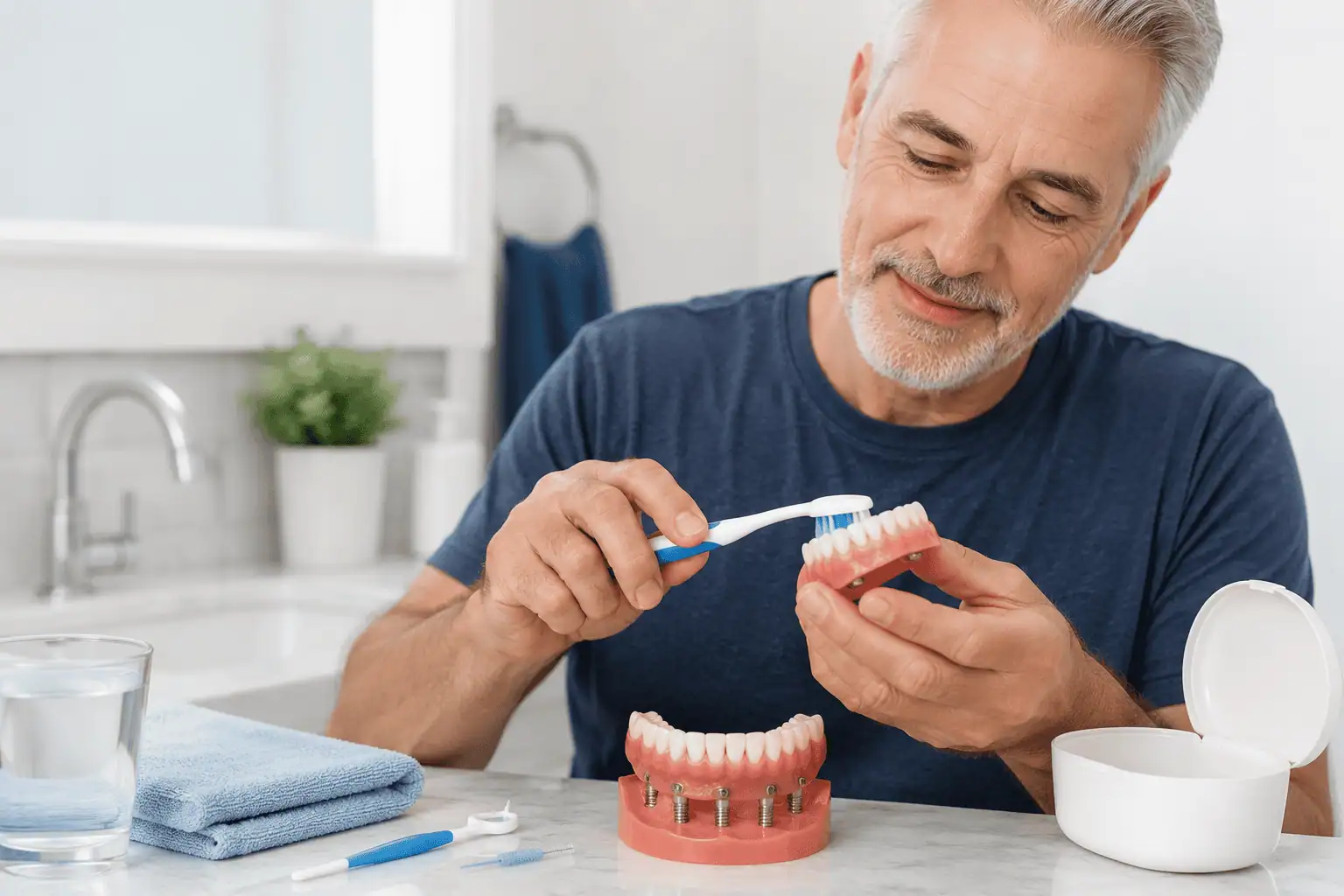
If the appliance feels too large, do not attempt to grind or reshape it at home.
Removing material from the wrong area can weaken the denture or affect the fit.
A professional assessment can determine whether an adjustment is possible.
If the denture is significantly worn or outdated, replacing it with a new digital denture may provide a better opportunity to improve the overall design.
A Reline May Help When the Problem Is Fit
Sometimes a denture feels awkward because it has become loose rather than because it is physically too large.
As the gums and supporting tissues change, space can develop underneath the denture.
This may cause the appliance to move and feel more noticeable.
A denture reline can sometimes improve the fit of an otherwise serviceable denture.
The right solution depends on whether the issue is design, fit, age, wear, or a combination of factors.
Digital Dentures Can Be Useful for Replacement Treatment
Patients with limited mouth opening who already wear dentures may particularly appreciate the benefits of digital records.
If a well-fitting digital denture eventually needs replacement, the previous design information may provide a useful reference.
That does not mean the denture can always be copied without a new assessment.
The mouth can change over time.
However, having digital records available can provide a more organized starting point for future treatment.
This can be helpful for patients who would prefer to avoid repeating difficult conventional impression procedures whenever possible.
A Smaller Mouth Does Not Mean Fewer Treatment Options
Patients sometimes assume that limited opening automatically eliminates certain denture choices.
Usually, the more important question is how the treatment can be adapted.
Digital scanning, careful appointment planning, thoughtful denture design, and professional adjustments can all help.
Some patients may benefit from complete dentures.
Others may need partial dentures.
Some may eventually explore implant support.
The size of the mouth is only one part of the treatment picture.
Who May Benefit From a Digital Denture Consultation?
A digital denture consultation may be worthwhile if you:
have difficulty opening widely, become tired while holding your mouth open, dislike conventional impression trays, have previously struggled with dental impressions, feel that your current denture is too bulky, want a modern denture workflow, or are replacing older dentures and want to explore digital options.
The purpose of the consultation is to determine whether digital scanning and digital denture treatment are appropriate for your specific situation.
Digital Technology Can Make the Experience More Patient Friendly
The benefits of digital dentures are often discussed in terms of precision and manufacturing.
But patient comfort during treatment matters too.
For someone who has delayed replacing dentures because they remember struggling with conventional impressions, learning that a modern scanning option exists can make treatment feel much more approachable.
The scanner does not eliminate every challenge.
It does, however, give the clinic another tool for working around individual needs.
That can be especially important for patients with limited space, jaw fatigue, or difficulty tolerating traditional techniques.
Book a Digital Denture Consultation
If you have a smaller mouth, limited jaw opening, or have struggled with conventional denture impressions in the past, modern digital treatment may provide a more comfortable approach.
Lower Mainland Denture Clinic offers digital dentures, complete dentures, partial dentures, denture relines, repairs, and implant supported dentures based on individual needs.
With intraoral scanning and digital denture planning, many parts of the process can be completed with greater precision while reducing reliance on traditional impression trays.
Call 604-457-3763 to book a consultation and find out whether digital dentures could make your treatment experience more comfortable.