How Digital Dentures Can Improve Bite Alignment and Chewing Balance
A Good Denture Needs More Than a Comfortable Fit
When people think about well-made dentures, comfort and appearance usually come to mind first. Both are important, but another part of denture design has a major influence on everyday function: the bite.
The way the upper and lower denture teeth meet affects how pressure is distributed while chewing, how stable the dentures feel during meals, and how naturally the jaw moves when the patient bites down. If that relationship is not balanced properly, dentures may rock, shift, create uncomfortable pressure areas, or make chewing feel less predictable.
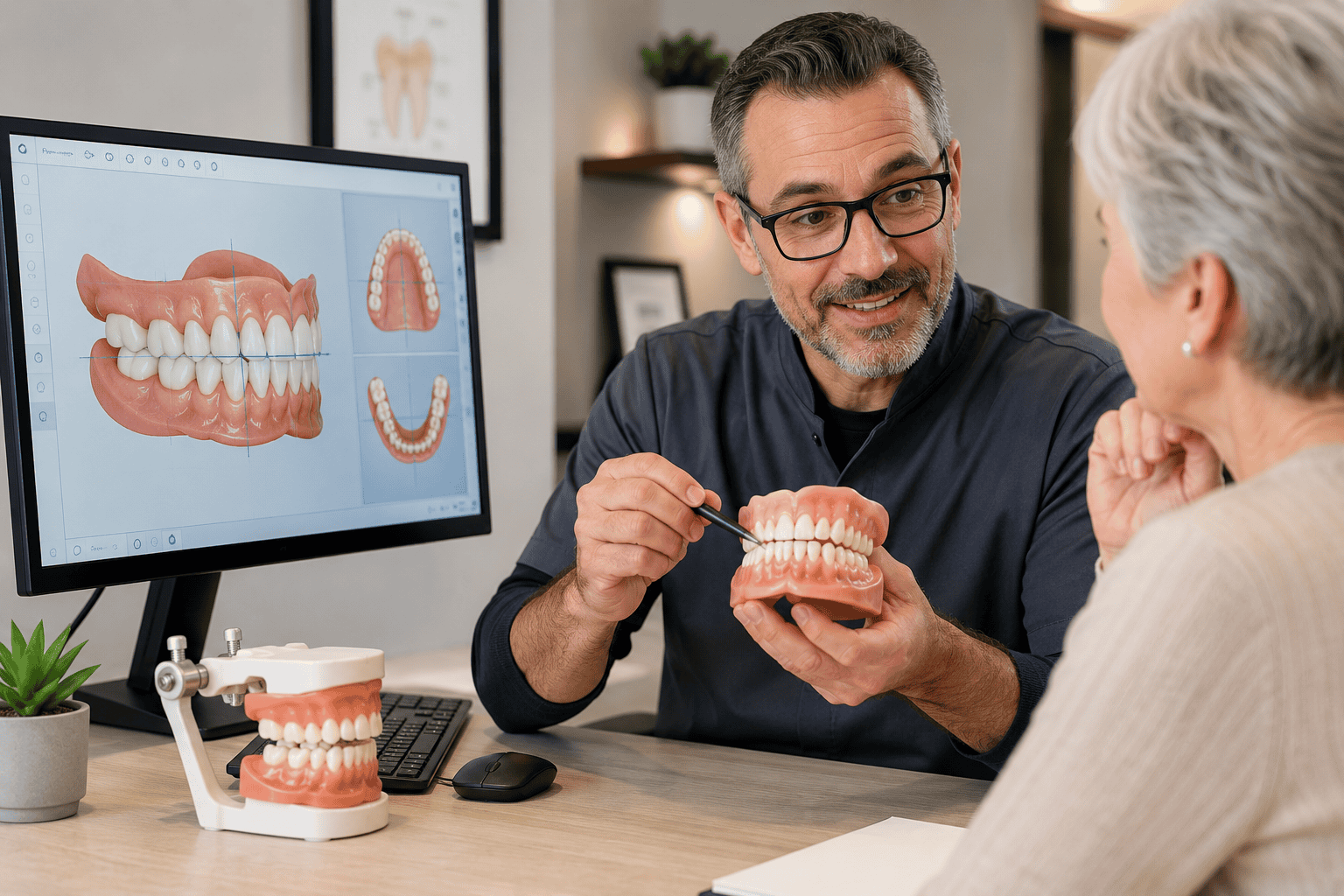
This is an area where digital dentures can offer an important advantage. A digital workflow allows the denture to be planned with detailed records and computer-assisted design, creating an opportunity to carefully consider tooth position, bite relationships, and overall denture balance before fabrication.
Digital technology does not eliminate the need for professional judgment or follow-up adjustments. What it can do is provide a more controlled and precise starting point for creating dentures that are designed around both comfort and function.
What Does Bite Alignment Mean With Dentures?
Bite alignment refers to how the upper and lower teeth come together when the mouth closes and how those teeth interact during chewing movements.
With natural teeth, the jaw, teeth, muscles, and supporting structures work together. Complete dentures are different because the teeth are part of removable appliances resting on the tissues of the mouth. This makes proper tooth positioning and pressure distribution especially important.
If one area contacts too heavily while another barely touches, the denture may become less stable during chewing. Instead of pressure being shared more evenly, one side may receive more force than the other.
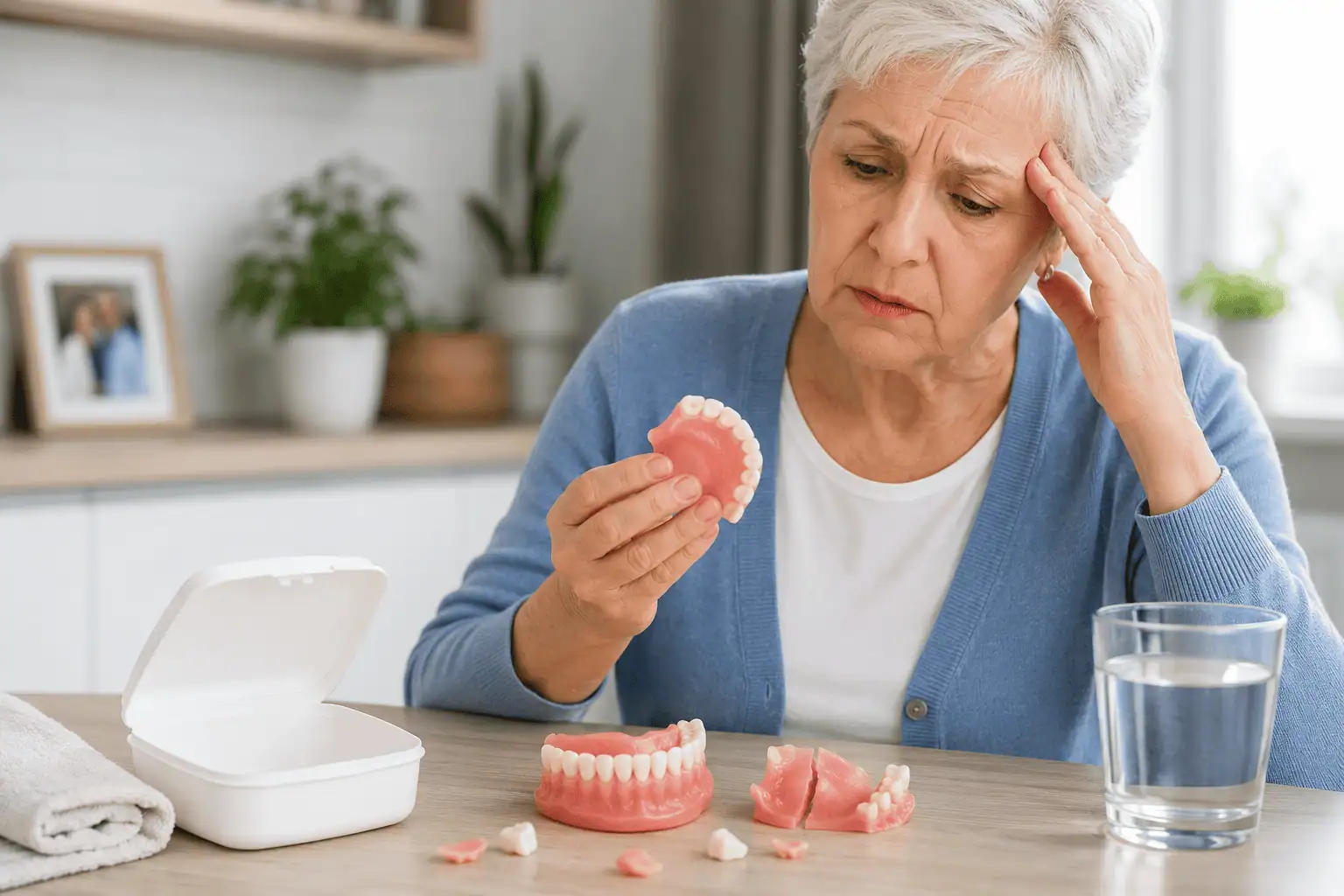
The patient may notice this as:
- rocking while chewing
- one side feeling higher than the other
- difficulty chewing evenly on both sides
- sore spots that repeatedly develop in the same areas
- clicking or movement while eating
- the feeling that the teeth do not come together naturally
- needing to consciously position the jaw before biting down
These concerns should not simply be accepted as an unavoidable part of wearing dentures. A professional assessment can determine whether the problem is related to the bite, fit of the denture base, changes in the mouth, or another issue.
Why Bite Balance Matters During Chewing
Chewing creates pressure. With dentures, that pressure needs to be managed carefully because excessive force on one area can cause the appliance to move.
Imagine chewing on the left side while the right side of the denture begins lifting away from the gums. Even slight movement can make the denture feel less dependable. The patient may respond by chewing more cautiously or avoiding certain foods entirely.
A more balanced bite can help reduce unnecessary tipping and rocking by creating a more appropriate relationship between the upper and lower denture teeth.
This does not mean that every denture must use exactly the same tooth arrangement or biting pattern. Denture design is individualized. The important point is that tooth position and contact should be planned intentionally rather than treated as an afterthought.
How Digital Denture Design Changes the Planning Process
Traditional denture techniques can produce excellent results, but much of the process relies on physical records, manual laboratory stages, and adjustments throughout fabrication.
With digital dentures, much of the planning can take place within a computer-assisted design environment.
Detailed records of the mouth and jaw relationship can be used to plan the denture, arrange the teeth, review the design, and determine how the upper and lower dentures are intended to interact.
This provides another level of control during treatment. Rather than evaluating the bite only after the denture has been produced, important relationships can be considered during the design stage.
Research into digitally manufactured removable dentures has found that modern CAD/CAM methods can achieve high levels of accuracy, including in the positioning and occlusal surfaces of denture teeth. At the same time, clinical results still depend on the quality of the records, workflow, fabrication method, and professional adjustments after delivery. citeturn740860search0turn740860search1
Digital Accuracy Does Not Mean a Bite Never Needs Adjustment
One misconception about digital dentures is that computer-assisted design means there will never be anything to adjust afterward.
That is not realistic.
The mouth is a living, moving environment. Muscles, gums, jaw position, saliva, and normal chewing patterns all influence how dentures function once they are actually being worn.
A bite that looks carefully balanced during design still needs to be evaluated when the dentures are placed in the mouth.
Minor adjustments may be required as the patient begins speaking and chewing with the new dentures. This is normal denture care rather than evidence that the digital process has failed.
The advantage of greater precision is that the treatment can begin from a more controlled foundation. The goal is to reduce unnecessary discrepancies and create a stronger starting point, not to remove professional follow-up entirely.
Why an Uneven Bite Can Make Dentures Feel Loose
Sometimes a patient describes a denture as loose even though the denture base itself appears to fit reasonably well.
The bite may be contributing to the problem.
If one tooth or section of teeth makes contact before the rest, biting pressure can cause the denture to tilt. The patient may interpret that movement as general looseness.
This is one reason a proper denture assessment needs to look at more than the underside of the appliance. Fit and bite work together.
A denture reline may improve a denture that no longer adapts properly to the gums, but relining alone will not necessarily correct an uneven bite. Likewise, adjusting the teeth will not solve a denture base that has become significantly loose because the supporting tissues have changed.
Both need to be evaluated.
Better Chewing Is About More Than Bite Force
When people discuss eating with dentures, they sometimes assume the goal is simply to create the strongest possible bite.
That is not necessarily the case.
Effective chewing depends on stability, coordination, comfort, tooth positioning, and the patient’s ability to control the dentures. Applying more force to an unstable appliance does not automatically improve function.
A more useful goal is controlled chewing.
Dentures should allow pressure to be applied in a way that the patient can manage comfortably. The bite should support function without encouraging unnecessary rocking or tipping.
Research on complete denture occlusion shows that bite design can influence chewing performance, although there is no single occlusal arrangement proven to be ideal for every patient. citeturn740860search6turn740860search14
That is why denture design should remain individualized.
Why Chewing on Both Sides Can Help
Many denture patients develop the habit of chewing mainly on one side. Sometimes this begins because one area feels more comfortable. In other cases, it is simply a habit carried over from previous dental problems.
With complete dentures, repeatedly chewing on only one side can make stability more difficult. Pressure placed heavily on one side may cause the opposite side to lift.
When appropriate, patients are often encouraged to develop a more balanced chewing pattern by placing manageable amounts of food on both sides and chewing slowly.
This takes practice.
New denture wearers should begin with softer foods and smaller pieces rather than immediately challenging the dentures with difficult textures. As coordination improves, firmer foods can gradually be added.
A carefully planned bite can support this adaptation by making the contact between the upper and lower dentures feel more predictable.
Digital Dentures Can Be Helpful When Replacing an Unsatisfactory Bite
Patients replacing older dentures sometimes know immediately that something about the previous bite never felt right.
They may describe:
- never being able to chew comfortably on one side
- their jaw feeling forced into an awkward position
- teeth meeting unevenly
- dentures rocking during meals
- constantly searching for a comfortable place to bite
- repeated sore areas despite adjustments
Replacing those dentures provides an opportunity to reassess the entire relationship rather than simply copying every aspect of the old design.
A modern digital denture process allows useful information from existing dentures to be considered while still creating an updated design around the patient’s current anatomy and needs.
The goal should be to preserve what worked while correcting what did not.
The Jaw Relationship Is Just as Important as the Teeth
Denture teeth cannot simply be arranged to look attractive. Their position must work with the way the patient’s jaws relate to each other.
During denture treatment, records are taken to establish important information about how the upper and lower jaws come together. That information helps guide tooth placement and the vertical relationship between the dentures.
This stage has a direct effect on comfort and function.
If the relationship is not recorded appropriately, the patient may feel that the teeth meet awkwardly or that the jaw has to search for a comfortable closing position.
Digital technology can help preserve and work with these records during design, but obtaining accurate clinical information remains essential.
Technology improves the tools available to the denturist. It does not replace the clinical decisions that determine how those tools should be used.
Digital Dentures May Support Greater Consistency During Fabrication
Another advantage of digital manufacturing is the ability to reduce some of the variation introduced during traditional processing.
Conventional denture materials can undergo changes during fabrication that may influence the final relationship of the teeth. Digital manufacturing methods are designed to reproduce the planned design more consistently.
Studies evaluating digital complete dentures have found promising accuracy in denture bases and occlusal relationships, although outcomes vary between manufacturing systems and techniques. citeturn740860search0turn740860search17
For the patient, the practical goal is straightforward: the denture delivered should resemble the denture that was carefully planned.
Greater manufacturing consistency can help move treatment closer to that goal.
Bite Problems Can Develop Even After Dentures Initially Fit Well
A denture that worked well when it was new may not function exactly the same several years later.
The mouth changes. Denture teeth can wear. Supporting tissues can change shape. The relationship between the upper and lower dentures may gradually become less balanced.
Patients may begin noticing that:
- chewing feels different
- the denture rocks more than it used to
- the teeth look worn
- the jaw closes differently
- one side contacts sooner
- certain foods have become harder to chew
These changes deserve professional attention.
Sometimes an existing denture can be improved with a denture reline, bite adjustment, or repair. In other situations, replacing the denture may provide a better long-term solution.
Implant Support Changes the Stability Conversation
For some patients, even an accurately designed conventional denture cannot provide the level of stability they want, particularly in the lower arch.
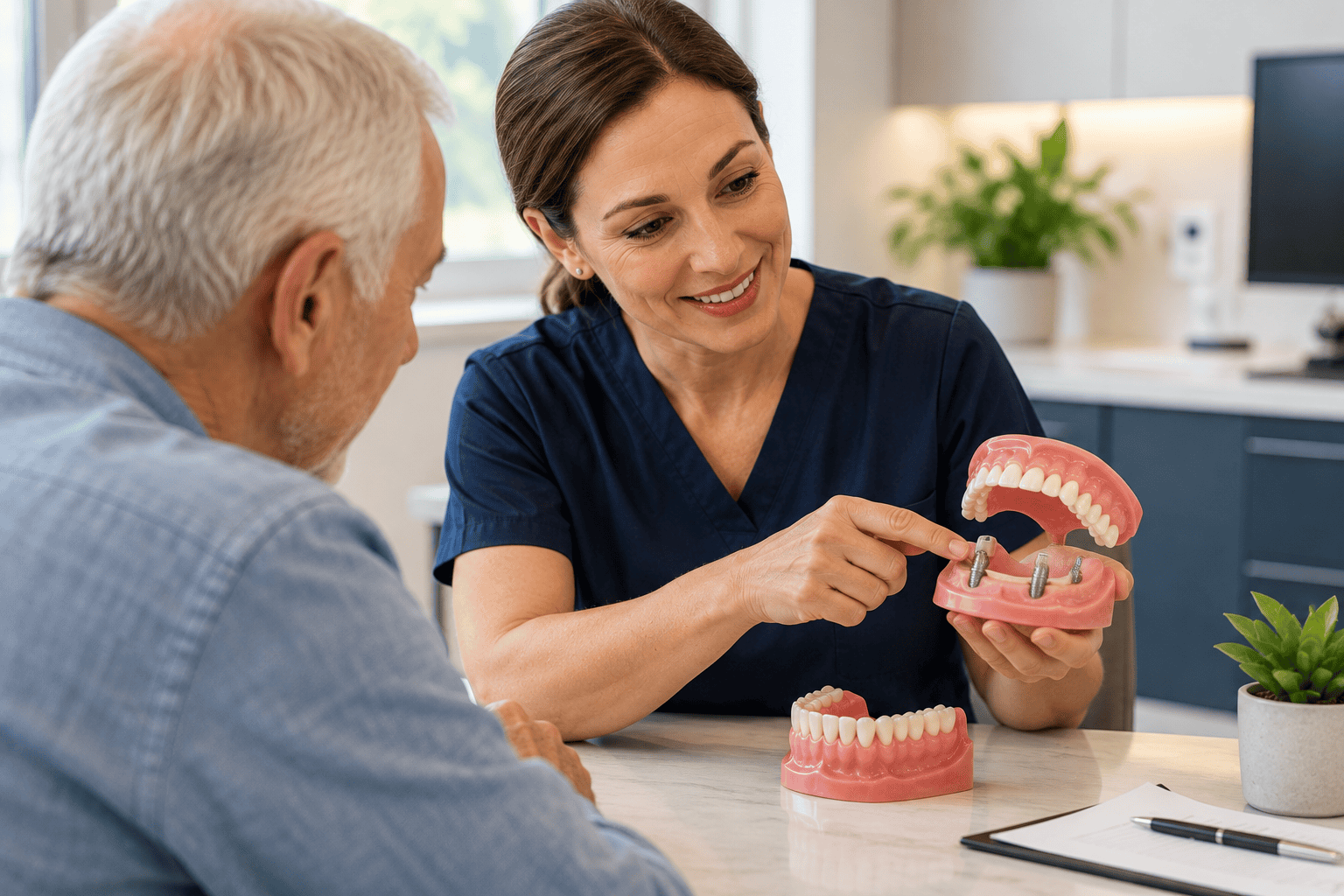
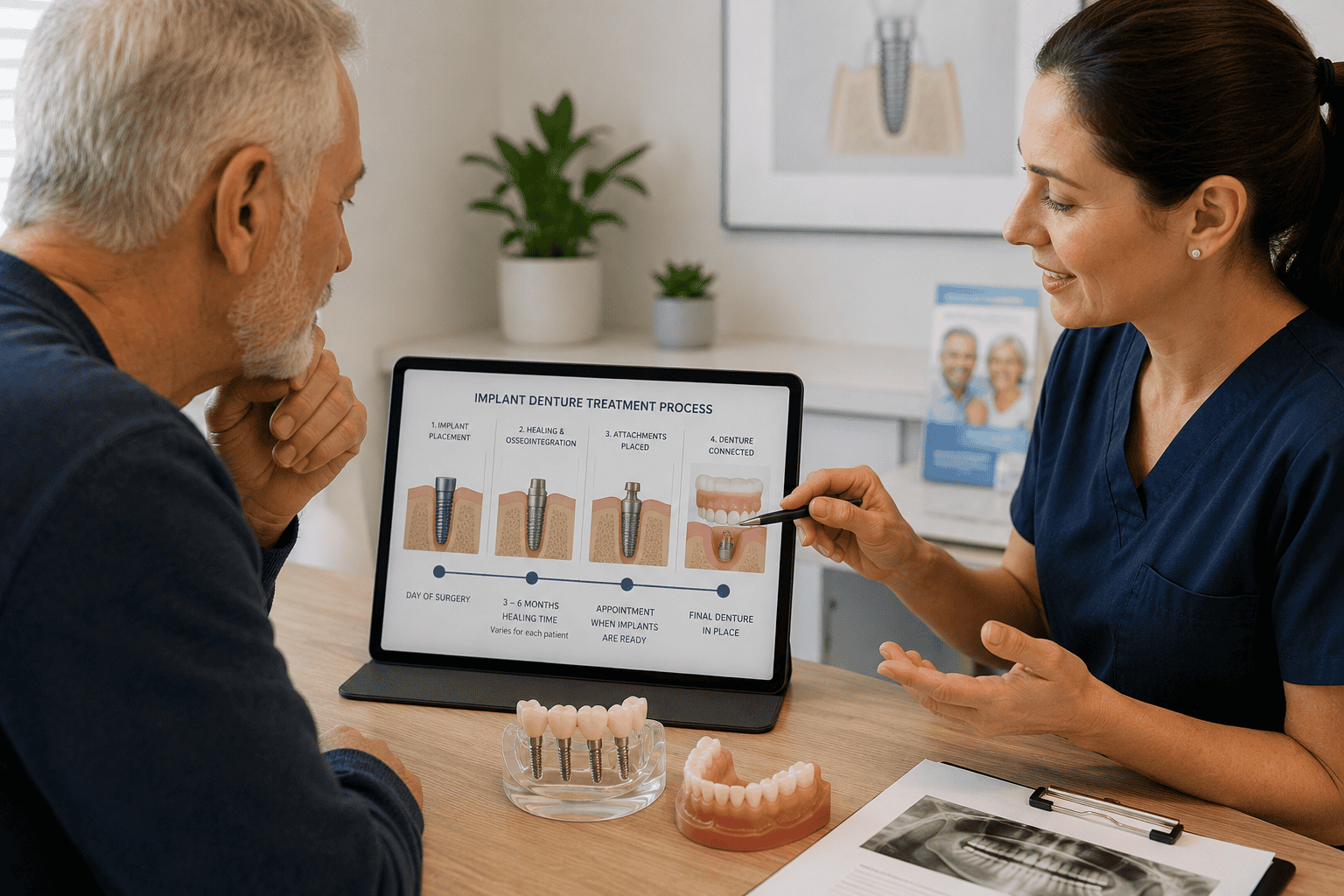
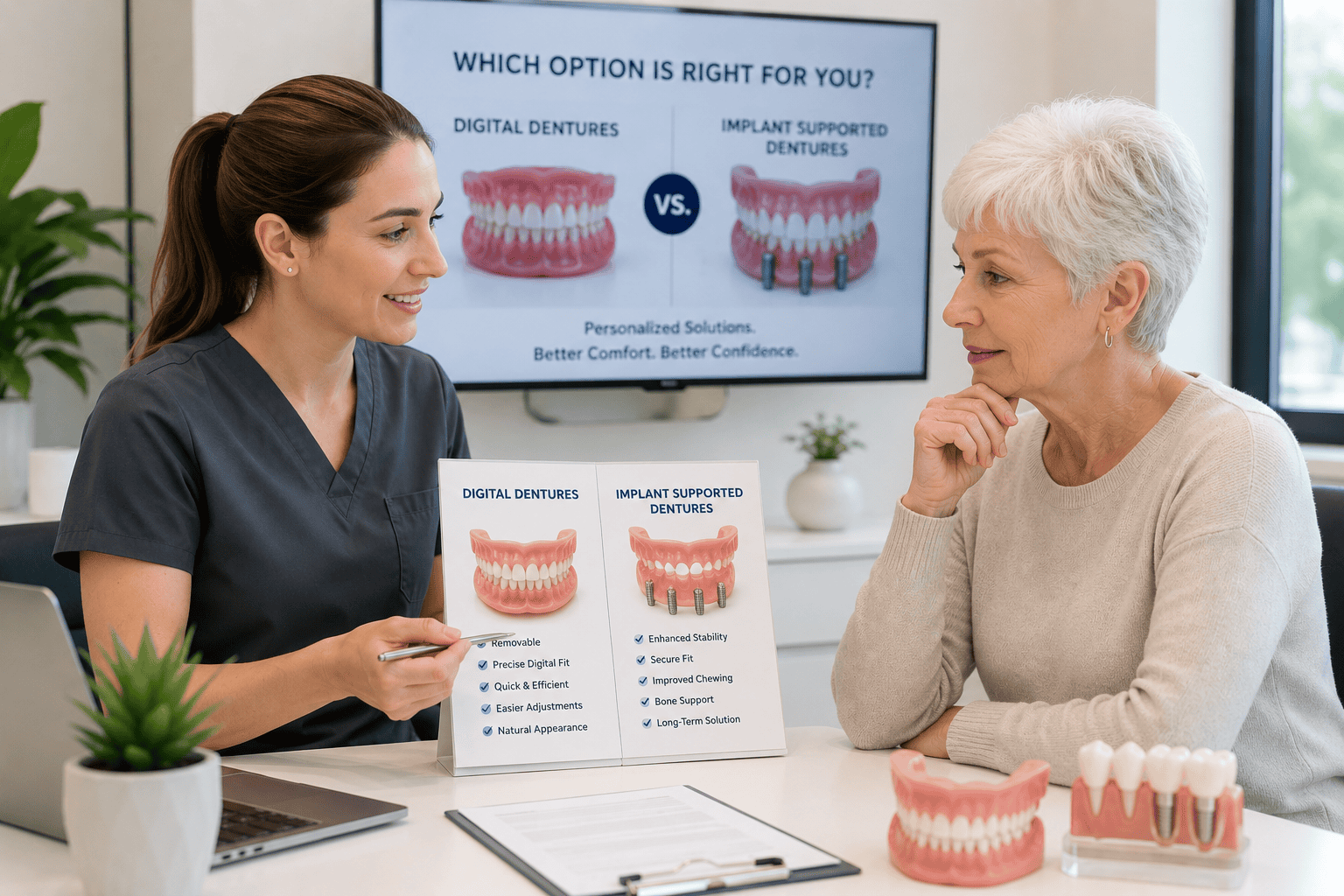
In these situations, implant-supported dentures may become part of the treatment discussion.
Implants provide additional retention, helping the denture resist unwanted movement. This can create a more dependable foundation during chewing.
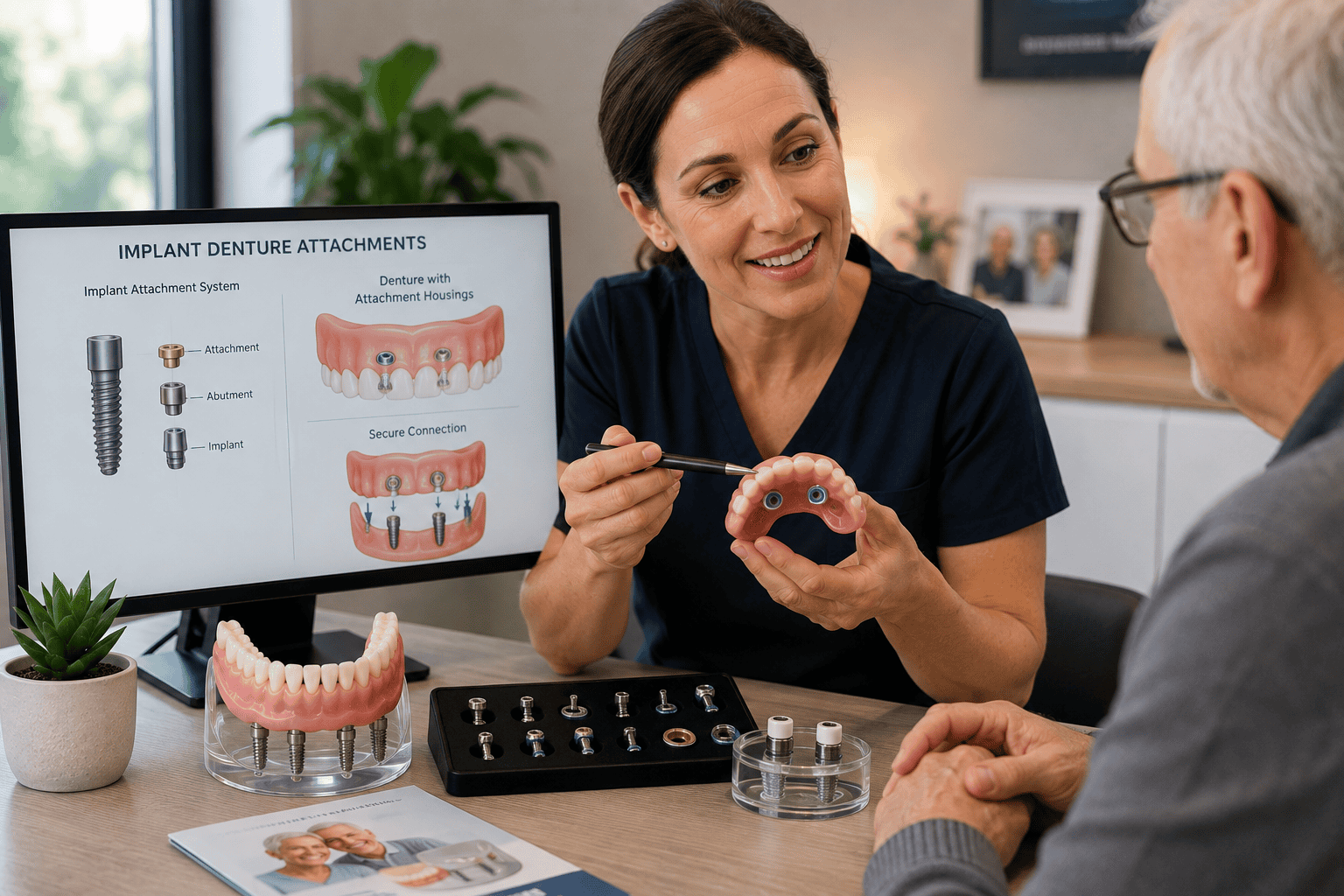
Bite planning remains important with implant dentures. Greater retention does not mean bite forces can be ignored. The denture, attachment components, implants, and opposing teeth or denture still need to work together appropriately.
Digital denture technology and implant support can therefore complement each other. Digital planning can help address denture design and tooth relationships, while implants can address the need for additional retention.
A Balanced Bite Can Improve Confidence Around Food
The effect of a better bite is not limited to mechanics.
Patients who do not trust their dentures often approach meals cautiously. They may avoid restaurants, choose food based entirely on what feels safest, or worry that the denture will move while eating with other people.
When dentures feel more predictable, confidence can gradually return.
The patient can concentrate more on the meal and less on controlling the appliance.
That does not mean every food becomes appropriate or that dentures suddenly function exactly like natural teeth. Realistic expectations still matter. But improving stability, fit, and bite coordination can make everyday eating feel far less frustrating.
Signs Your Denture Bite Should Be Checked
A denture assessment may be worthwhile if you notice:
- your teeth seem to meet on one side before the other
- the denture rocks when you bite down
- chewing is consistently easier on only one side
- the jaw feels tired after meals
- sore spots repeatedly appear in the same area
- the denture lifts when chewing
- your bite feels different than it did previously
- denture teeth appear significantly worn
- eating has become progressively more difficult
- you cannot find a comfortable position when closing your teeth together
These concerns may be related to the bite, the denture fit, wear, or a combination of factors.
The solution depends on identifying the cause rather than simply adjusting the area that happens to feel uncomfortable.
Modern Denture Care Is About Precision and Function Together
Digital dentures are often discussed in terms of scanning, comfort, and appearance, but the technology also creates opportunities for more detailed functional planning.
A successful denture should look natural, but it also needs to work.
The upper and lower teeth should interact in a way that supports chewing without creating unnecessary instability. The denture bases should fit appropriately. The tooth arrangement should work with the patient’s jaw relationship and facial features.
No technology guarantees a perfect result automatically.
What digital technology provides is a more precise set of tools that can be combined with professional experience, careful clinical records, and appropriate follow-up.
That combination is what makes modern denture treatment valuable.
Book a Digital Denture Consultation
If your dentures rock while eating, feel uneven when you bite, or no longer provide the chewing comfort they once did, it may be time for a professional assessment.
Lower Mainland Denture Clinic offers digital dentures, complete dentures, denture relines, same day denture repairs and relines, and implant-supported dentures based on individual needs.
Call 604-457-3763 to book a consultation and learn whether a digitally planned denture could improve your bite, chewing balance, comfort, and overall denture experience.