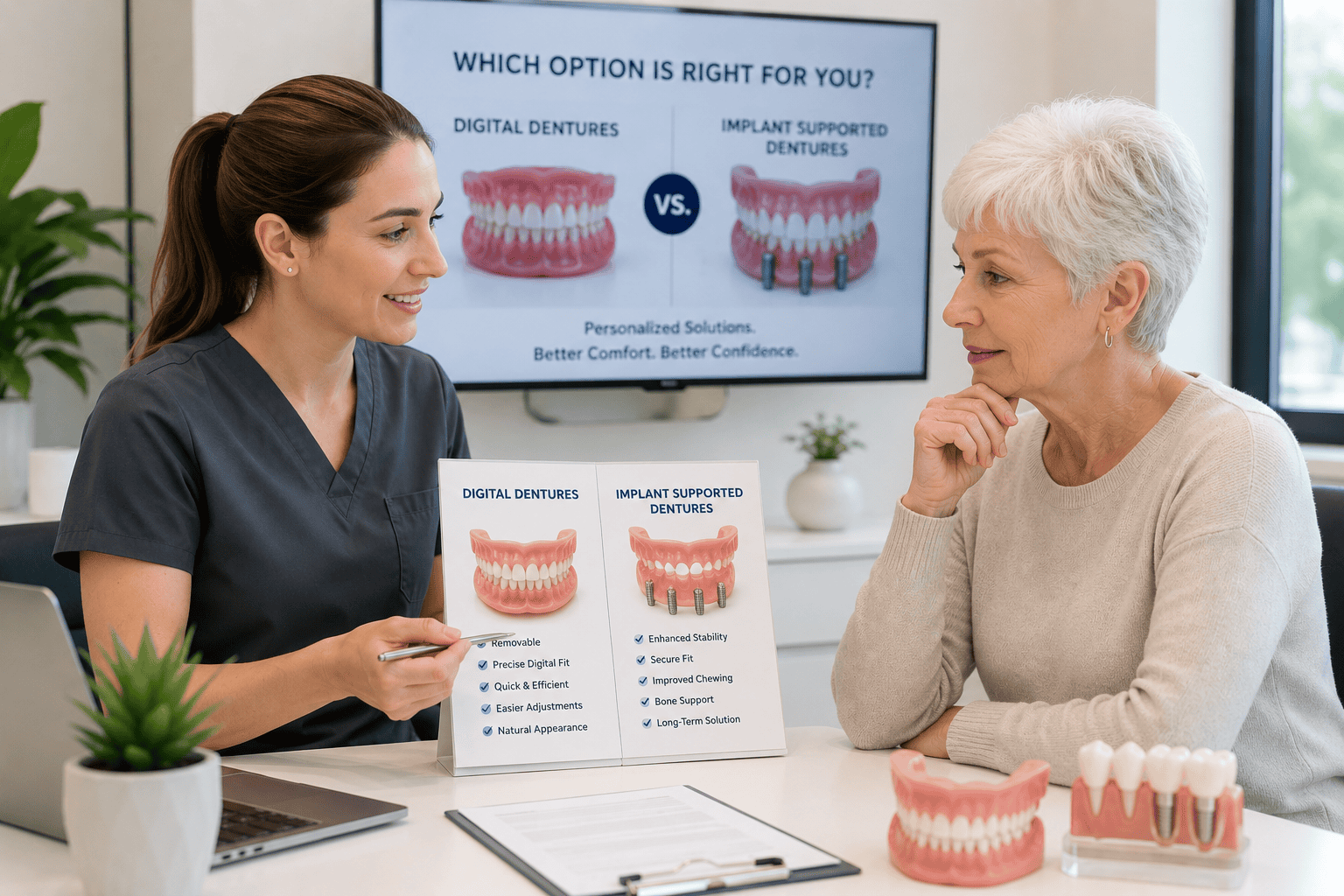
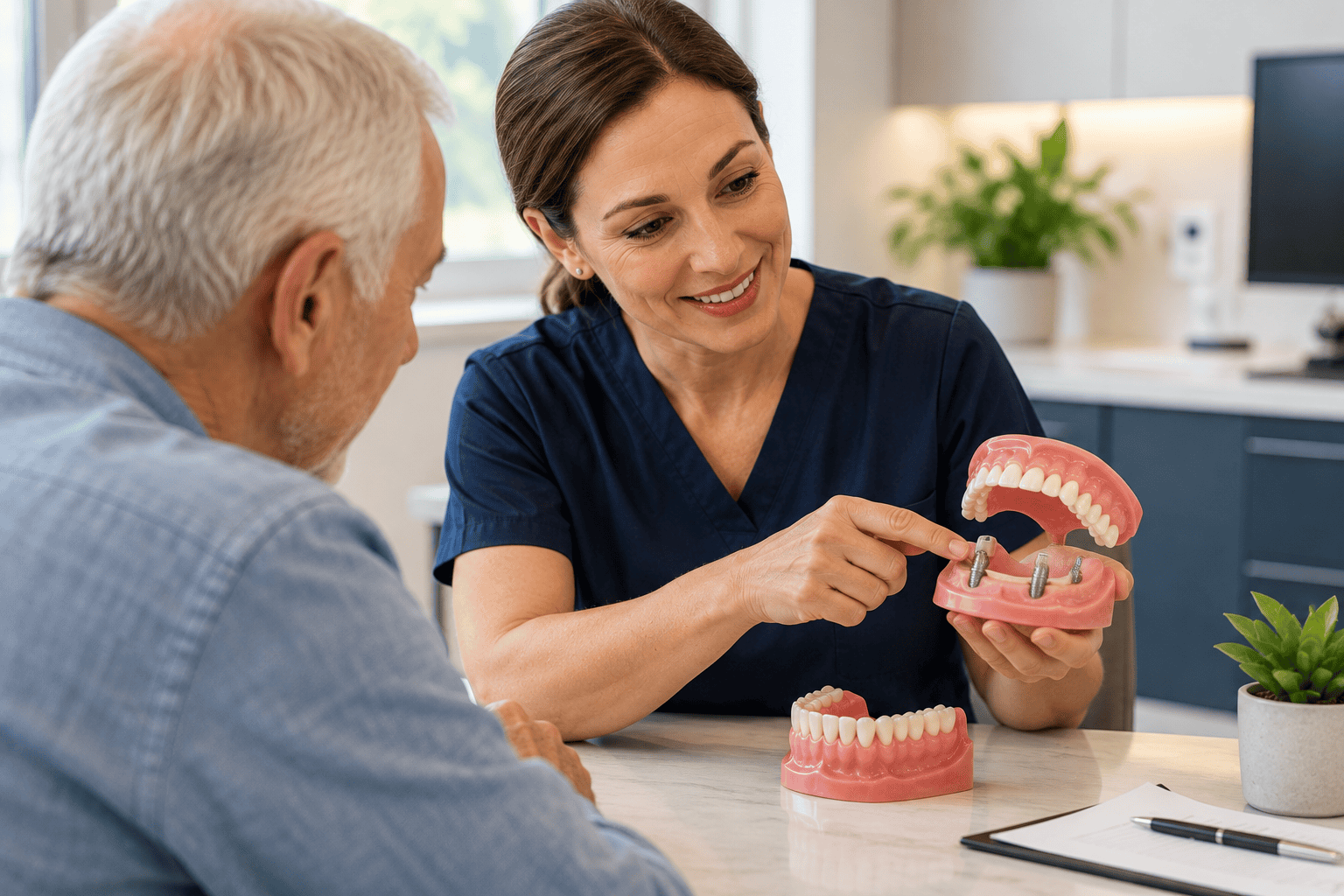
Can You Upgrade From Traditional Dentures to Implant Supported Dentures Later?
Choosing traditional dentures today does not necessarily mean implant supported dentures are off the table in the future.
Many patients begin with conventional dentures because they are the right option at the time. Years later, they may start looking for greater stability, better retention, or more confidence while eating and speaking. Others may have always been interested in implants but were not ready for the additional treatment when they first received dentures.
The good news is that implant supported dentures can often become part of a future treatment plan, even if a patient has already been wearing traditional dentures for years.
The exact process depends on the condition of the current dentures, the health and anatomy of the mouth, the amount of available bone, the position of any planned implants, and the overall treatment goals. In some cases, an existing denture may be modified to work with implants. In other situations, creating a new denture provides the better long-term result.
Traditional Dentures and Implant Supported Dentures Solve Different Problems
Traditional dentures rely on the shape of the gums, the denture base, muscle control, and in some cases suction or denture adhesive for retention.
For many patients, this works well.
However, lower dentures can sometimes become difficult to control because the lower jaw offers less surface area for support and is surrounded by active muscles, the tongue, and the floor of the mouth.
An implant supported denture adds another source of retention.
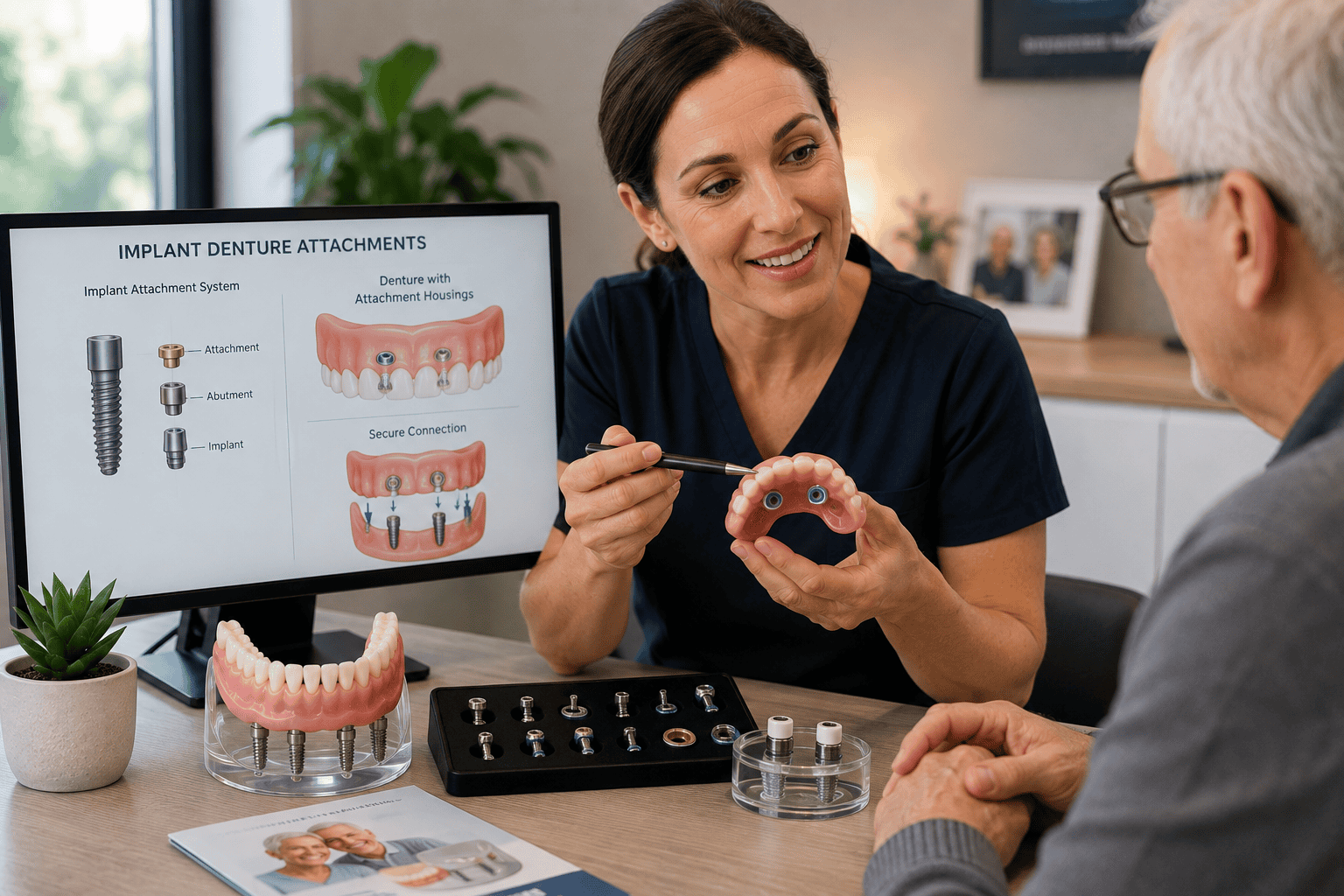
Dental implants are placed in the jaw and, once healed appropriately, can be used to help secure the denture through attachment components.
This does not turn the denture into natural teeth, but it can make the appliance feel more stable and predictable.
Why Patients Consider Upgrading Later
A patient may be perfectly satisfied with conventional dentures when they are first made and still become interested in implant support later.
The mouth changes over time.
The gums and jawbone continue changing after natural teeth have been lost. A denture that once felt secure may gradually become more difficult to control.
Some patients begin noticing movement while eating.
Others rely increasingly on denture adhesive.
A lower denture may lift when speaking or laughing.
The patient may begin choosing softer foods or avoiding restaurants because they no longer trust the denture.
These changes can prompt a conversation about whether implants could provide additional support.
You Do Not Necessarily Need to Decide on Implants Immediately
One reason patients hesitate to explore dentures is the feeling that they must make every long-term decision at once.
That is not always necessary.
A conventional denture can be an appropriate treatment now, while implant support remains a possible future option.
This can be especially helpful for patients who need time to consider treatment, complete other dental work, plan financially, or simply become comfortable with wearing dentures before deciding whether additional retention is important to them.
The future implant option depends on the individual clinical situation, so it should still be discussed during treatment planning.
But receiving conventional dentures does not automatically close the door.
Can an Existing Denture Be Converted to Work With Implants?
Sometimes.
Once dental implants have been placed and have healed appropriately, an existing denture may be evaluated to determine whether implant attachment components can be incorporated into it.
This depends heavily on the denture itself.
A relatively new denture that fits well, has an appropriate bite, contains enough material to accommodate attachment housings, and is in good structural condition may sometimes be suitable for modification.
An older denture may not be.
If the appliance is worn, cracked, poorly fitting, unstable, or already due for replacement, investing additional treatment into the old denture may not make sense.
A professional assessment is needed before deciding.
When a New Denture May Be the Better Choice
There are several situations where making a new implant supported denture may provide a better result than modifying the current one.
The existing denture may be too old.
The teeth may be significantly worn.
The bite may no longer be balanced.
The denture base may not fit the gums properly.
There may not be enough room within the denture to safely house the implant attachment components.
The smile may also need updating.
In these situations, a new denture allows the entire treatment to be planned around the implants rather than trying to adapt an appliance that was originally designed without them.
This can provide more control over fit, attachment positioning, tooth arrangement, bite, and appearance.
The Condition of the Current Denture Matters
The age of the denture alone does not determine whether it can be used.
What matters is its actual condition.
A denture should be assessed for cracks, wear, looseness, tooth damage, bite changes, and the quality of the fit against the gums.
If the denture already moves significantly before implant treatment, attaching it to implants without addressing the underlying fit may not produce the ideal result.
The implant attachments provide retention, but the denture itself still needs to function properly.
This is why implant supported dentures are not simply about adding a few mechanical parts underneath an old appliance.
The entire system needs to work together.
Implant Position Has to Work With the Denture
The implants need to be placed in positions that support the planned denture treatment.
This requires coordination between the professional placing the implants and the denturist creating or modifying the denture.
Implants cannot simply be placed wherever there appears to be space.
Their position affects where the attachment components will sit inside the denture.
The denture needs enough thickness and room to accommodate those components without becoming weak or uncomfortable.
This is one reason implant treatment should be planned as a complete restorative process rather than treating the implants and denture as separate decisions.
Bone Availability Is Part of the Assessment
Dental implants need adequate bone support.
After teeth are lost, the jawbone can gradually change over time.
Patients who have worn dentures for many years may have different bone levels than someone who recently lost their natural teeth.
This does not automatically mean implants are impossible.
It does mean that the available bone needs to be assessed carefully by the appropriate dental professional.
Imaging and clinical evaluation can help determine whether implants are suitable and whether any additional treatment may be required.
The number, size, and position of implants also depend on the individual case.
Age Alone Does Not Automatically Rule Out Implant Dentures
Some patients assume they are too old for implant supported dentures simply because they have already worn dentures for many years.
Age alone does not determine whether someone is a suitable candidate.
Overall health, bone condition, healing ability, medications, oral hygiene, and treatment goals may be more important considerations.
An older adult in good health may still be able to consider implant treatment.
At the same time, implant supported dentures are not automatically appropriate for everyone.
A proper consultation is necessary to evaluate the complete picture.
What Happens First If You Want to Upgrade?
The process usually begins with an assessment of the current dentures and the mouth.
The denture fit, bite, condition, and overall function are reviewed.
The patient should also explain what they want to improve.
For example, is the biggest concern movement while eating?
Is the lower denture lifting?
Is adhesive becoming necessary every day?
Is the denture uncomfortable?
Is the appearance still acceptable?
Understanding the problem helps determine whether implant support is actually the best solution.
Some Loose Dentures May Need a Reline Instead
Not every loose denture needs implants.
If the denture previously fit well but has become loose because the shape of the gums changed, a denture reline may improve the fit.
A reline updates the fitting surface of the denture so it adapts more closely to the current tissues.
For some patients, this may provide enough improvement that implant support is not immediately necessary.
The distinction is important.
A denture may be loose because it no longer fits properly.
Another denture may fit reasonably well but still lack the level of retention the patient wants.
Those situations may require different solutions.
Implant Support Is Especially Relevant for Lower Dentures
The lower denture is where many patients notice the greatest challenge.
Unlike the upper denture, the lower denture does not have a broad palate to help create suction and support.
The tongue also moves constantly around it.
For patients who continue struggling with lower denture stability even after the fit has been optimized, implants can provide an additional anchoring system.
This is why dentures over implants are often discussed when conventional lower dentures no longer provide enough confidence.
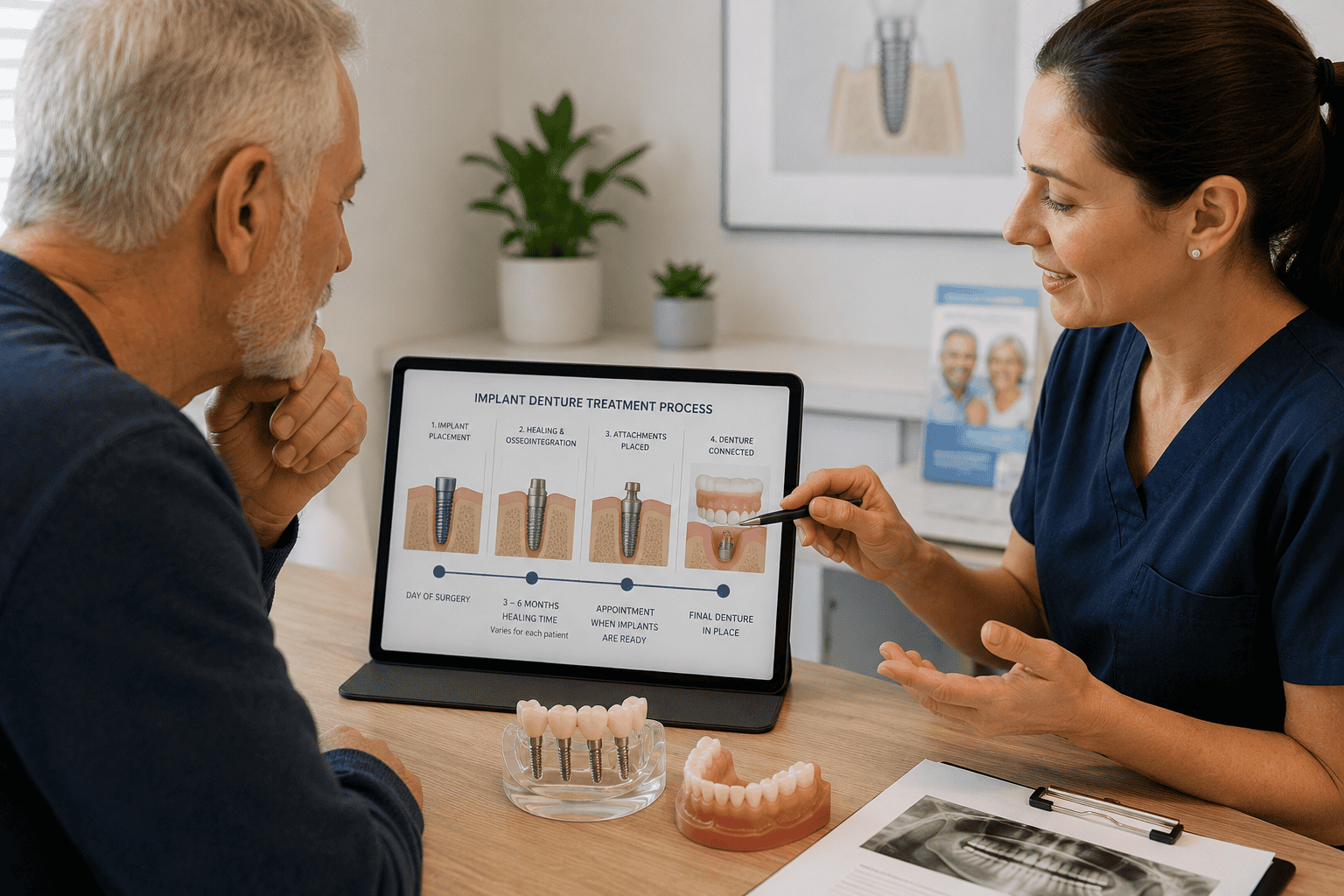
What Happens After the Implants Are Placed?
Dental implants require a healing period.
During this stage, the implants integrate with the surrounding bone.
The exact timeline varies between patients and depends on the treatment plan.
The existing denture may sometimes be adjusted or used as a temporary appliance during healing, but this needs to be managed professionally.
The denture should not place inappropriate pressure over healing implant sites.
Once the implants are ready, the next stage involves incorporating the appropriate attachment system and completing the denture treatment.
You May Not Need to Go Without Dentures
One common fear is that upgrading to implant supported dentures means spending months without teeth.
That is not necessarily the case.
Depending on the treatment plan, a patient may be able to continue wearing an existing or temporary denture through much of the healing process.
The denture may need adjustments as the tissues heal.
The exact approach depends on the surgery and the condition of the current appliance.
Patients should always follow the specific instructions given by the implant provider and denturist rather than assuming the denture can be worn exactly as it was before surgery.
Digital Dentures Can Be Part of an Upgrade
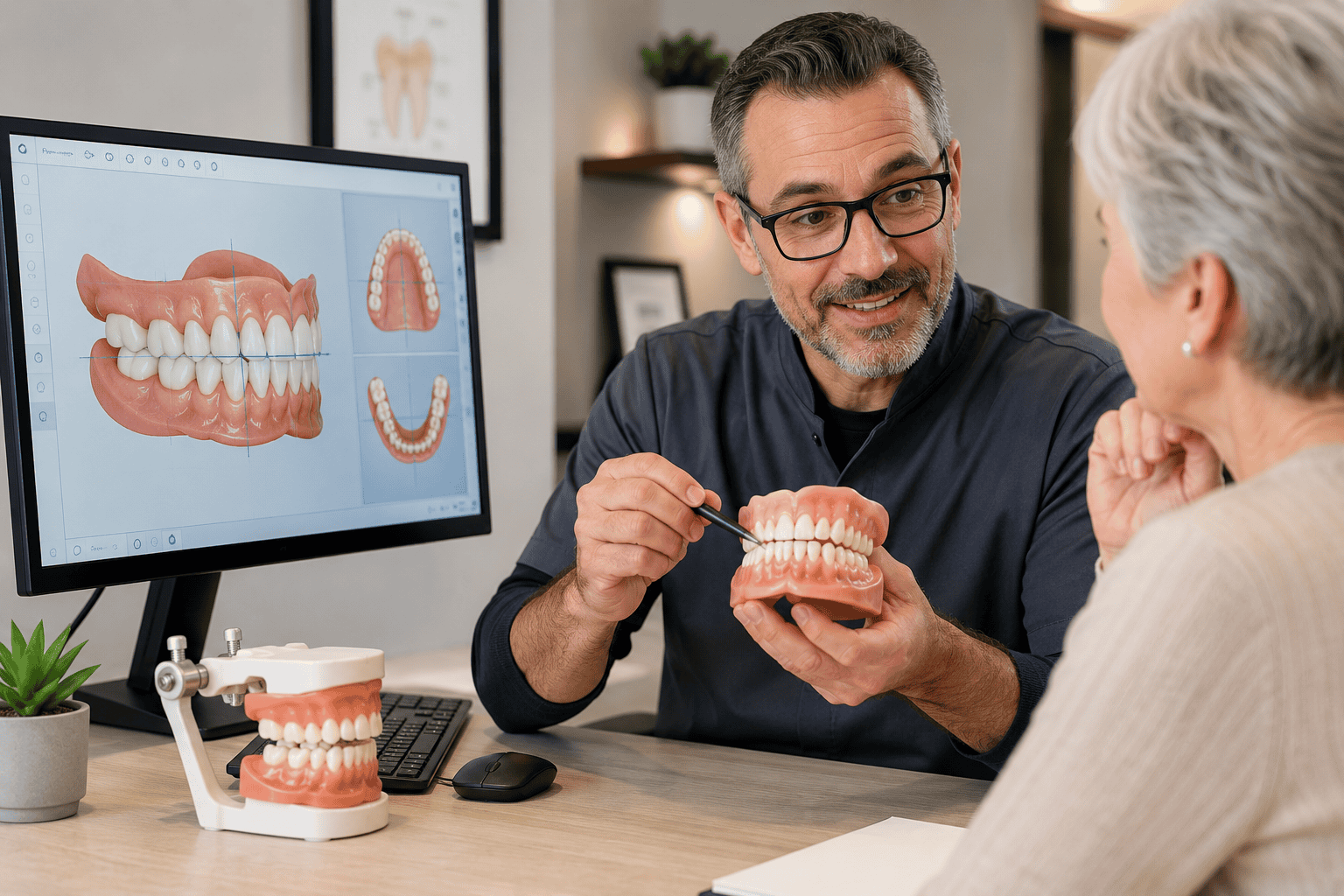
A patient upgrading to implant support may also decide that it is a good time to replace an older conventional denture with a new digital denture.
This can allow both parts of the treatment to be considered together.
The implants can improve retention, while digital denture planning can address fit, tooth position, bite, appearance, and the overall design of the prosthesis.
Lower Mainland Denture Clinic uses digital workflows and intraoral scanning for modern denture treatment, reducing reliance on traditional impression techniques in many cases.
For a patient who has worn the same conventional denture for years, upgrading can therefore involve more than simply adding implants.
It can be an opportunity to modernize the entire denture.
A New Implant Denture Can Also Improve Appearance
Patients often begin exploring implants because of movement, but the transition can also create an opportunity to improve appearance.
Older dentures may have worn teeth, reduced facial support, staining, or a smile design that no longer feels appropriate.
If a new denture is being made as part of the implant treatment, tooth shape, shade, arrangement, facial support, and bite can all be reassessed.
The finished treatment can therefore address both stability and aesthetics.
Attachments Are What Connect the Denture to the Implants
Once the implants have healed, attachment components are used to connect the removable denture to the implants.
Depending on the treatment design, the patient may feel the denture gently snap into position.
This mechanical connection provides the additional retention.
The denture remains removable if it has been designed as a removable implant supported prosthesis, allowing the patient to take it out for cleaning.
These attachment components require maintenance over time.
They are used every time the denture is inserted and removed, so normal wear can occur.
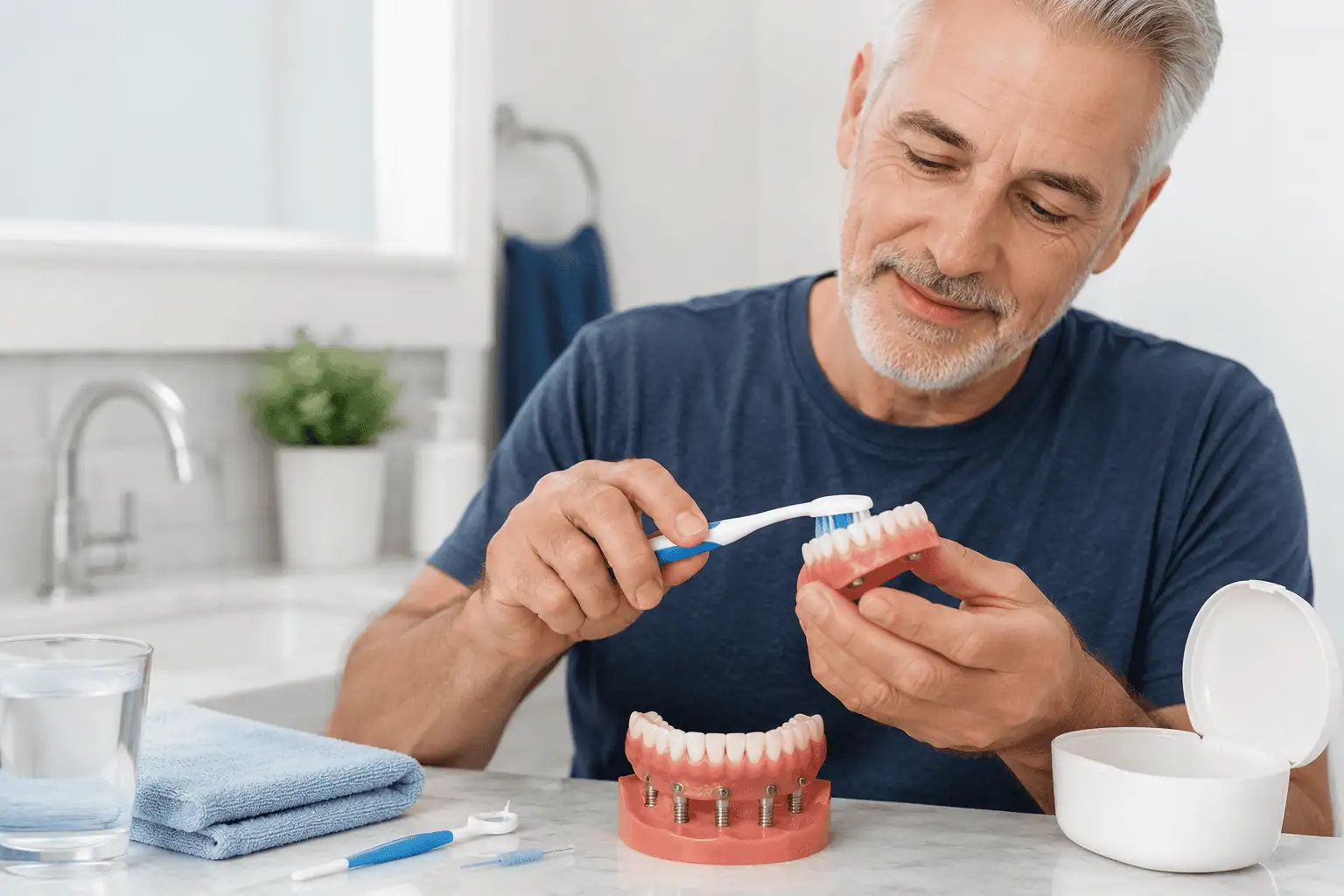
Implant Supported Dentures Still Need Maintenance
Upgrading to implant support does not eliminate denture care.
The denture still needs to be cleaned.
The attachment areas need attention.
The tissues around the implants need to stay healthy.
The bite and fit should continue to be monitored.
Attachment components may also require periodic replacement or adjustment.
This is normal maintenance rather than evidence that the treatment is failing.
Patients considering implant dentures should understand both the benefits and the responsibility that comes with maintaining them properly.
Your Existing Denture Habits May Change
Patients who have relied heavily on adhesive may notice that their routine changes after implant support is added.
Others may find that inserting and removing the denture requires learning a slightly different technique.
Cleaning may also take more attention because the implant connectors and attachment areas need to be kept clean.
Most patients adapt as these habits become part of the normal routine.
The important thing is to receive clear instructions about the specific attachment system being used.
Upgrading Is Not About Making the Denture Impossible to Remove
Some patients hear the word implants and assume the denture will permanently stay in place.
Implant supported denture treatment can take different forms.
Many systems involve a removable denture that gains retention from implants but can still be taken out for cleaning.
This can offer a useful balance.
The patient gets additional security while maintaining the practical advantages of a removable appliance.
The exact treatment design should be discussed during the consultation.
How Do You Know If It Is Time to Consider Implants?
Implants may be worth discussing if the current denture continues to move despite appropriate fit, especially when that movement begins affecting everyday life.
A consultation may be helpful if you are increasingly relying on adhesive, avoiding certain foods, worried about the denture moving in public, struggling with a lower denture, or simply looking for a more secure option.
None of these automatically means implant treatment is required.
They are signs that it may be worth exploring what options are available.
The Best Time to Ask Is Before the Current Denture Becomes a Major Problem
Patients do not need to wait until their denture becomes unbearable before discussing implants.
Treatment planning is often easier when there is time to consider the different options calmly.
If an existing denture is still in reasonable condition, that information can also help determine whether it might be usable during part of the implant process.
Planning ahead gives the treatment team more flexibility.
Conventional Dentures Are Still a Good Option for Many Patients
Implant supported dentures should not be viewed as automatically better for every person.
Many patients do very well with conventional dentures.
A properly designed and well-maintained traditional denture can provide good function, appearance, and comfort.
Implants become valuable when additional retention is needed or desired.
The right choice depends on the individual.
The goal is not to push every denture patient toward implants.
It is to understand what problem needs to be solved and choose the treatment that makes sense.
Can You Upgrade From Traditional Dentures to Implant Supported Dentures Later?
Yes, many patients can explore implant supported dentures after already wearing conventional dentures.
The exact path depends on the condition of the current appliance, implant suitability, bone availability, treatment goals, and the design required.
Sometimes the existing denture can be modified.
Sometimes creating a new implant supported denture is the better choice.
What matters is planning the implants and denture together so the final result works as one complete system.
Book an Implant Supported Denture Consultation
If your current dentures are comfortable but you want greater stability, or if a loose lower denture is beginning to interfere with eating, speaking, or confidence, it may be worth exploring implant support.
Lower Mainland Denture Clinic provides implant supported dentures, dentures over implants, digital dentures, denture relines, repairs, and complete denture treatment.
Call 604-457-3763 to book a consultation and discuss whether your current conventional dentures could eventually be upgraded to an implant supported solution.