
Why Does Speech Change With New Dentures and Can Digital Dentures Help?
Getting new dentures can improve appearance, comfort, and function, but one of the first changes many patients notice is the way they speak. Words may sound slightly different. Certain letters may feel harder to pronounce. The tongue may seem to have less room, and speech can feel less automatic than it did before.
This is a common part of adapting to new dentures.
Speech depends on very precise coordination between the tongue, lips, teeth, palate, and airflow. Even small changes in tooth position or the shape of the denture can affect how certain sounds are formed. The good news is that the mouth is highly adaptable, and most patients become more comfortable with speaking as they adjust to the new appliance.
Modern digital dentures can also help create a more precise starting point by allowing tooth position, denture contours, and bite relationships to be planned carefully before fabrication.
Why Dentures Can Affect Speech
Speaking may feel effortless, but the process is actually highly coordinated.
The tongue touches or approaches different parts of the mouth depending on the sound being made. The lips change shape. Air moves around the teeth. The upper front teeth help form certain sounds, while the palate and tongue play an important role in others.
When dentures replace missing teeth, they also change the surfaces the tongue and lips use during speech.
A new denture may be slightly different in thickness, tooth position, height, or contour compared with what the patient was used to before. Even when those changes are appropriate, the tongue may need time to learn the new environment.
That is why speech can feel different during the first few days or weeks.
Certain Sounds Are More Sensitive Than Others
Some speech sounds are especially dependent on the position of the front teeth and tongue.
Sounds such as “S,” “F,” “V,” and “TH” can be more noticeable when adapting to new dentures.
For example, the “F” and “V” sounds depend partly on the relationship between the upper front teeth and the lower lip. If the position of the upper teeth changes, those sounds may initially feel different.
“S” sounds depend heavily on airflow and the spacing between the tongue and the teeth. Small changes in tooth position or denture contour can temporarily change the way the sound is produced.
This does not necessarily mean something is wrong with the dentures. It may simply mean the tongue and lips need time to adapt.
Tooth Position Plays a Major Role
The position of the front teeth affects much more than appearance.
It also influences speech.
If the front teeth are placed too far forward, too far backward, too high, or too low, certain sounds may become harder to form naturally.
This is one reason denture design needs to balance aesthetics and function.
A smile may look attractive in a static photograph, but the teeth also need to work during speaking, chewing, and everyday movement.
Digital denture planning can help because tooth position can be considered carefully as part of the overall design rather than being treated as a separate cosmetic decision.
Denture Thickness Can Also Affect Speech
The thickness of the denture base can change how the tongue moves and where it contacts the palate.
If a denture feels bulky, the tongue may initially feel crowded.
This can make speech feel less natural, especially for sounds that require the tongue to move quickly or touch specific areas.
Over time, many patients adapt as the tongue becomes familiar with the new shape.
However, if the denture feels unusually bulky or speech continues to feel significantly impaired, a professional assessment may be helpful.
The goal is to distinguish between a normal adjustment period and a design issue that may need correction.
Why Digital Dentures Can Help With Precision
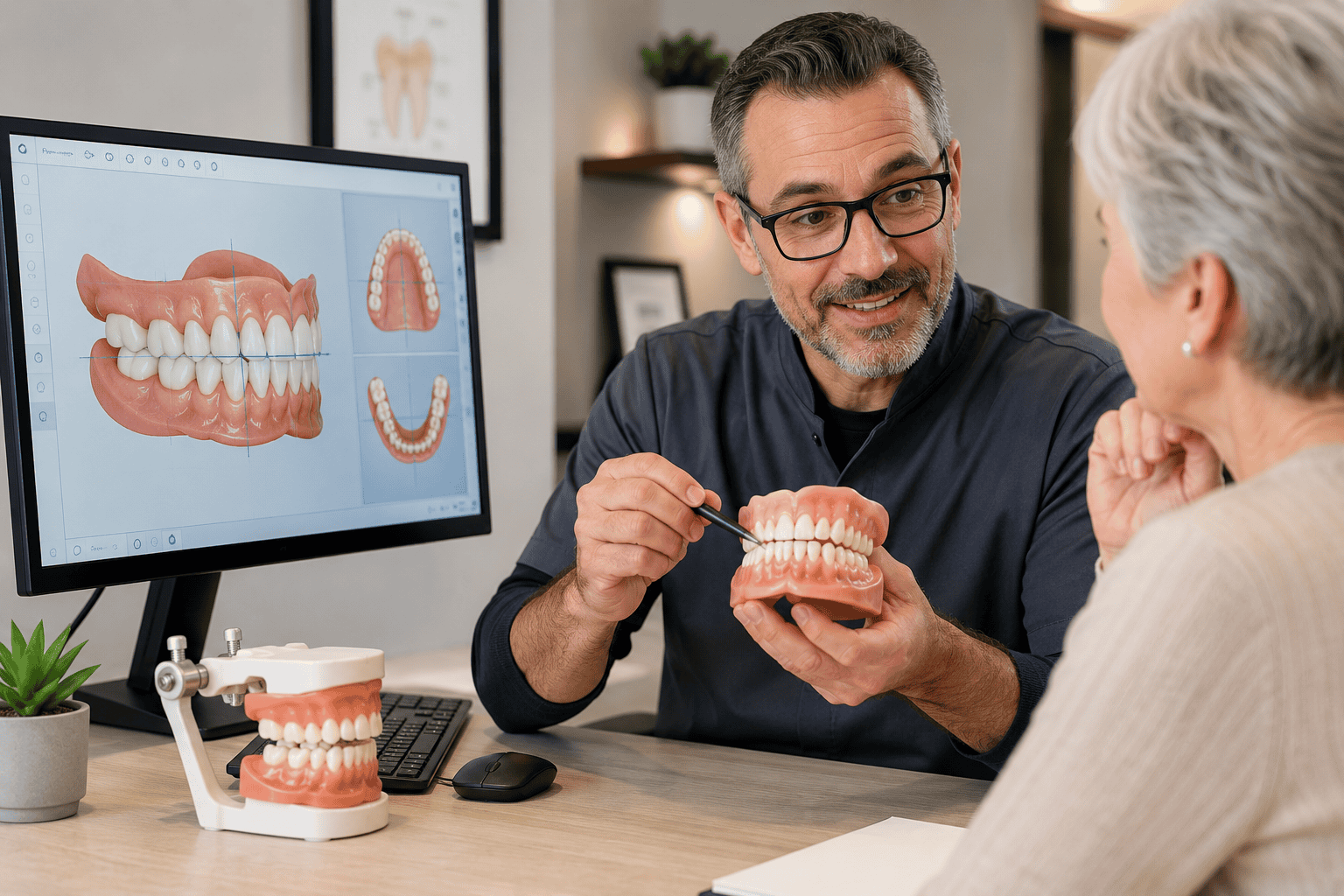
Digital dentures are designed using modern scanning and computer-assisted planning.
This can create more control over the shape, tooth arrangement, and overall design of the denture.
At Lower Mainland Denture Clinic, intraoral scanning can be used as part of the digital workflow, reducing the need for conventional impression trays in many cases.
The digital records can then be used to design the denture with close attention to the relationship between the teeth, bite, and surrounding oral structures.
This precision can support a more predictable result.
It does not mean speech will feel completely normal on the first day, but it can help create a well-planned foundation for adaptation.
Digital Records Can Help Preserve a Familiar Smile
Another advantage of digital dentures is the ability to preserve important design information.
If a patient is replacing an existing digital denture that already worked well for speech, the previous tooth arrangement and design may provide useful information.
This can make it easier to maintain familiar characteristics rather than starting from the beginning.
For patients who were comfortable with their previous smile and speech, preserving those relationships can be valuable.
The new denture may still need adjustments because the mouth changes over time, but digital records can provide a useful reference point.
Why Speech May Feel Different Even When the Denture Fits Well
A denture can fit properly and still feel different when speaking.
Fit and speech are related, but they are not the same thing.
The tongue, lips, and facial muscles have built habits over many years. A new denture changes the environment those muscles are working in.
Even a small change can require adaptation.
For example, a patient may notice a temporary lisp even though the denture feels comfortable and stable.
As the tongue becomes more familiar with the new tooth position and palate contour, speech often becomes more natural.
Practice Can Speed Up the Adjustment Process
One of the best ways to adapt to new dentures is simply to speak more.
Reading aloud can be especially helpful.
Choose a newspaper, book, magazine, or online article and read slowly for several minutes each day.
Pay attention to words that feel difficult.
Repeating those words can help retrain the tongue and lips.
Speaking in front of a mirror can also be useful because it allows the patient to see how the lips and jaw are moving.
The goal is not perfection.
The goal is repetition.
The more the mouth practices with the new denture, the more natural speech can begin to feel.
Start With Slower Speech
Many patients try to speak at their normal speed immediately after receiving new dentures.
That can make the adjustment feel more frustrating.
Speaking slightly more slowly during the first few days can help.
Slower speech gives the tongue more time to find the new positions it needs.
As confidence improves, normal speed usually returns naturally.
This is similar to learning any new physical pattern.
The mouth needs time to adapt.
Use Difficult Words as Practice
If certain sounds feel awkward, choose words that contain them and practice intentionally.
For example, patients struggling with “S” sounds might repeat words that begin or end with “S.”
Those having difficulty with “F” or “V” sounds can practice words that use the front teeth and lower lip.
A few minutes of deliberate practice each day can be more useful than avoiding conversation.
Avoidance can actually slow adaptation because the mouth receives fewer opportunities to learn.
Speaking on the Phone Can Feel Different
Some patients notice that speech concerns become more obvious on the phone.
Without facial expressions or visual cues, people often become more aware of their own voice.
This can make minor pronunciation changes feel more noticeable than they actually are.
Practicing short phone conversations with someone familiar can help rebuild confidence.
Most patients find that once they stop concentrating so heavily on the denture, speech begins to feel more automatic again.
Denture Movement Can Affect Speech
A denture that moves significantly during speaking can make adaptation more difficult.
If the denture shifts when the tongue presses against it, the patient may struggle to form sounds consistently.
This is especially relevant with lower dentures.
A lower denture that lifts or rocks can make speech feel unpredictable.
If movement is the main problem, the issue may not be speech adaptation alone.
The denture fit should be assessed.
In some cases, a denture reline may improve the fit of an existing denture.
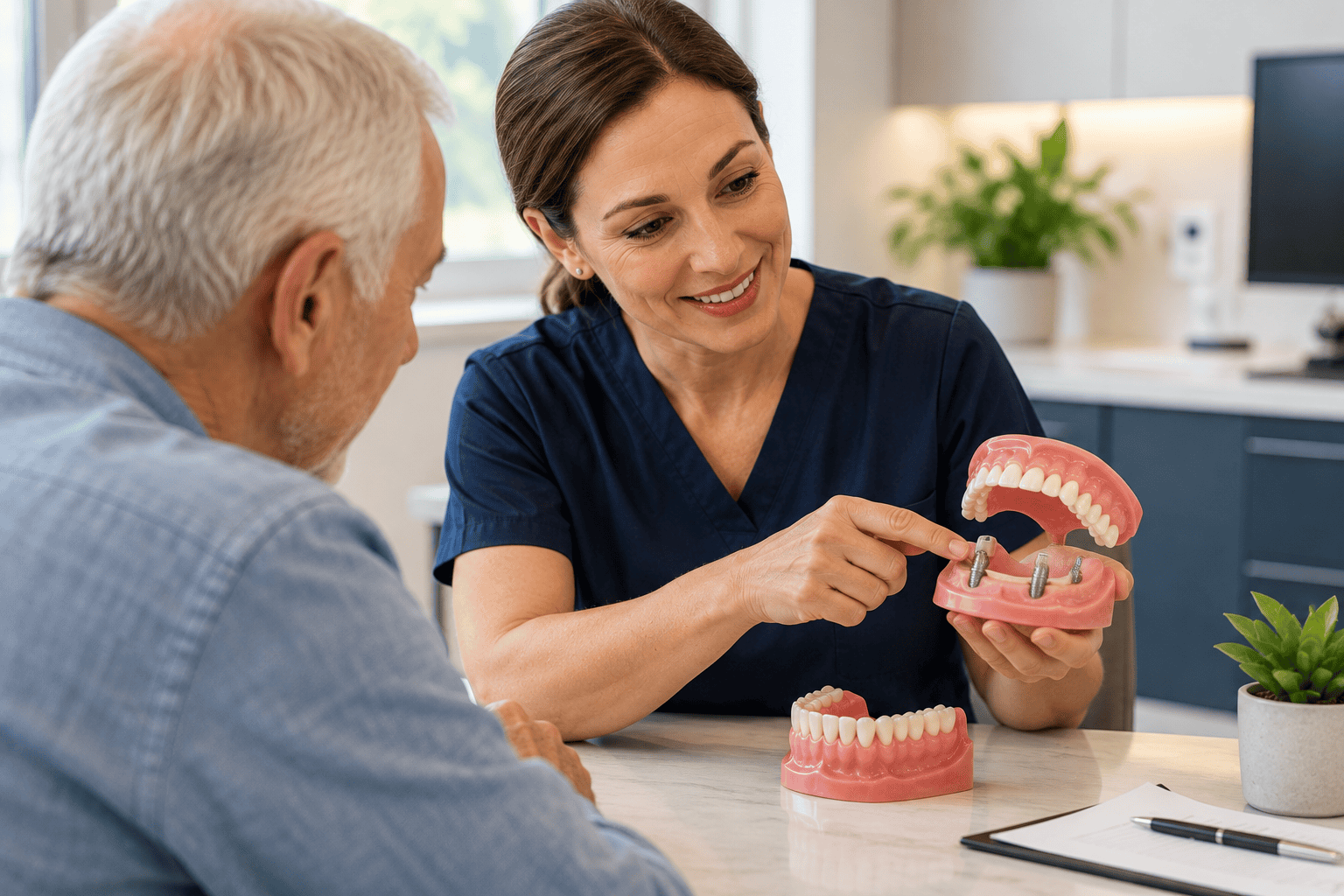
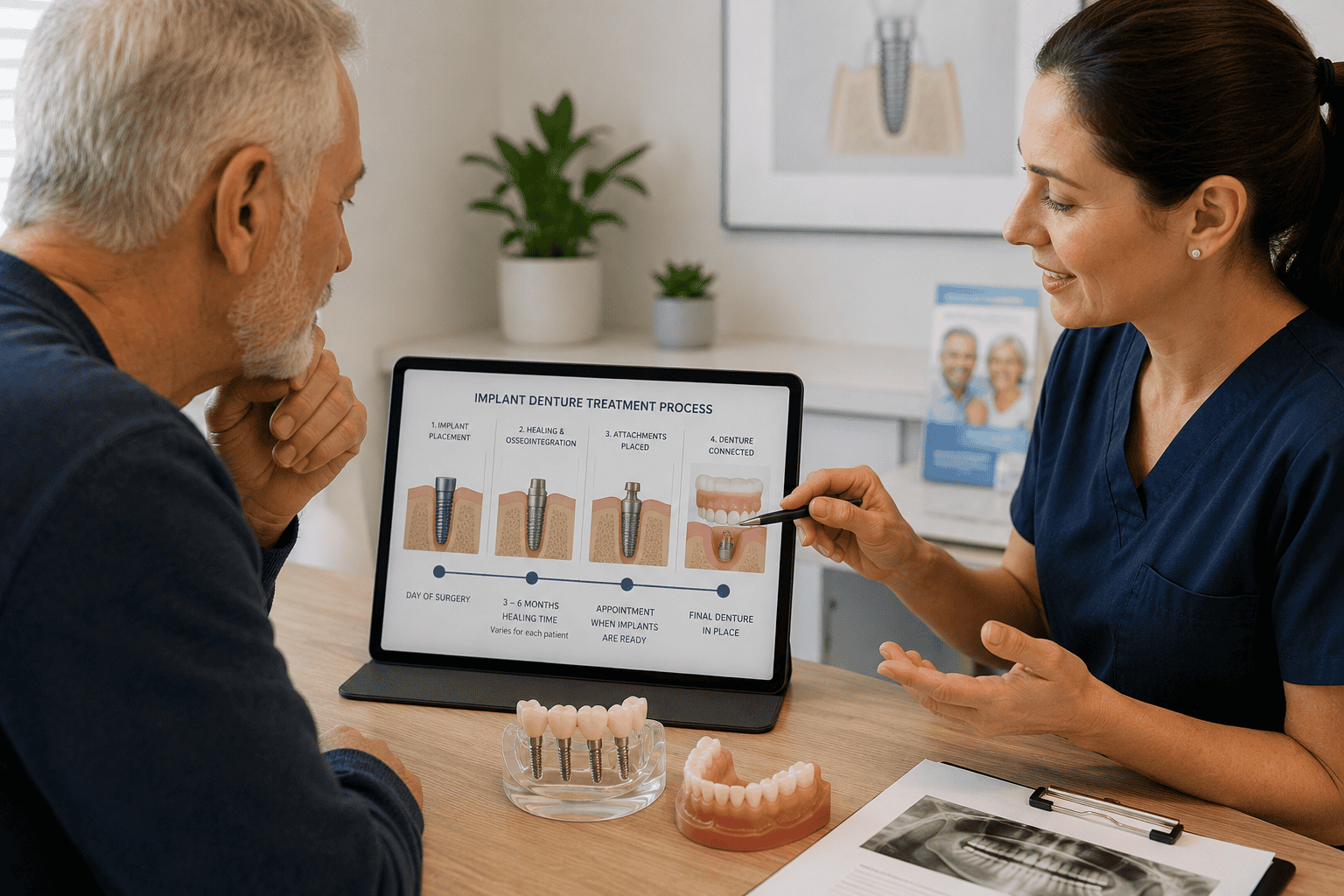
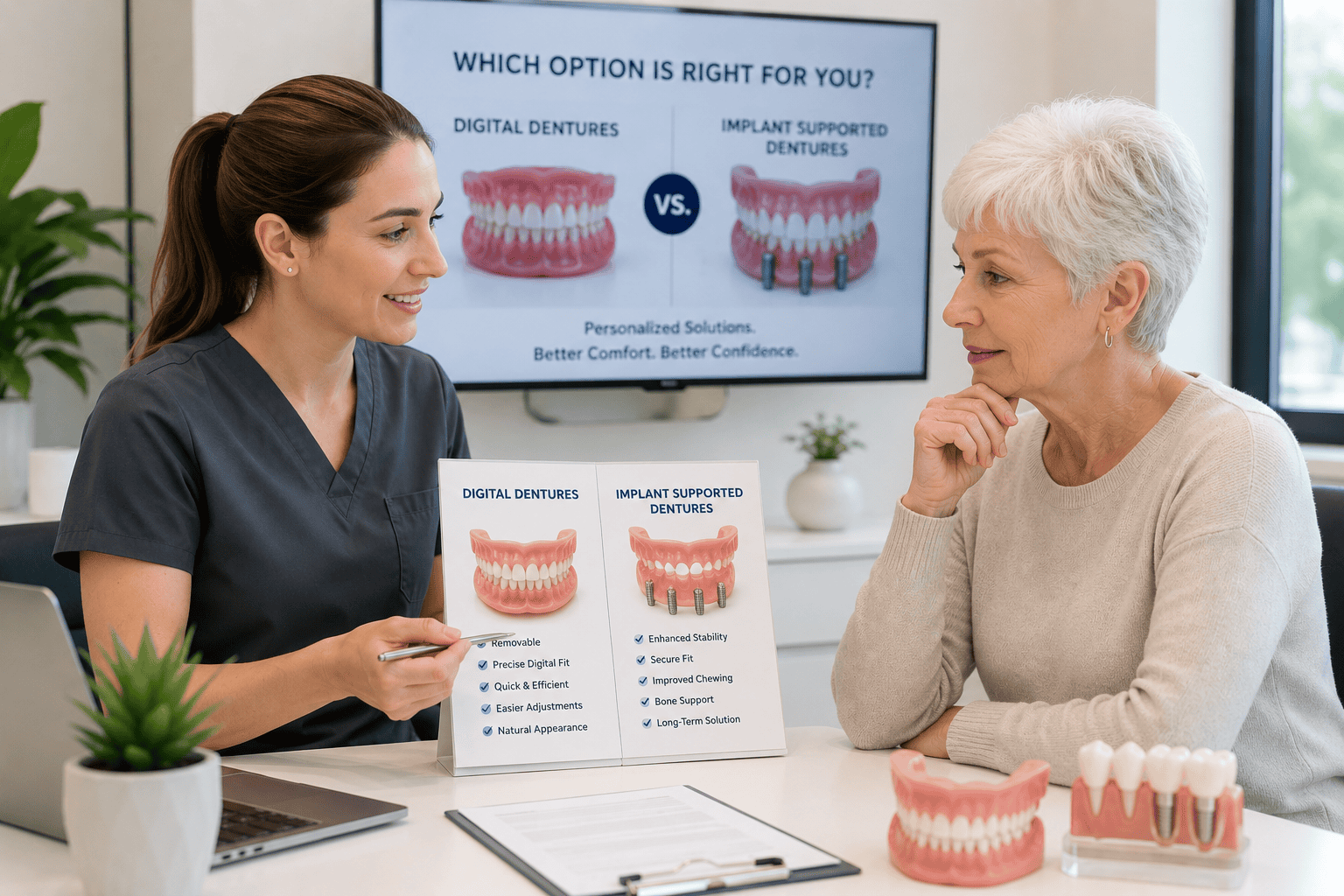
For patients who continue to struggle with retention, implant supported dentures may provide additional stability.
Implant Support Can Help Create a More Stable Speaking Platform
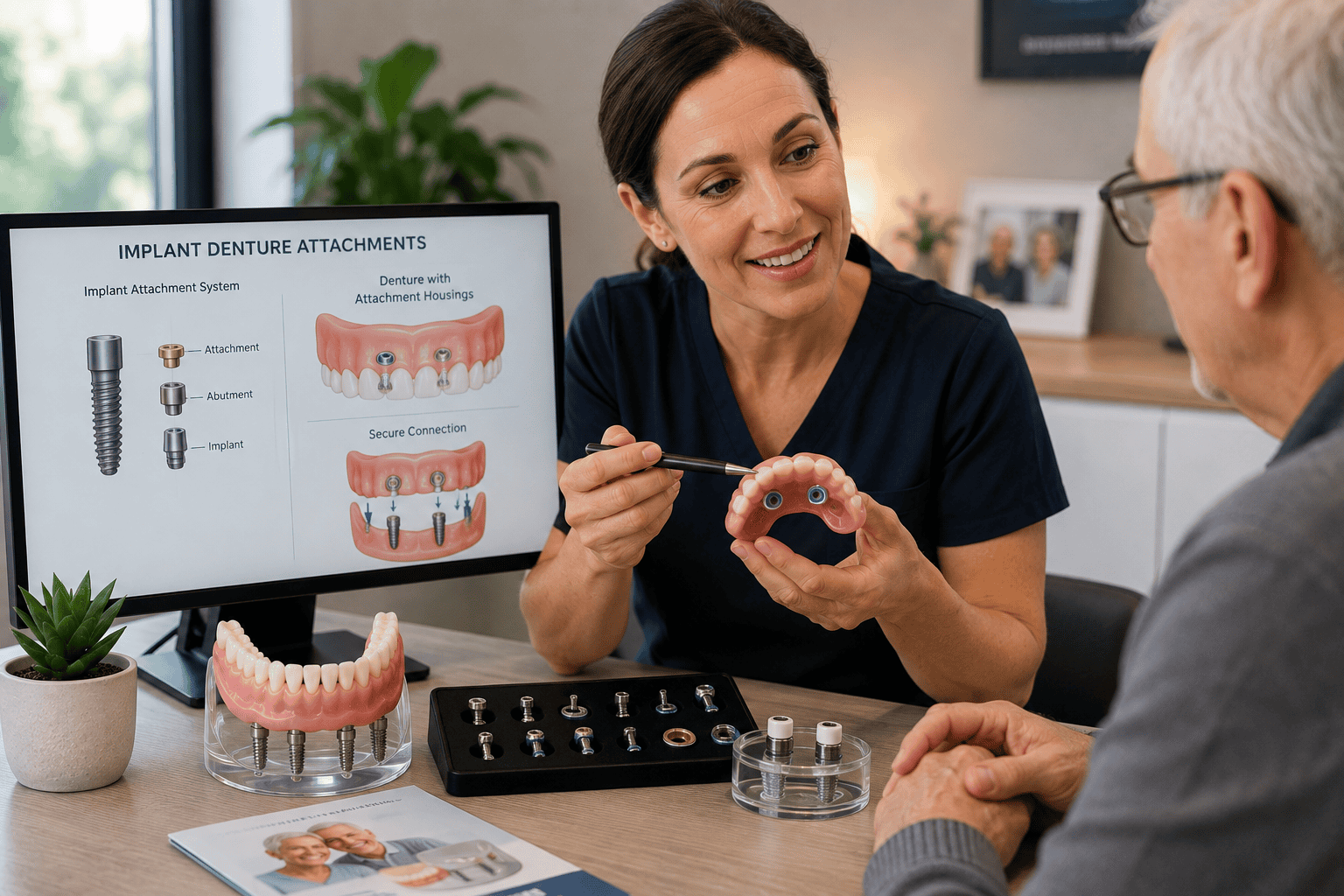
Implant supported dentures can reduce unwanted movement by connecting the denture to dental implants.
This can be especially helpful for lower dentures that move while talking.
A more secure denture gives the tongue a more dependable surface to work against.
That does not mean implant dentures automatically solve every speech issue.
The tooth position, denture contours, and adaptation period still matter.
But improved stability can make speech feel more predictable.
A Loose Denture May Cause Clicking
Clicking sounds while speaking can sometimes be related to denture movement or the way the upper and lower teeth contact.
This may happen when the dentures come together unexpectedly during speech.
Occasional clicking during the adjustment period may improve with practice.
Persistent clicking should be assessed.
The bite may need adjustment, the denture may be moving, or the patient may still be learning to control the appliance.
The cause should be identified rather than simply tolerated.
Saliva Can Temporarily Increase
Some patients notice increased saliva when they first receive new dentures.
The mouth recognizes the appliance as something new and may respond by producing more saliva.
This can make speech feel slightly more difficult during the early adjustment period.
In most cases, saliva production becomes more normal as the mouth adapts.
Sipping water and speaking slowly can help during this stage.
Persistent excessive saliva should be discussed if it continues beyond the expected adjustment period.
Dry Mouth Can Create Different Speech Challenges
While some patients produce more saliva initially, others struggle with dry mouth.
A dry denture can feel less comfortable, and the tongue may not move as easily across oral surfaces.
This can make speaking feel harder.
Patients with persistent dry mouth should discuss it with the appropriate healthcare provider because many factors can contribute, including medications and medical conditions.
The denture itself may not be the only cause.
First-Time Denture Wearers May Need More Time
Patients receiving dentures for the first time may have a longer adjustment period than someone replacing a familiar appliance.
The tongue has never had to work around a full denture before.
The lips and cheeks are also adapting to a new shape.
This can make speech feel unusually noticeable at first.
Patience is important.
The fact that speech feels different during the first week does not mean it will continue to feel that way.
Replacing Older Dentures Can Also Change Speech
Patients who have worn the same dentures for many years may be surprised when a new set temporarily changes their speech.
Older denture teeth may have become worn and shorter.
The bite may have changed.
The tongue may have adapted to the exact shape of the old denture.
A new denture restores different dimensions and positions, which means the mouth needs to adapt again.
This is normal.
In many cases, the new design may actually improve function once the adjustment period is complete.
Why Very Old Dentures Can Affect Speech
As denture teeth wear, the relationship between the upper and lower dentures can change.
The vertical height of the bite may decrease.
Tooth surfaces become flatter.
The tongue may compensate for these changes over time.
When a new denture restores proper tooth height and position, speech can temporarily feel unfamiliar even though the new design is more appropriate.
This is one reason comparing a new denture directly to a very old appliance can sometimes be misleading.
The goal is not necessarily to duplicate every feature of the old denture.
The goal is to create a better current result.
When Speech Problems Should Be Checked
Most speech changes improve with practice and time.
However, a professional assessment may be appropriate if:
speech remains significantly difficult after the normal adjustment period, the denture feels bulky, the front teeth feel obviously misplaced, the denture moves while talking, clicking continues, certain sounds remain consistently difficult, or the patient feels that the tongue does not have enough room.
These issues may be related to the denture design, fit, bite, or another factor.
A small adjustment can sometimes make a noticeable difference.
Do Not Try to Adjust the Denture Yourself
Patients may be tempted to file or reshape an area that feels bulky.
This should be avoided.
Even a small home modification can affect the bite, denture strength, or fit.
If a denture feels too thick or speech remains difficult, book a professional assessment.
The denture can then be evaluated safely.
Confidence Matters Just as Much as Technique
Speech is highly sensitive to confidence.
Patients who become anxious about the way they sound may speak more cautiously, which can make speech feel less natural.
It is important to remember that other people often notice far less than the patient does.
What feels like a dramatic speech change may sound relatively minor to someone else.
Practicing with trusted family members or friends can help.
As confidence improves, speech usually becomes more fluid.
Digital Dentures Support a More Controlled Starting Point
Digital dentures cannot eliminate the need for adaptation.
They do, however, provide modern tools for creating a carefully planned appliance.
Tooth position, denture contours, bite relationships, and overall design can be considered digitally before manufacturing.
That can help reduce unnecessary variability and create a stronger starting point for both function and appearance.
For patients who value precision and want a modern denture experience, digital technology can make an important difference.
Speech, Comfort, and Appearance All Work Together
A successful denture should not be judged by one feature alone.
The teeth should look natural.
The denture should fit comfortably.
The bite should function properly.
The patient should be able to speak with confidence.
These goals are connected.
A poorly positioned tooth may affect both appearance and speech.
A loose denture may affect both comfort and pronunciation.
A bulky design may influence both tongue movement and overall feel.
That is why comprehensive denture planning matters.
Give Yourself Time to Adjust
One of the most important pieces of advice for new denture wearers is simple: give yourself time.
Speech may not feel completely natural on the first day.
That is okay.
The mouth needs practice.
Read aloud.
Speak slowly.
Repeat difficult words.
Have conversations.
Use the denture in normal daily life.
The more consistently the mouth works with the new appliance, the easier adaptation usually becomes.
Book a Digital Denture Consultation
If your current dentures affect your speech, move while you talk, or no longer feel comfortable, a professional assessment can help determine the cause.
Lower Mainland Denture Clinic offers digital dentures, complete dentures, denture relines, repairs, and implant supported dentures based on individual needs.
With digital scanning and modern denture design, treatment can focus on fit, comfort, appearance, and everyday function together.
Call 604-457-3763 to book a consultation and discuss whether new digital dentures could help you feel more confident when speaking.