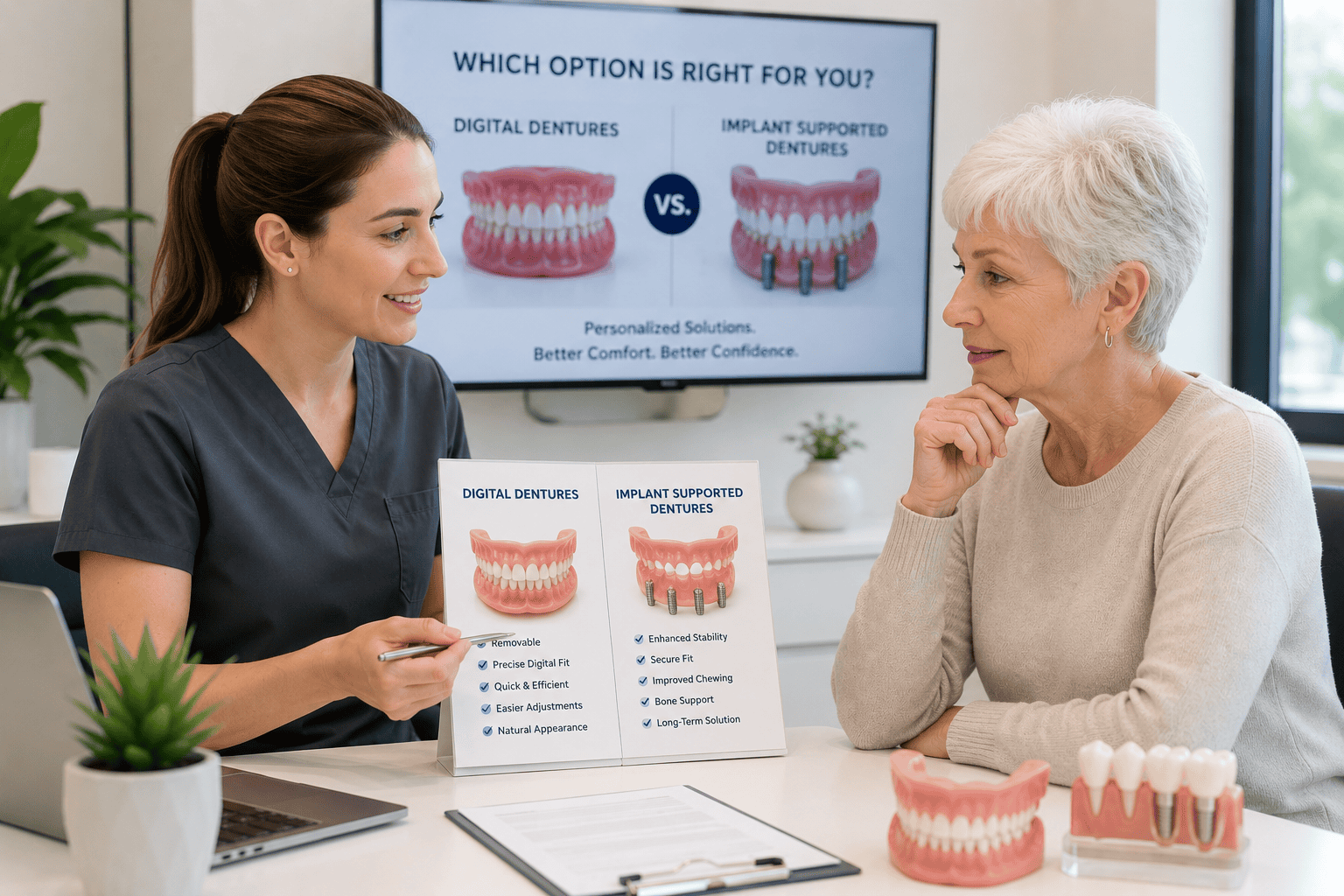
Why Implant Denture Attachments Matter: Understanding the Parts That Keep Your Denture Secure
The Small Components That Make a Big Difference
When people think about implant supported dentures, they usually picture the implants themselves or the denture that sits on top. What often gets overlooked are the attachment components that connect the two.
These attachments play a major role in how secure a removable implant denture feels. They help the denture connect to the implants, resist unwanted movement, and provide the retention that many patients are looking for after struggling with loose conventional dentures.
The attachments are small, but they are one of the most important parts of the system.
Understanding how they work can help patients better understand what “snap-in dentures” actually means, why retention can feel different from one patient to another, and why occasional maintenance is a normal part of implant denture care.
For patients considering implant supported dentures, knowing what happens underneath the denture can make the treatment process much easier to understand.
What Is an Implant Denture Attachment?
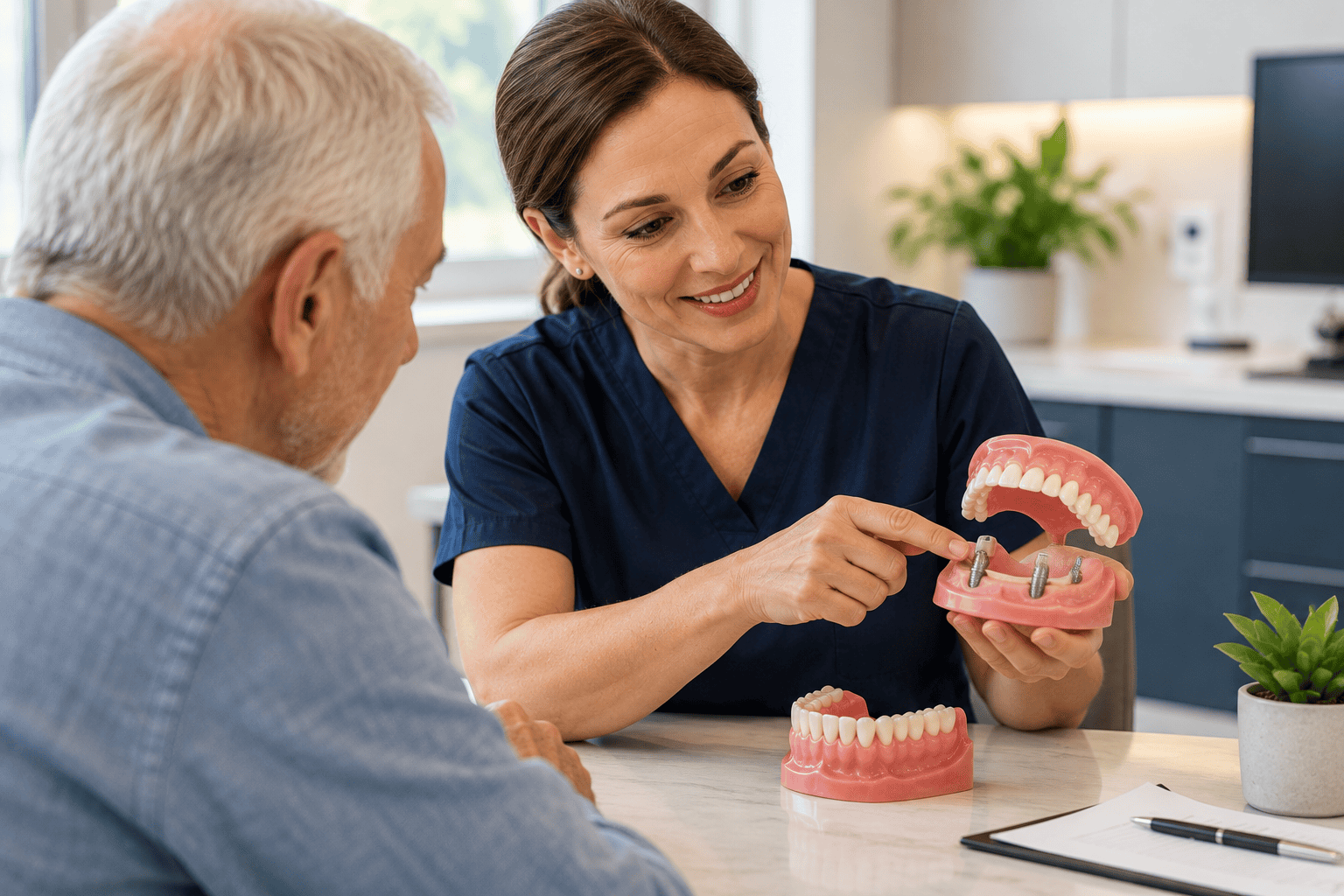
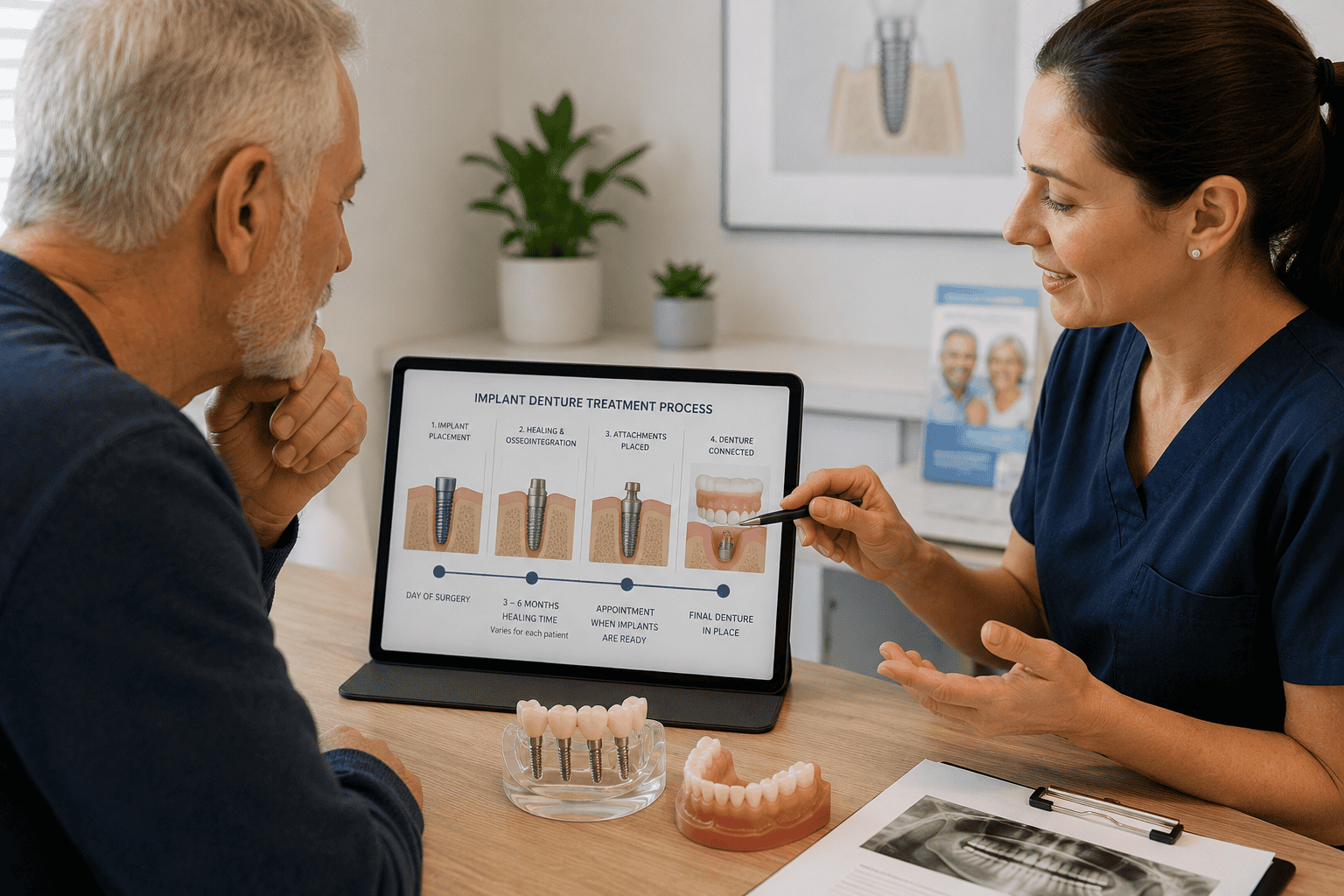
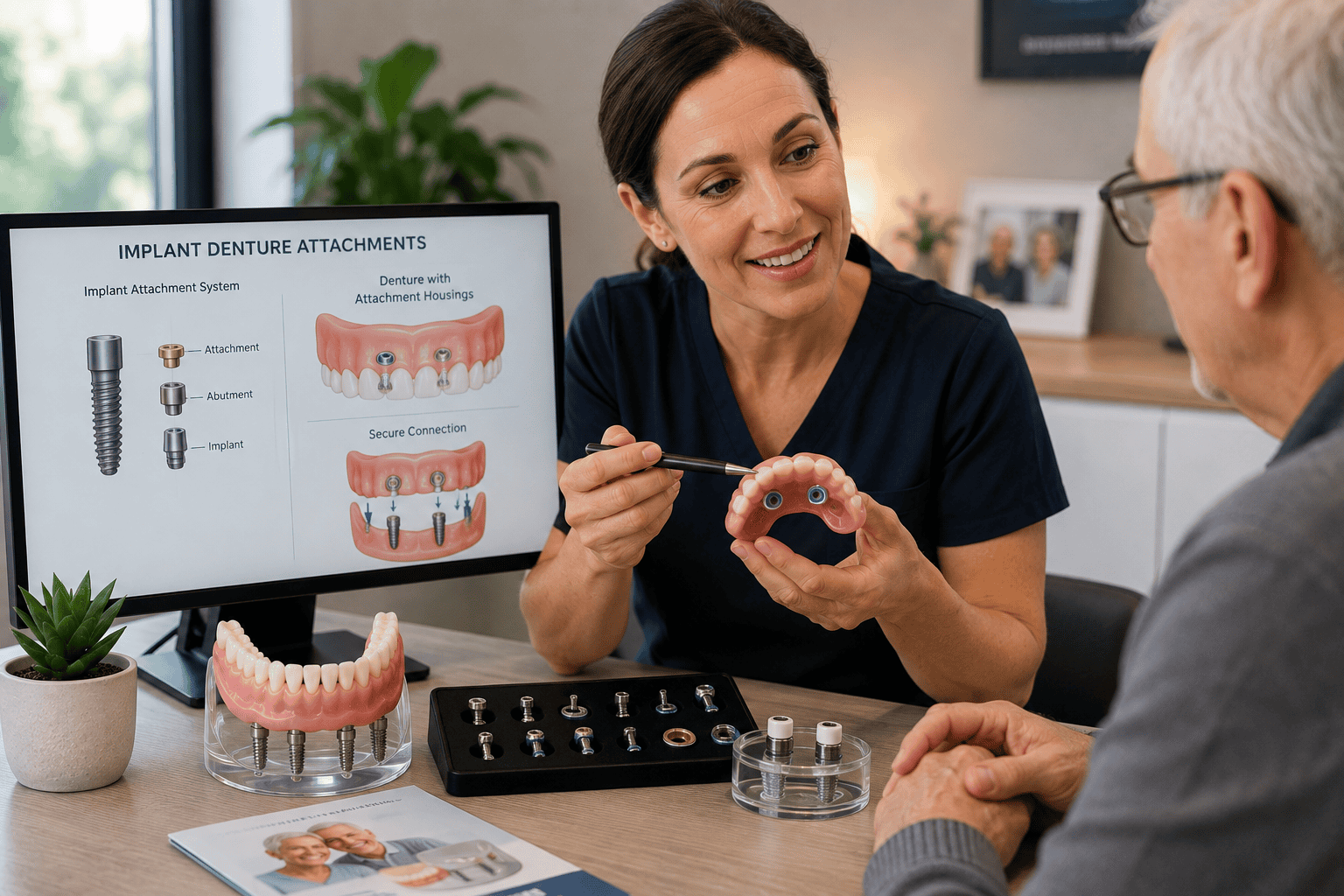
An implant denture attachment is the component that helps connect a removable denture to dental implants.
Instead of relying only on suction, adhesives, or the shape of the gums, the denture is able to connect mechanically to implants placed in the jaw.
Depending on the treatment design, the attachment system may include components attached to the implants and corresponding parts built into the underside of the denture.
When the denture is seated correctly, these components engage and provide retention.
The patient may feel a gentle snap or click as the denture moves into position. That is why removable implant dentures are sometimes casually called snap-in dentures.
The connection helps reduce unwanted lifting and movement while still allowing the denture to be removed for cleaning when the treatment is designed that way.
Why Attachments Matter So Much for Lower Dentures
Lower dentures are often more difficult to stabilize than upper dentures.
The lower jaw provides less surface area for a denture to rest on, and the tongue, cheeks, and floor of the mouth are constantly moving around it.
Even a well-made conventional lower denture can sometimes move more than a patient would like.
Implant attachments provide additional retention by giving the lower denture something more dependable to connect to.
This can reduce:
- lifting during meals
- side-to-side movement
- rocking while speaking
- the feeling that the denture may shift unexpectedly
- dependence on denture adhesive
- the need to constantly control the denture with the tongue
The result can be a denture that feels much more predictable throughout the day.
What Does “Snap-In Denture” Really Mean?
The phrase snap-in denture is helpful because it describes the feeling many patients notice when inserting the denture.
However, the system is more precise than simply snapping plastic onto an implant.
The implant itself is placed in the jaw. A connector or attachment component is associated with the implant, while a corresponding housing or retentive element is built into the denture.
When the denture is placed into position, these components align and engage.
The level of retention is carefully selected. The denture needs to feel secure while being worn, but a removable appliance also needs to be removable without requiring excessive force.
Too little retention may leave the patient feeling that the denture is still loose.
Too much retention can make the denture difficult to remove and may place unnecessary stress on the components.
That balance is part of professional implant denture planning.
Not All Implant Denture Attachments Are the Same
There are several types of attachment systems used with implant retained dentures.
Patients do not usually need to choose an attachment based on a product name. The decision depends on the treatment plan, available space, implant position, jaw anatomy, denture design, maintenance needs, and the clinician’s assessment.
Common attachment concepts can include individual stud-style attachments, bar-supported systems, and other connection designs.
Each system has advantages and considerations.
Some are compact and allow individual implants to provide retention. Others connect multiple implants through a bar before the denture engages with that structure.
The important point is that there is no single attachment design that is automatically right for every patient.
A personalized treatment plan matters more than choosing the system that sounds strongest.
Individual Attachments
With an individual attachment approach, each implant can have its own connector.
Corresponding components are incorporated into the denture so that the appliance engages with those implant locations.
This type of design can provide strong retention while keeping the denture removable.
One advantage is that the components can often be serviced individually. If a retentive insert begins wearing, the entire denture does not necessarily need to be replaced.
The exact design and number of implants vary from patient to patient.
The goal is to create sufficient retention without making the denture unnecessarily complicated.
Bar Supported Dentures
Another approach involves connecting implants with a bar.
The denture then engages with the bar rather than connecting independently to each implant.
Bar systems can provide strong support and may be appropriate in certain treatment plans.
They also require careful cleaning because food and plaque can collect underneath the bar and around the implant areas.
The choice between a bar-supported system and individual attachments depends on multiple clinical factors.
Patients should not assume that one is automatically better than the other.
What matters is which approach works best for the anatomy, implant positions, available space, hygiene needs, and desired denture design.
Why Retention Feels Different From Patient to Patient
Two patients can both have implant supported dentures and still describe the retention differently.
That is because retention depends on more than simply having implants.
Several factors influence how secure the denture feels, including:
- the attachment design
- the number and location of implants
- the condition of the attachment inserts
- the shape and fit of the denture
- the patient’s bite
- jaw anatomy
- wear over time
- how accurately the denture aligns with the implants
A patient should never assume that their denture must feel exactly like someone else’s.
The best level of retention is one that provides security while still allowing the denture to function comfortably and be removed when necessary.
The Denture Still Needs to Fit Properly
Implant attachments improve retention, but they do not replace the need for a properly fitting denture.
The denture base still rests against the tissues of the mouth. If the supporting tissues change significantly over time, the denture may begin rocking even if the attachments themselves are still working.
This is an important distinction.
A patient may think stronger attachments are needed when the actual problem is that the denture no longer fits the gums properly.
In some cases, a denture reline may help restore better adaptation between the denture and the supporting tissues.
The implant attachments and the denture base need to work together.
Strong retention cannot compensate indefinitely for a denture that has become poorly fitting.
Attachment Inserts Can Wear Over Time
Removable implant dentures are inserted and removed repeatedly.
That repeated use creates normal wear on certain attachment components.
Over time, a denture that once snapped firmly into place may begin to feel slightly easier to remove.
This does not automatically mean there is a problem with the implant itself.
Often, the change may be related to a replaceable retentive insert or another serviceable attachment component.
This is one of the reasons regular professional maintenance is important.
Small components can often be replaced or adjusted before the patient experiences a major loss of retention.
Signs Your Attachments May Need Attention
Attachment wear tends to happen gradually.
Patients should watch for changes such as:
- the denture no longer snapping into place as firmly
- one side feeling looser than the other
- increased movement while eating
- the denture lifting more easily
- clicking that was not present before
- difficulty seating the denture fully
- food collecting underneath more often
- the denture rocking despite feeling attached
- difficulty removing a denture that was previously easy to remove
Any noticeable change in retention is worth discussing during a professional appointment.
The solution may be simple, but it is important to identify the actual cause first.
Stronger Is Not Always Better
It is easy to assume that the strongest possible attachment is automatically the best one.
That is not necessarily true.
A removable denture needs enough retention to feel secure, but excessive retention can make the denture difficult to remove.
Patients with reduced hand strength or dexterity may find overly retentive attachments frustrating.
The denture also needs to seat properly without being forced.
The best attachment strength is one that matches the patient’s needs, anatomy, denture design, and ability to insert and remove the appliance comfortably.
Treatment should focus on usable retention, not maximum resistance.
Why Proper Alignment Matters
Implant attachments need to line up accurately with the corresponding parts inside the denture.
If the denture is not seated properly or the components are misaligned, the patient may feel resistance, uneven retention, or difficulty getting the denture fully into position.
This is one reason patients should never force an implant denture into place.
If the denture previously seated easily and suddenly becomes difficult to insert, something has changed.
Possible causes include:
- debris around the attachment
- damage to a component
- a worn insert
- a denture that has changed fit
- a housing issue
- another mechanical problem
Forcing the denture may damage the attachment or create unnecessary pressure on the implant system.
Digital Denture Technology Can Support Precise Planning
Modern digital dentures can also play a role in implant denture treatment.
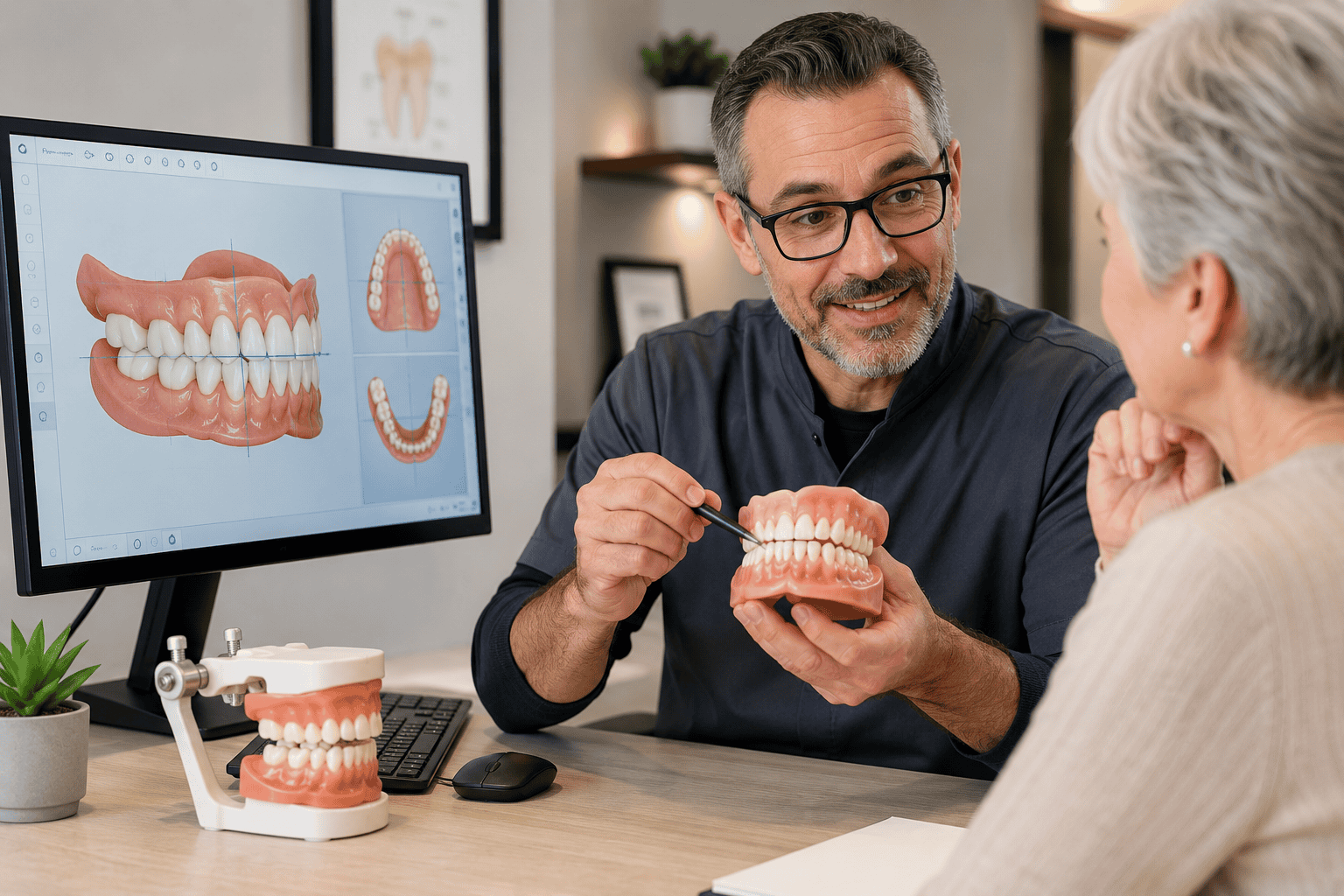
Digital scanning and computer-assisted design allow the denture to be planned with detailed records of the mouth and surrounding structures.
This can support accurate denture design, tooth positioning, bite planning, and coordination with implant components.
Lower Mainland Denture Clinic has increasingly moved toward a digital workflow using intraoral scanning, reducing the need for conventional impression materials in many cases.
That can make the treatment experience more comfortable while also providing detailed digital information for denture planning.
The implants provide the retention.
The digital denture workflow helps create the appliance that needs to connect accurately to them.
Attachments Do Not Eliminate the Need for Cleaning
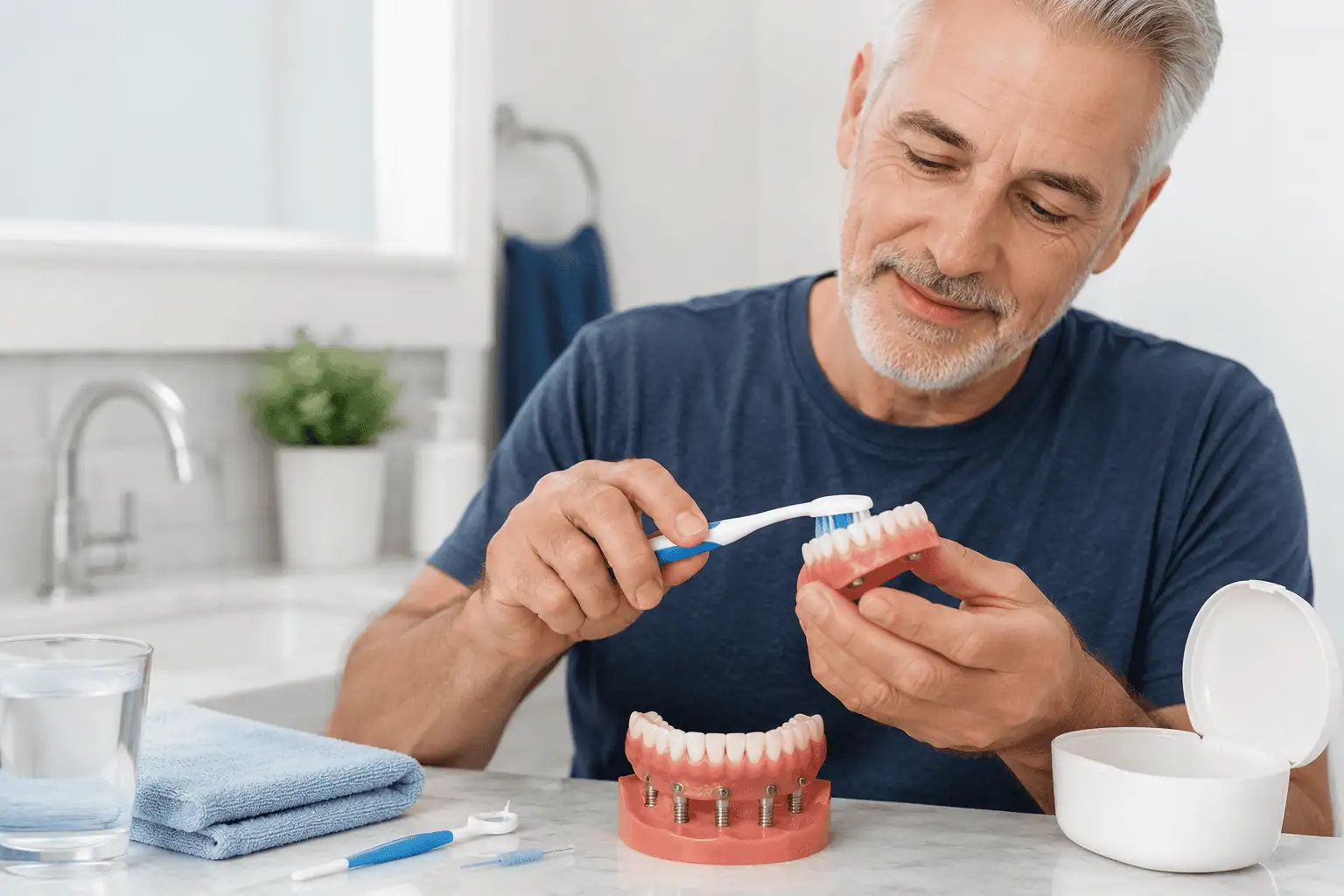
Because attachment systems create small spaces and components under the denture, cleaning is extremely important.
Plaque and food particles can collect around:
- implant connectors
- denture housings
- attachment inserts
- the underside of the denture
- surrounding gum tissues
A removable implant denture should be cleaned according to the instructions provided during treatment.
The implant areas inside the mouth also need daily attention.
Depending on the system, patients may use a soft toothbrush, interdental brushes, flossing aids, or other recommended tools.
Good cleaning protects more than the denture. It also helps support healthy tissues around the implants.
Never Adjust Implant Attachments at Home
Patients may be tempted to fix a loose attachment themselves.
This should be avoided.
Implant attachment systems are designed with specific components and tolerances. Using household tools, glue, online replacement parts, or do-it-yourself repair kits can change how the denture seats.
A home adjustment may also place uneven pressure on one implant.
Do not attempt to:
- tighten attachment components
- remove denture housings
- reshape connectors
- glue loose parts into place
- force inserts into the denture
- file areas around the attachment
- use metal tools around the implants
Professional servicing helps protect the denture and implant system.
What If the Denture Suddenly Feels Loose?
A sudden change in retention should be assessed.
Possible causes include:
- worn attachment components
- a damaged housing
- debris interfering with seating
- changes in denture fit
- a crack in the denture base
- an issue with the bite
- a problem involving the implant or connector
The cause cannot always be identified by how the denture feels.
For example, a worn insert may create looseness that is relatively simple to correct, while a rocking denture may require a more detailed assessment of the base and supporting tissues.
The important thing is not to ignore the change.
What If One Side Feels Tighter Than the Other?
Uneven retention can be another sign that the denture needs attention.
One attachment may have worn more quickly than another.
The denture may also not be seating completely, or the supporting tissues may have changed enough to alter how the appliance sits.
A denture should not need to be forced down on one side.
If one attachment feels significantly tighter or looser, book an assessment.
Small mechanical differences can affect the way the entire denture functions.
Attachments Are Designed to Be Maintained
One of the biggest misconceptions about implant dentures is that once the attachments are installed, they should last forever without servicing.
Implant supported dentures require maintenance.
The implants themselves are intended to provide long-term support, but the removable prosthetic components connected to them experience normal wear.
Attachment inserts may need to be replaced periodically.
The denture may eventually require relining.
Denture teeth can wear.
The bite can change.
Professional maintenance is therefore part of successful implant denture treatment, not a sign that something has gone wrong.
Implant Attachments Can Help Reduce Dependence on Adhesive
Patients with loose conventional dentures sometimes rely heavily on adhesive to feel secure.
Implant retained dentures can reduce the need to depend entirely on adhesive because retention comes from the mechanical connection to the implants.
This can make daily life feel more predictable.
Patients may feel less worried about:
- adhesive losing effectiveness during meals
- applying too much product
- removing adhesive residue
- the denture lifting unexpectedly
- planning meals around denture movement
Implant support does not mean every patient will never use any adhesive under any circumstance, but the attachment system provides a different source of retention.
That can be a meaningful change for someone who has struggled with a loose lower denture for years.
Better Retention Can Improve Confidence
The benefit of attachment systems is not only mechanical.
A denture that feels secure can affect how confidently a patient approaches daily life.
Speaking, laughing, eating, and spending time with other people may feel easier when there is less concern about the denture shifting.
The patient does not have to spend as much attention controlling the appliance.
This is one of the reasons implant supported dentures can make such a noticeable difference for appropriate candidates.
The attachments may be hidden underneath the denture, but their effect is felt throughout the day.
Implant Supported Dentures and Conventional Dentures Solve Different Problems
Not every patient needs implant attachments.
A properly fitting conventional denture can work very well for many people.
If the main problem is simply that an existing denture has become loose over time, a denture reline or replacement denture may be enough to restore comfortable function.
Implant supported treatment becomes more relevant when the patient wants greater retention than a conventional denture can provide.
This is especially common with lower dentures.
A professional consultation can determine whether the issue is caused by:
- an older denture
- changing gum tissues
- poor fit
- bite problems
- denture damage
- limited conventional retention
- a combination of several factors
The treatment should address the cause rather than simply choosing the most advanced option.
The Best Attachment Is the One That Works for the Patient
Patients sometimes research implant denture systems online and arrive at a consultation already convinced that a particular attachment is the best one.
There is nothing wrong with being informed, but implant denture treatment is highly individualized.
The ideal system depends on more than a product name.
The treatment team needs to consider:
- implant location
- available bone and anatomy
- available vertical space
- denture thickness
- bite forces
- cleaning ability
- hand strength
- desired retention
- maintenance requirements
- the existing or planned denture
The right system is the one that provides appropriate retention while remaining practical to clean, maintain, insert, and remove.
A Small Component Can Change the Entire Denture Experience
Implant denture attachments are easy to overlook because patients rarely see them when the denture is being worn.
Yet these small components are responsible for one of the biggest differences between conventional and implant retained dentures.
They create a mechanical connection.
That connection can reduce unwanted movement, improve confidence, and help make a lower denture feel much more dependable.
They also explain why implant dentures require ongoing maintenance.
The attachments work every time the denture is inserted, removed, and used.
Understanding that makes it easier to appreciate why routine checks and occasional component replacement are part of protecting the treatment.
Book an Implant Supported Denture Consultation
If your current dentures move while eating, lift while speaking, or require more adhesive than you would like, implant support may be worth considering.
Lower Mainland Denture Clinic provides implant supported dentures, dentures over implants, digital dentures, complete dentures, denture relines, and repairs.
Call 604-457-3763 to book a consultation and learn whether implant denture attachments could provide the additional retention and confidence you are looking for.