
Can Implant Supported Dentures Make Eating Easier?
When Loose Dentures Begin to Change the Way You Eat
Eating should feel natural, comfortable, and enjoyable. For many people wearing traditional dentures, however, meals can become one of the most frustrating parts of the day. A lower denture may lift while chewing, certain foods may feel difficult to manage, and the fear of movement can make eating around other people uncomfortable.
These problems often develop gradually. A patient may begin cutting food into smaller pieces, chewing only on one side, avoiding harder textures, or choosing softer meals even when they would prefer something else. After a while, these adjustments can feel normal. In reality, they may be signs that the dentures are not providing enough stability.
Implant supported dentures can offer a more secure alternative. By connecting the denture to dental implants placed in the jaw, implant support can reduce unwanted movement and help the denture feel more dependable during meals.
The goal is not to make unrealistic promises that dentures will feel exactly like natural teeth. The goal is to create a more stable foundation so eating can feel less stressful and more comfortable.
Why Traditional Lower Dentures Can Be Difficult During Meals
Lower dentures are often more challenging than upper dentures because they have less surface area available for support. The tongue, cheeks, and muscles of the mouth are also constantly moving around them.
During chewing, a lower denture may lift, rock, or slide. Even small amounts of movement can interfere with the patient’s ability to break down food comfortably. When the denture shifts, the pressure may become uneven, creating irritation or soreness in certain areas.
This can lead to several common habits:
- chewing more slowly than usual
- avoiding foods that require stronger biting
- using only one side of the mouth
- removing the denture during certain meals
- relying heavily on denture adhesive
- eating smaller portions because meals feel tiring
- avoiding restaurants or social meals
These habits may help the patient cope, but they do not correct the underlying lack of stability.
How Implant Supported Dentures Work
Implant supported dentures connect to dental implants that have been placed in the jaw. After the implants have healed and integrated, the denture is designed or modified to attach to them.
The exact design varies. Some implant dentures are removable and snap onto attachment components. Others follow a different treatment plan based on the patient’s oral condition, anatomy, and desired level of support.
The important difference is that the denture no longer relies entirely on the gums for retention. The implants provide additional support that helps reduce lifting and movement during normal use.
This improved connection can be especially valuable for lower dentures. Patients who have spent years trying to control a moving lower denture may notice that meals feel more manageable when the appliance has a more stable foundation.
How Greater Stability Can Improve Chewing
Less Movement During Each Bite
When a denture moves during chewing, the patient has to compensate constantly. The jaw may shift, the tongue may work harder to control the denture, and the patient may avoid placing pressure in areas that feel unreliable.
Implant support can reduce that movement. A denture that stays in place more consistently allows the patient to chew with greater confidence and less distraction.
This does not mean every food immediately becomes easy to eat. Patients still need time to adapt, and some foods may remain more challenging than others. However, improved retention can create a more dependable chewing experience.
More Even Pressure
A denture that rocks may place excessive pressure on one area while losing contact in another. This uneven loading can contribute to discomfort and make chewing feel unpredictable.
Greater stability can help the denture remain more balanced during use. When pressure is distributed more consistently, meals may feel more comfortable and the patient may feel less worried about sudden movement.
Greater Confidence While Chewing
Chewing ability is not only physical. Confidence also matters.
A patient may have enough strength to manage a food but still avoid it because they do not trust the denture. Worry about slipping, clicking, or discomfort can make the meal feel stressful before it even begins.
A more secure denture can reduce that hesitation. Patients may feel more comfortable taking normal bites, chewing on both sides, and eating around family or friends without constantly thinking about the appliance.
Research comparing conventional dentures with implant-retained overdentures has reported improvements in patient satisfaction, stability, chewing ability, comfort, and oral-health-related quality of life, although individual outcomes and treatment designs vary.
Foods That May Feel Easier With Better Denture Stability
Every patient adapts differently, and no denture treatment guarantees that all foods will become easy. Still, improved stability may make a wider variety of foods feel more manageable.
Patients may feel more comfortable with foods such as:
- cooked vegetables
- softer meats cut into manageable pieces
- sandwiches with softer bread
- pasta and rice dishes
- fruits without hard skins or seeds
- eggs and other protein-rich foods
- firmer foods that previously caused the denture to lift
The process is usually gradual. It is better to reintroduce foods carefully rather than testing the denture with the hardest or stickiest foods immediately.
Start with smaller pieces, chew slowly, and use both sides of the mouth where possible. Balanced chewing can help keep pressure more even and reduce the tendency to overload one area.
Foods May Still Require Care
Implant supported dentures can improve stability, but they are not indestructible. Certain foods may still require caution.
Very hard foods can place excessive stress on the denture teeth, base, and attachment components. Sticky foods may pull at a removable denture or collect around attachments. Biting directly into very hard foods with the front teeth may also create unnecessary leverage.
Examples that may require extra care include:
- hard candies
- ice
- popcorn kernels
- very hard nuts
- sticky caramel
- tough meat that has not been cut properly
- hard crusts
- foods containing small bones
The purpose of implant support is to improve function, not to remove the need for sensible habits. Protecting the denture and its attachments helps preserve the result over time.
Better Eating Can Support a More Varied Diet
When dentures feel unstable, patients may begin choosing foods based on what the denture can tolerate rather than what they actually enjoy. This often means relying heavily on soft foods.
Soft foods can still be nutritious, but a restricted diet may make it harder to maintain variety. Some patients begin avoiding vegetables, meats, fruits, or other foods that require more chewing.
A more stable denture may make it easier to expand food choices gradually. This can help meals feel more enjoyable and may support a broader eating routine.
Implant-supported treatment should not be viewed as a substitute for nutritional advice. Patients with dietary restrictions, swallowing concerns, or medical conditions should continue following guidance from the appropriate healthcare professionals. However, improving denture stability may remove one practical barrier that has been limiting food choices.
Eating in Public Can Feel More Comfortable
Loose dentures often affect social confidence as much as chewing. A patient may feel comfortable eating at home but avoid restaurants, family gatherings, or meals with friends because they are worried about movement.
They may fear that the denture will click, lift, trap food, or make speech difficult during the meal. Even when other people do not notice, the patient may feel distracted and self-conscious.
A more secure denture can reduce some of that worry. When the appliance feels dependable, patients may be more willing to eat normally, join conversations, and enjoy the social side of a meal.
This emotional benefit is easy to underestimate. Food is connected to family, celebrations, travel, and daily routines. Being able to participate with greater confidence can improve far more than chewing alone.
Are Implant Supported Dentures the Same as Natural Teeth?
Implant supported dentures can provide a major improvement in stability, but they should not be described as identical to natural teeth.
A removable implant denture is still a denture. It still needs to be cleaned, maintained, and handled carefully. The patient may still notice differences in sensation, chewing efficiency, and the way certain foods feel.
The gums and supporting tissues can also change over time. Attachment components may wear and require replacement. The denture may need professional adjustments, relining, or repair as the years pass.
Realistic expectations are important. Implant support can make dentures feel more stable and dependable, but successful treatment still requires adaptation and ongoing care.
Why the Lower Denture Often Shows the Biggest Improvement
Patients frequently seek implant support because of problems with a lower denture. The lower arch presents more challenges for retention, and movement can be especially noticeable during meals.
An upper denture often gains support from a larger surface area and may feel more secure for some patients. The lower denture sits in a more active environment, surrounded by the tongue, cheeks, and floor of the mouth.
For someone whose lower denture lifts or rocks repeatedly, even a moderate improvement in retention can make meals feel very different. The patient may spend less effort controlling the denture and more time simply chewing.
That is why dentures over implants are often considered when lower denture instability has become a persistent problem.
What If the Existing Denture Is Simply Loose?
Not every loose denture automatically requires implants. Sometimes an existing denture has become unstable because the gums and supporting tissues have changed.
If the denture remains in otherwise good condition, a professional denture reline may improve the fit against the gums. A reline updates the fitting surface of the denture rather than replacing the entire appliance.
A repair or reline may be appropriate when:
- the denture previously fit well
- looseness developed gradually
- the denture teeth and base remain in good condition
- there is no major fracture or distortion
- the main concern is a changing fit
Implant support becomes more relevant when the patient wants greater retention than a conventional removable denture can provide or when lower denture movement continues despite appropriate fit and professional care.
A proper assessment helps separate a fit problem from a retention problem.
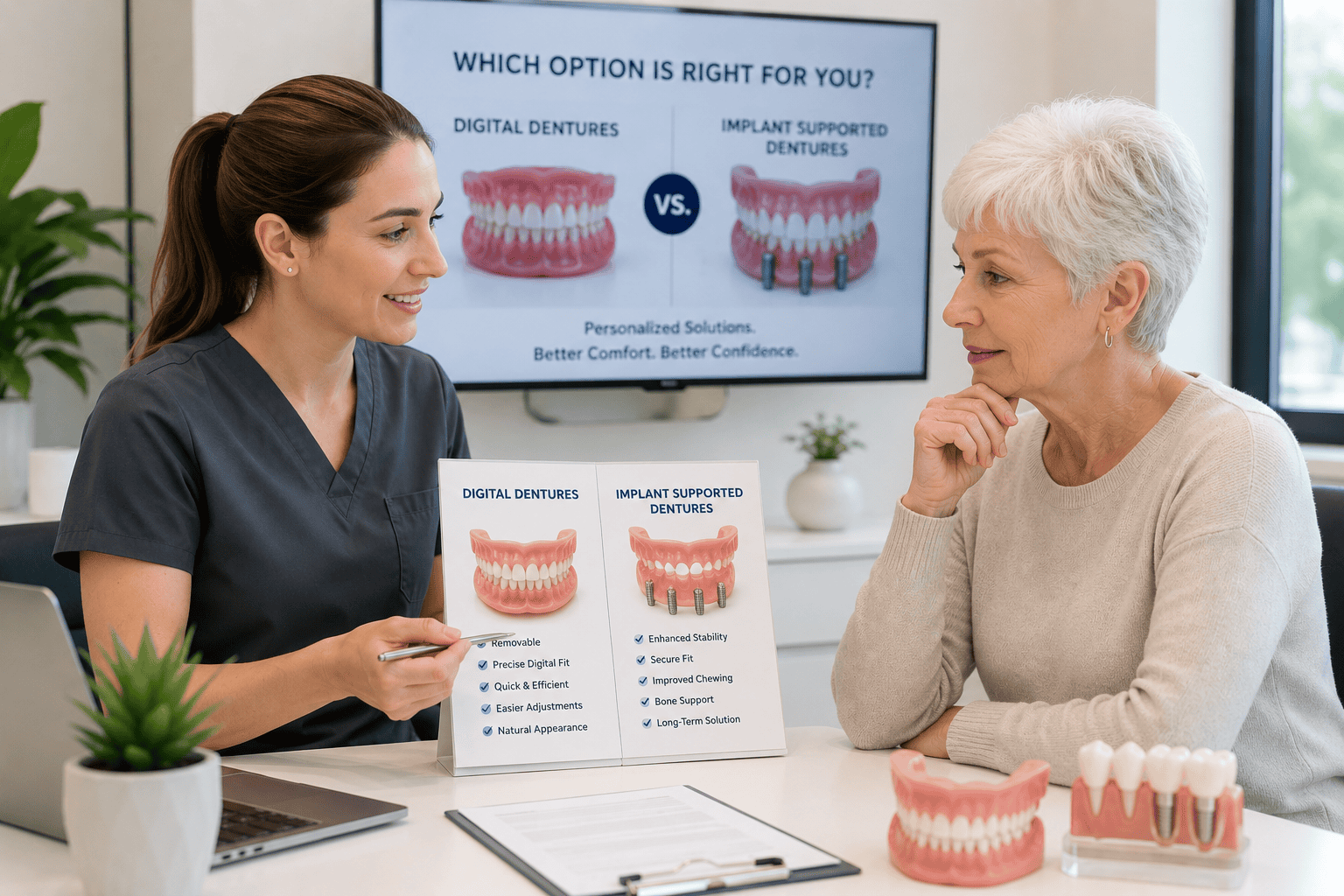
Digital Dentures and Implant Support Can Work Together
Digital dentures and implant supported dentures are not necessarily competing treatments.
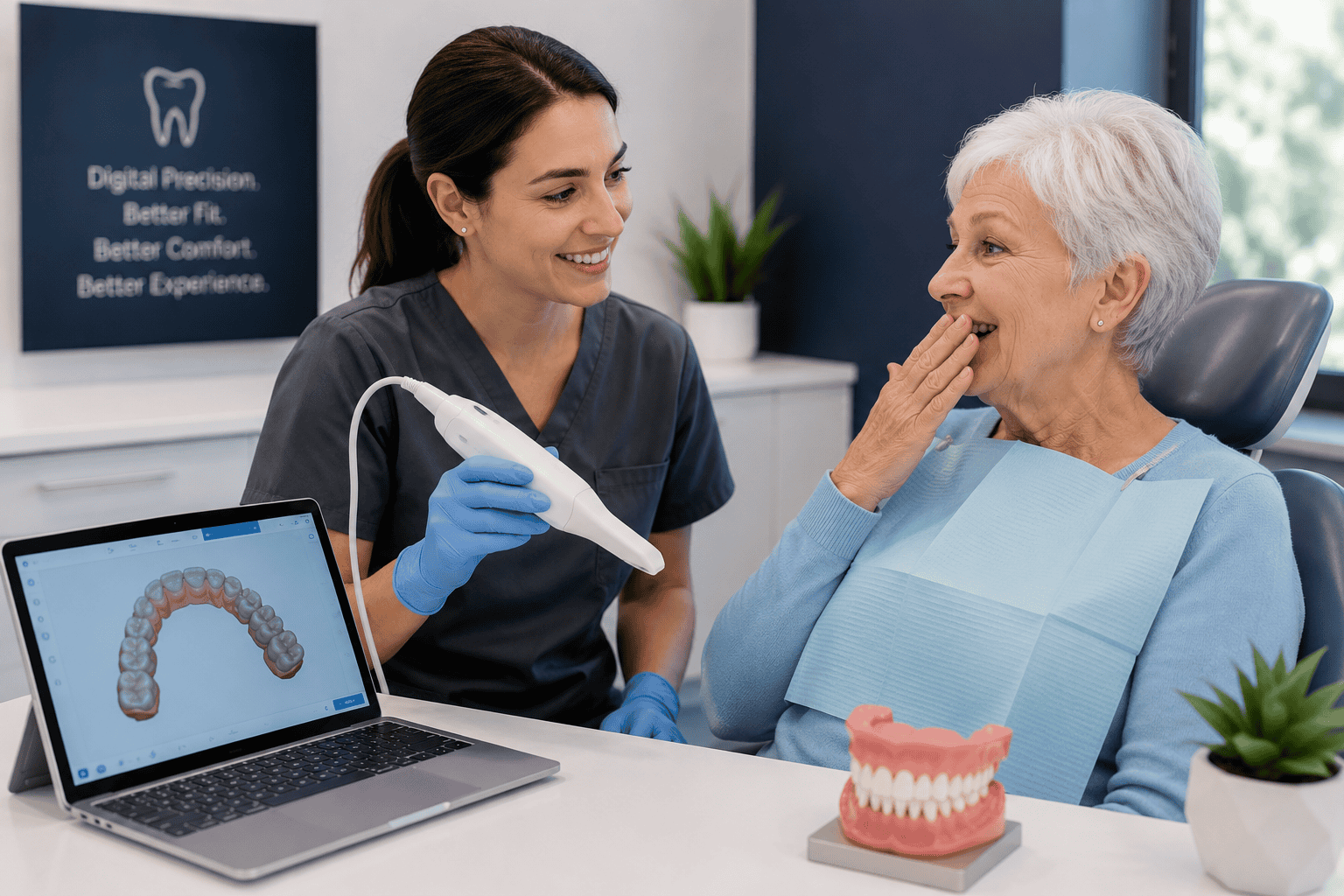
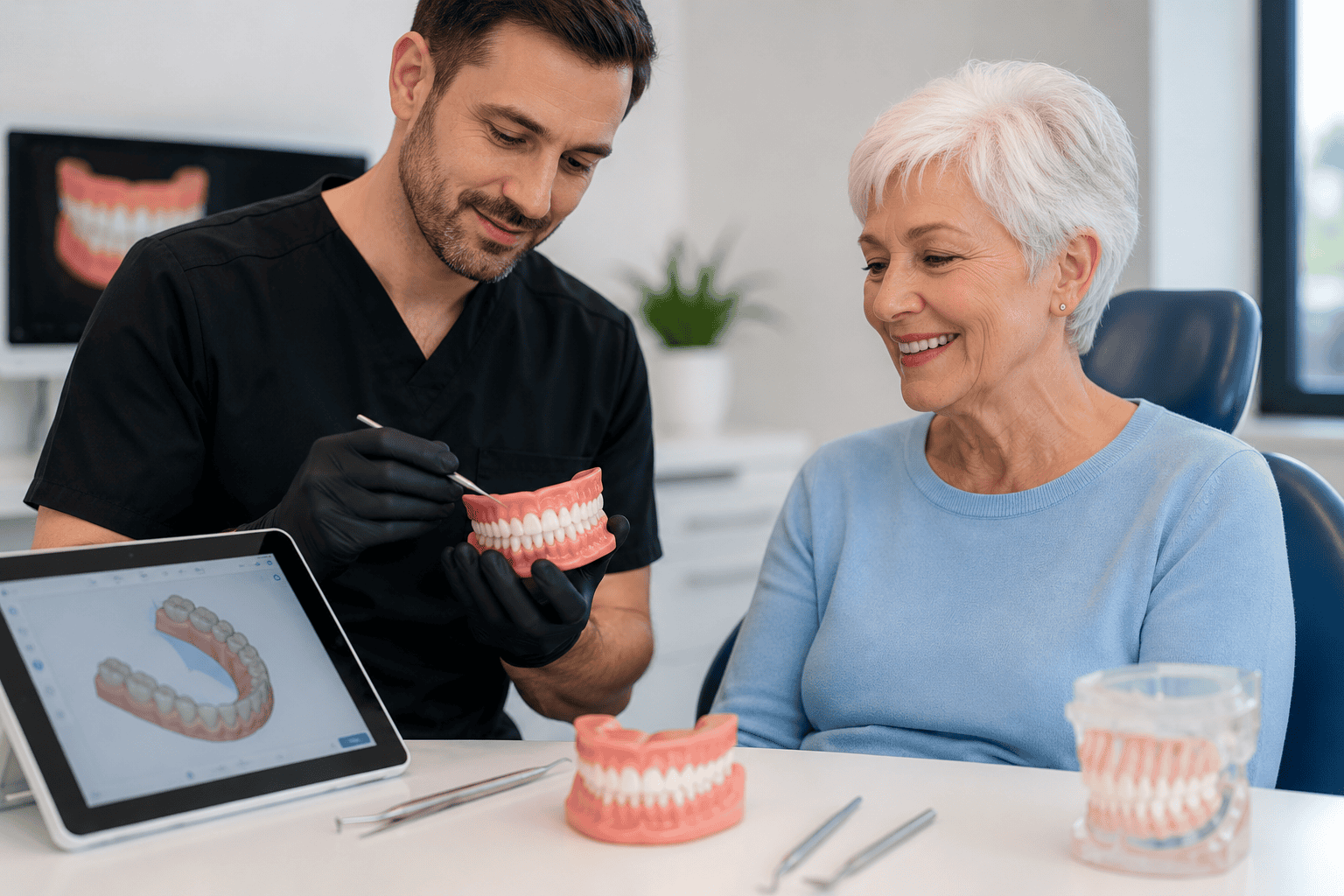
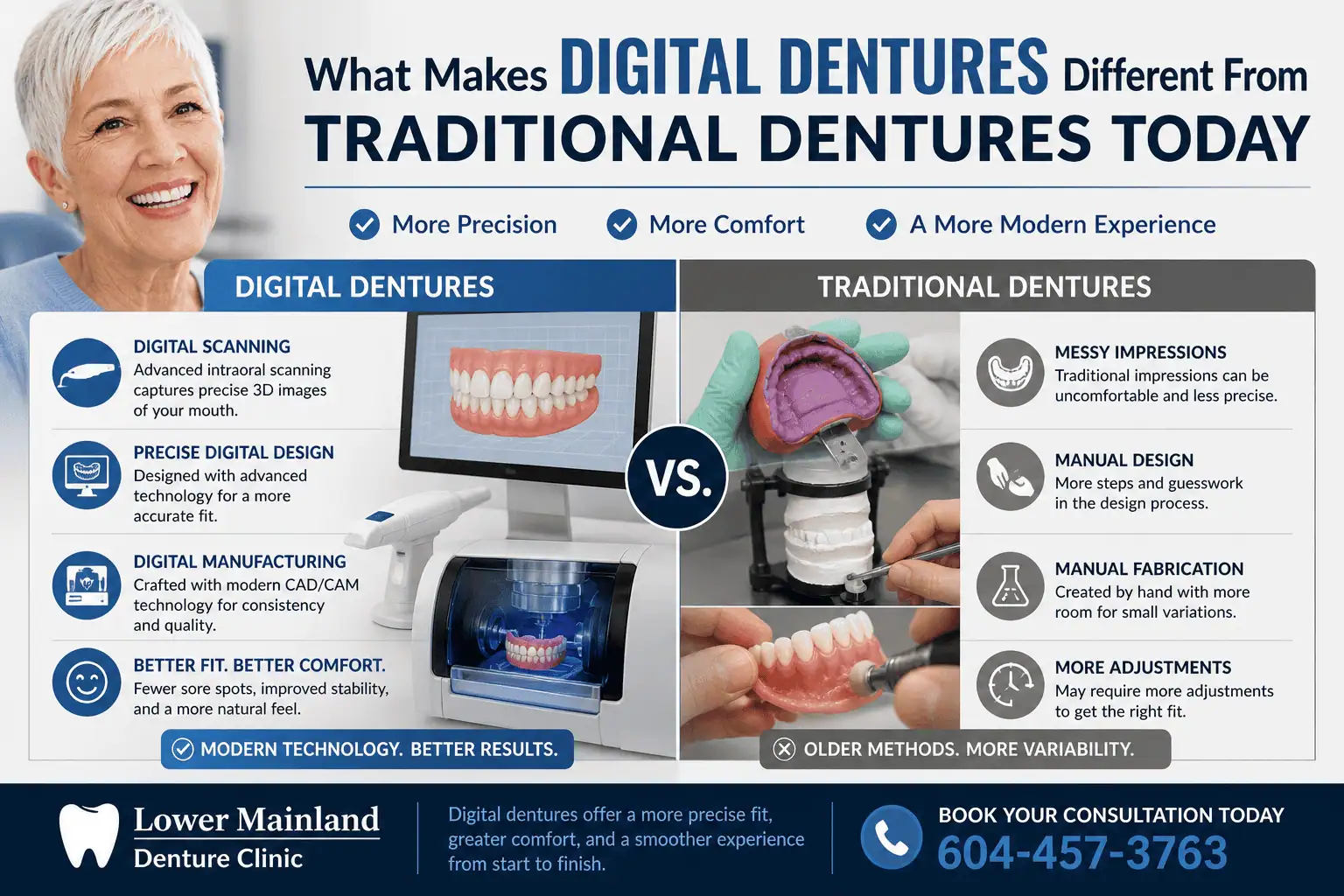
A patient may benefit from the precision of a digital denture while also receiving the added security of implant support. Digital scanning and computer-aided planning can contribute to a modern denture workflow, while implants address the need for stronger retention.
This combination can be especially useful when the treatment goal includes:
- a more precise denture design
- improved comfort
- stronger lower denture stability
- a more natural appearance
- greater confidence during meals
- more organized digital treatment records
The final treatment plan depends on the individual. Some patients need a new digital denture. Others need implant support. Some may benefit from both.
The Importance of a Gradual Adjustment Period
Even with improved stability, patients should allow time to adapt.
The muscles of the mouth may have spent years compensating for a loose denture. Chewing patterns may need to change. Foods that were avoided for a long time may take practice to manage comfortably again.
A gradual approach is usually best:
- Begin with softer, familiar foods.
- Cut food into smaller pieces.
- Chew slowly and evenly.
- Add firmer textures as confidence improves.
- Stop if a food causes pain or unusual movement.
- Book an assessment if soreness continues.
Some tenderness can occur while adapting to a new denture, but persistent pain should not be ignored. An area that rubs repeatedly may require a professional adjustment.
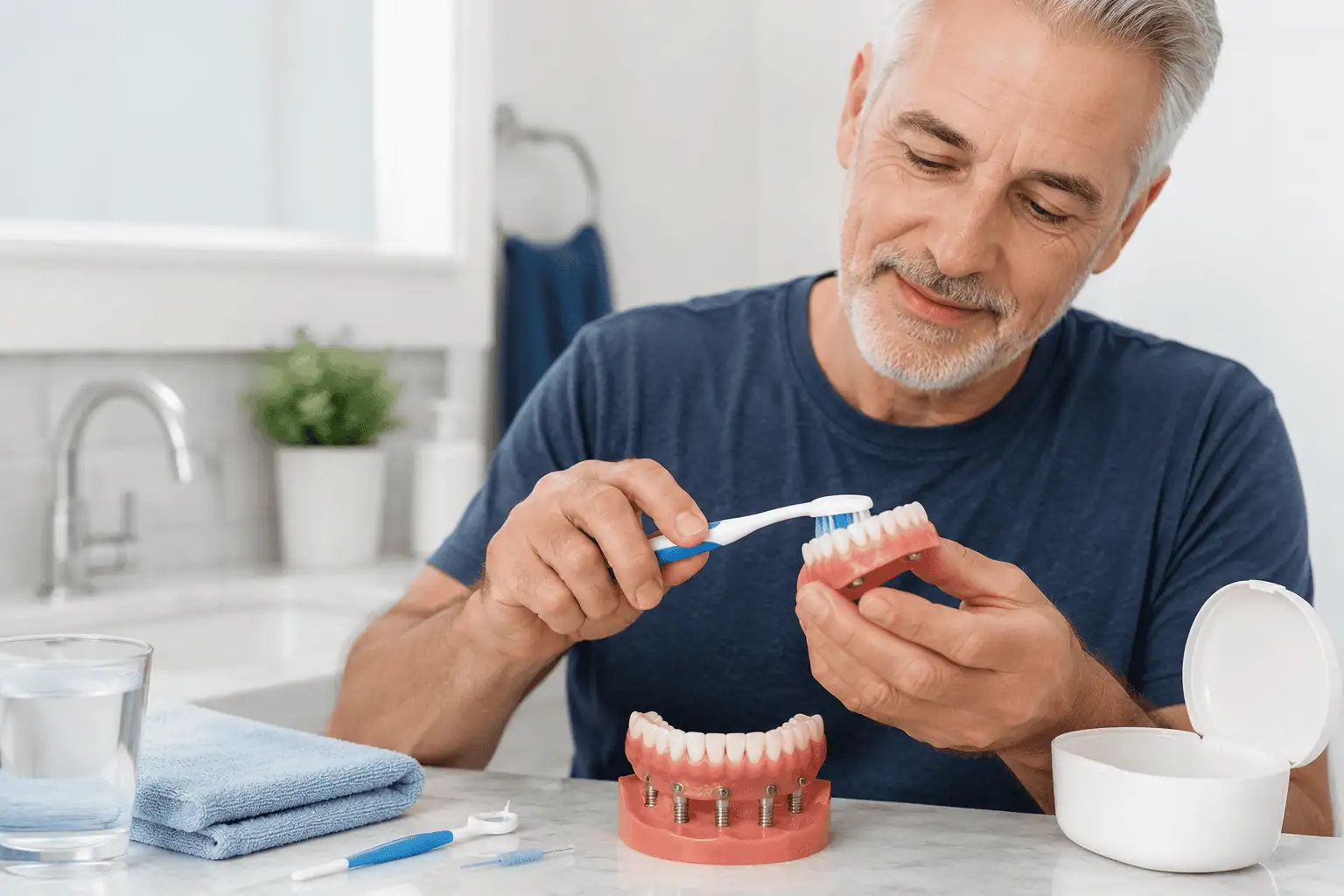
Implant Dentures Require Maintenance
The improved stability of implant supported dentures depends partly on the attachment components. These components are used repeatedly and can wear over time.
A denture that once snapped securely into place may gradually feel easier to remove. One side may feel less retentive, or the denture may begin moving more during meals.
This does not automatically mean the implants have failed. The issue may be a worn attachment insert, a change in fit, buildup around a connector, or another serviceable component.
Daily cleaning and professional maintenance help protect the implants, attachments, denture, and surrounding tissues. Patients should pay attention to changes rather than waiting until the denture feels significantly loose.
Signs That Eating Problems Need Professional Attention
Contact the clinic when:
- the denture lifts repeatedly during meals
- chewing causes persistent pain
- sore areas return in the same location
- the denture rocks from side to side
- one attachment feels different from the others
- the denture no longer snaps into place securely
- food collects underneath more than before
- a denture tooth chips or breaks
- the bite suddenly feels uneven
- the implant area becomes swollen, tender, or irritated
A small adjustment may be enough to restore comfort, but the cause should be identified before it becomes a larger problem.
Can Implant Supported Dentures Make Eating Easier?
For many appropriate candidates, implant supported dentures can make eating feel easier by improving retention and reducing unwanted movement.
The biggest difference is often confidence. A patient who trusts the denture may feel more comfortable chewing, trying a wider range of foods, and eating with other people.
Results vary, and implant dentures do not recreate every sensation or function of natural teeth. They also require maintenance and realistic expectations. However, for patients who have struggled with a loose lower denture, the improvement can be meaningful.
A secure denture can help meals feel less like a challenge and more like a normal part of the day.
Book an Implant Denture Consultation
Lower Mainland Denture Clinic offers implant supported dentures, dentures over implants, digital dentures, complete dentures, and same day denture repairs and relines.
If loose dentures are limiting what you eat or making meals less comfortable, call 604-457-3763 to arrange a consultation.
A personalized assessment can determine whether a reline, new digital denture, implant-supported solution, or another treatment path is best suited to your needs.