Can Implant Supported Dentures Help If Denture Adhesive Is No Longer Enough?
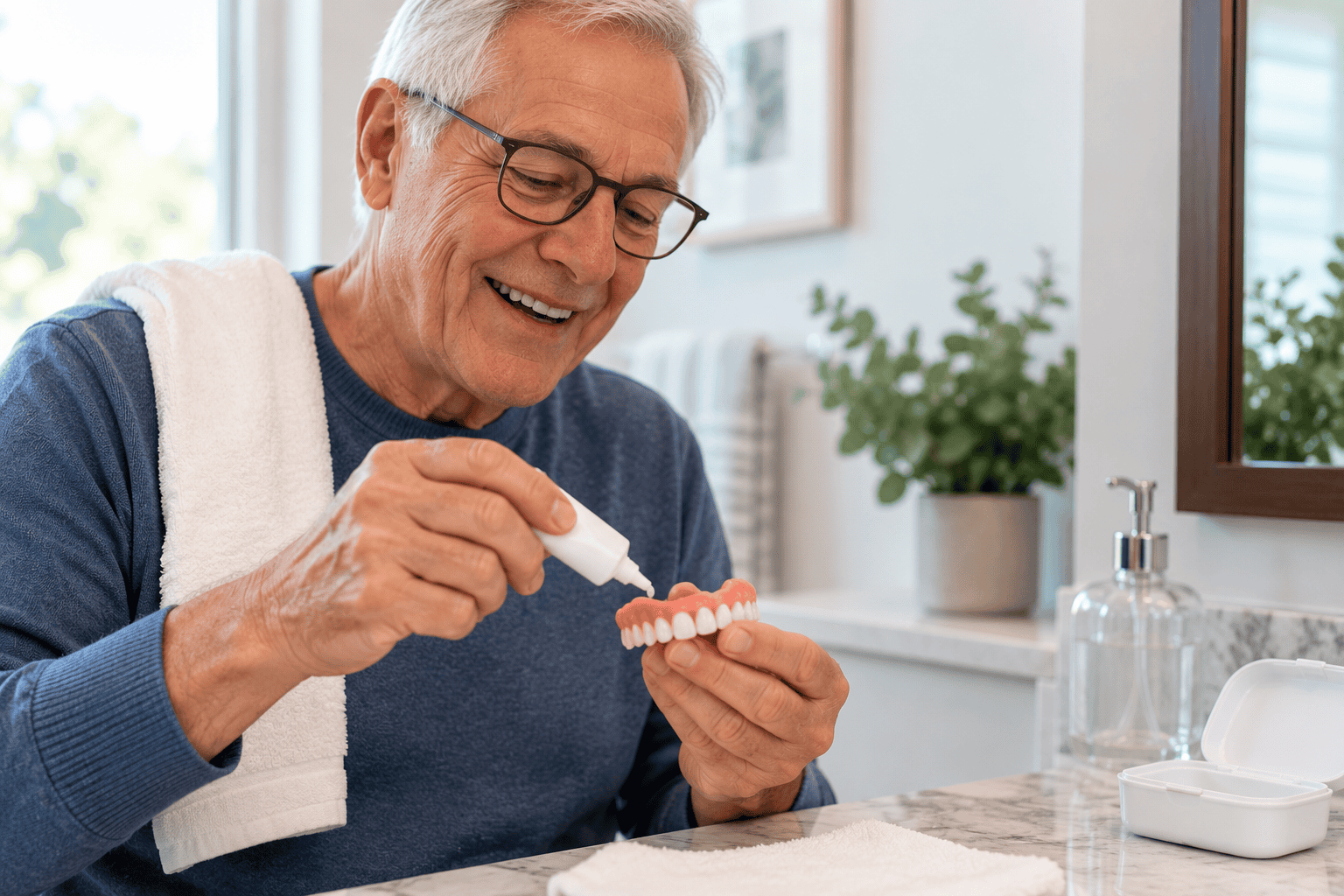
Denture adhesive can be useful when a denture needs a little extra help staying in place, but it should not have to do all the work.
If you are using more adhesive than you used to, reapplying it during the day, or still feeling movement while eating and speaking, the problem may not be the adhesive itself. The denture may no longer fit as closely as it once did, the supporting tissues may have changed, or the lower denture may simply need more retention than a conventional denture can provide.
For some patients, implant supported dentures can provide a more dependable solution by using dental implants to help secure the denture in place. That does not mean everyone who uses adhesive needs implants, but it does mean that heavy or increasing reliance on adhesive is worth assessing.
Why Some Denture Wearers Depend More on Adhesive Over Time
A denture that felt reasonably secure when it was new may become more difficult to control years later. This often happens because the gums and supporting bone continue to change after natural teeth have been lost.
As those tissues change shape, small spaces can develop underneath the denture. The appliance may begin to lift, rock, or slide more easily, especially during chewing.
At first, a little adhesive may compensate for that movement. Over time, however, the patient may find that the same amount no longer feels sufficient.
This is often the point where adhesive stops being a simple convenience and starts becoming a sign that the denture itself should be reassessed.
Adhesive Cannot Fix Every Denture Problem
Denture adhesive can improve the feeling of retention, but it does not correct a denture that is badly worn, poorly fitting, cracked, or no longer balanced properly.
It also cannot rebuild the gum support that has changed underneath the denture.
If a denture is moving because the fit has deteriorated, adding more adhesive may only mask the problem temporarily.
The same is true if the bite is uneven. A denture may still rock even when adhesive is holding part of it in place.
That is why the first step should be identifying the cause of the movement.
A Loose Denture May Need a Reline
One common reason dentures become loose is that the gums have changed while the denture base has stayed the same.
In this situation, a denture reline may be enough to improve the fit.
A reline updates the underside of the denture so it follows the current shape of the supporting tissues more closely.
When the denture is otherwise in good condition, this can make a meaningful difference.
Patients may notice less movement, improved comfort, and less need for adhesive.
A reline is often worth considering before assuming implant treatment is necessary.
When a Reline May Not Be Enough
There are situations where improving the fit still does not create the level of retention the patient wants.
This is especially common with lower dentures.
The lower jaw offers less surface area for a denture to rest on, and the tongue, cheeks, and floor of the mouth are constantly moving around it.
Even a well-fitting lower denture may not feel as secure as the patient would like.
If the denture continues to move despite appropriate fit, this is where implant support may become worth discussing.
Why Lower Dentures Often Need More Help
Upper dentures can often benefit from a larger surface area and better suction.
Lower dentures are different.
They sit on a smaller ridge and must function in an area with constant muscle and tongue movement.
This can make them more difficult to stabilize.
Patients often compensate by using adhesive, biting more carefully, or avoiding certain foods.
Over time, this can become frustrating.
For some patients, dentures over implants provide the additional retention that conventional dentures cannot achieve on their own.
How Implant Supported Dentures Reduce Dependence on Adhesive
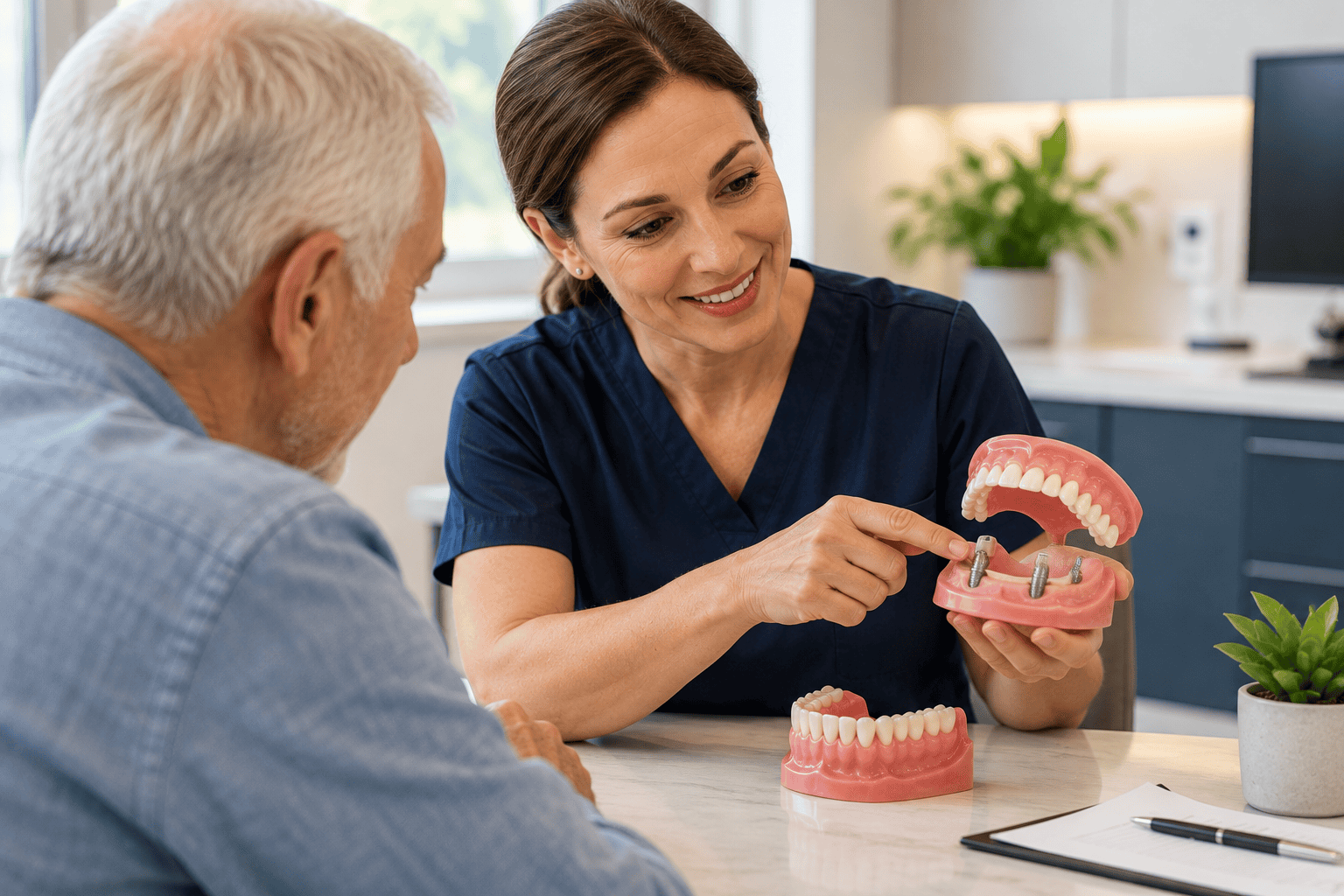
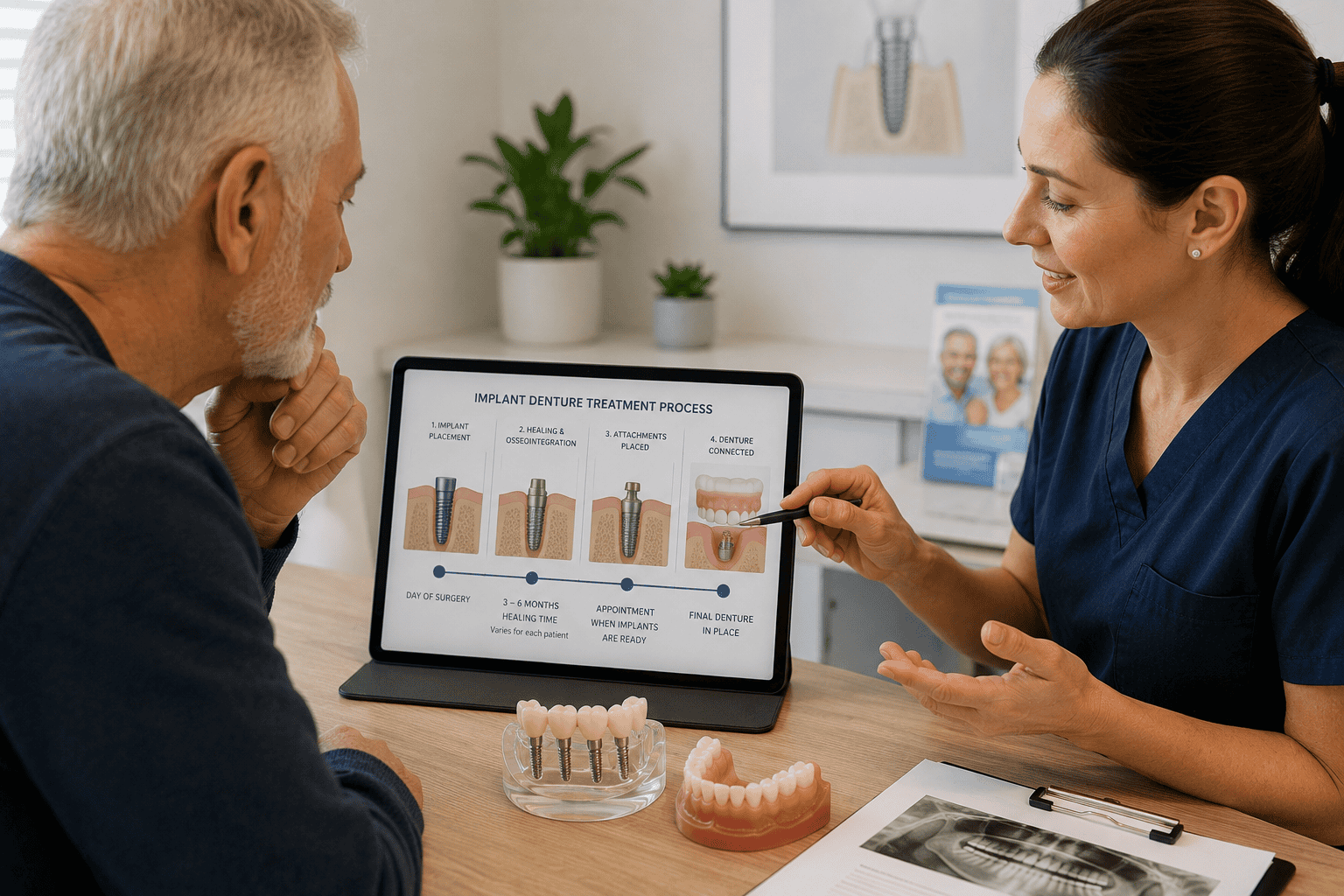
Implant supported dentures use dental implants in the jaw to provide additional retention.
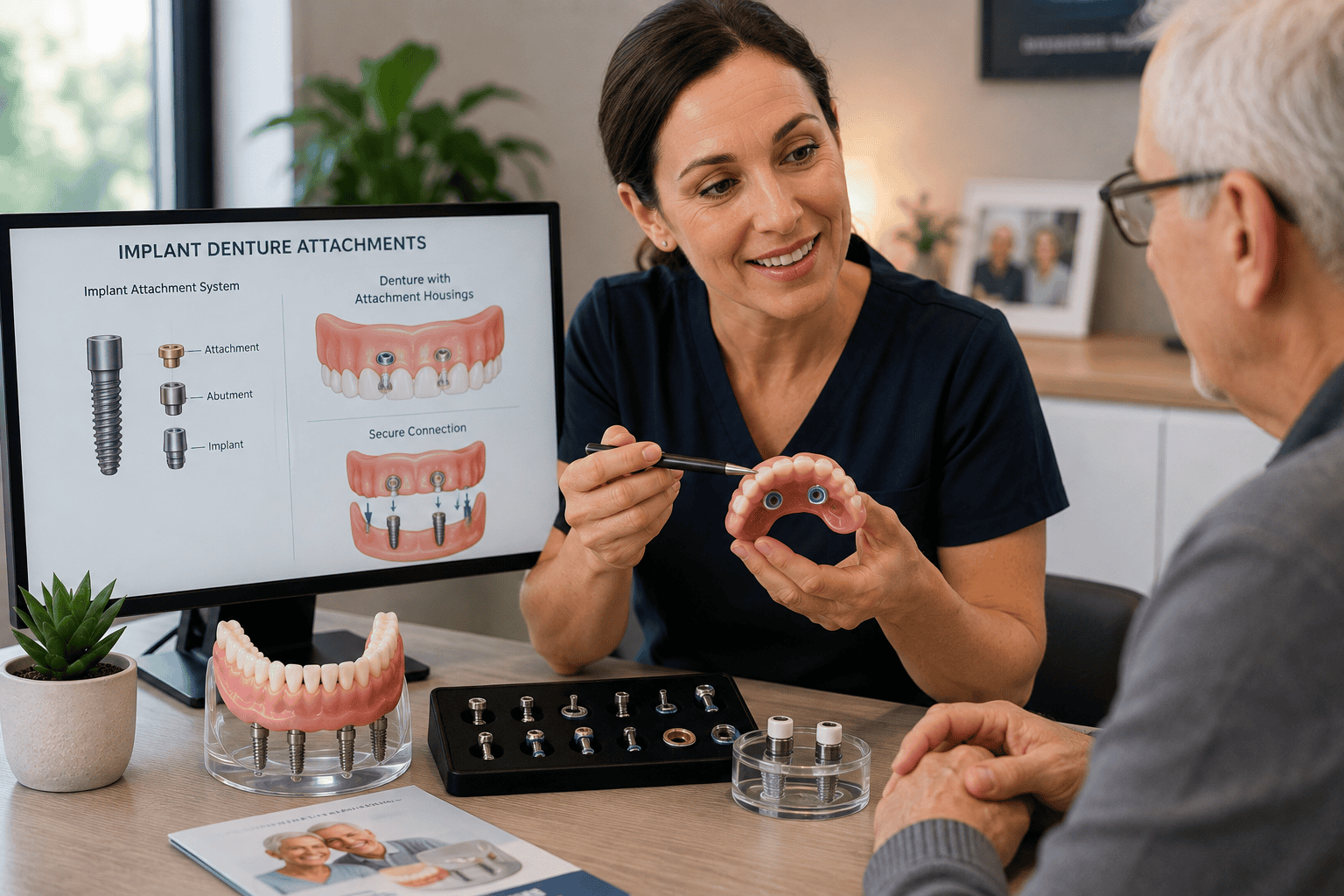
Once the implants have healed appropriately, the denture can be designed or modified to connect to attachment components.
This gives the denture another source of support.
Instead of relying only on the gums and adhesive, the denture gains a mechanical connection to the implants.
For many patients, this can reduce the need to depend so heavily on adhesive throughout the day.
Does That Mean You Will Never Need Adhesive Again?
Not necessarily.
The goal of implant supported dentures is better retention, but individual experiences vary.
Many patients find that adhesive becomes unnecessary or far less important, but the exact result depends on the treatment design, denture fit, attachment system, and patient preferences.
The main benefit is that the denture gains a more dependable source of retention.
That can make the daily routine feel much less stressful.
Why Using More Adhesive Can Become Frustrating
Heavy adhesive use can create practical problems.
Patients may need to reapply it during the day.
Cleaning residue from the denture and gums can take extra time.
Some people dislike the taste or texture.
Others worry that the denture will loosen before the next meal or social event.
The psychological side matters too.
Constantly thinking about whether the denture will stay in place can reduce confidence.
A more secure denture can help shift attention away from the appliance and back toward normal daily activities.
Eating Can Reveal the Limits of Adhesive
A denture may feel acceptable while sitting still but move once chewing begins.
This is especially noticeable with foods that require more pressure or repeated chewing.
A patient may feel the denture lift on one side, slide slightly, or become less secure as the adhesive loses effectiveness.
That can lead to smaller bites, slower chewing, or avoiding certain foods completely.
Implant support can help reduce this kind of unwanted movement by anchoring the denture more securely.
Speaking Can Also Become More Predictable
Adhesive is often used to help prevent movement while speaking, but if the denture is poorly fitting, the patient may still notice clicking or shifting.
Speech depends on the tongue having a dependable surface to work against.
If the denture moves every time the tongue makes contact, certain sounds can become harder to produce consistently.
A more stable denture can make speaking feel more predictable.
Adhesive Should Not Be Used to Ignore Pain
If the denture is sore, painful, or creating repeated pressure areas, adhesive is not the answer.
Pain usually means something needs to be assessed.
The denture may be rubbing, the bite may be uneven, or the fit may have changed.
Using more adhesive to force the denture into place can make discomfort worse.
Persistent soreness should always be evaluated professionally.
An Old Denture May Need Replacement Instead
Sometimes the problem is not simply retention.
The denture may also be too old.
The teeth may be worn, the bite may have changed, the base may be cracked, or the appearance may no longer be appropriate.
In that situation, converting the existing denture to work with implants may not be the best choice.
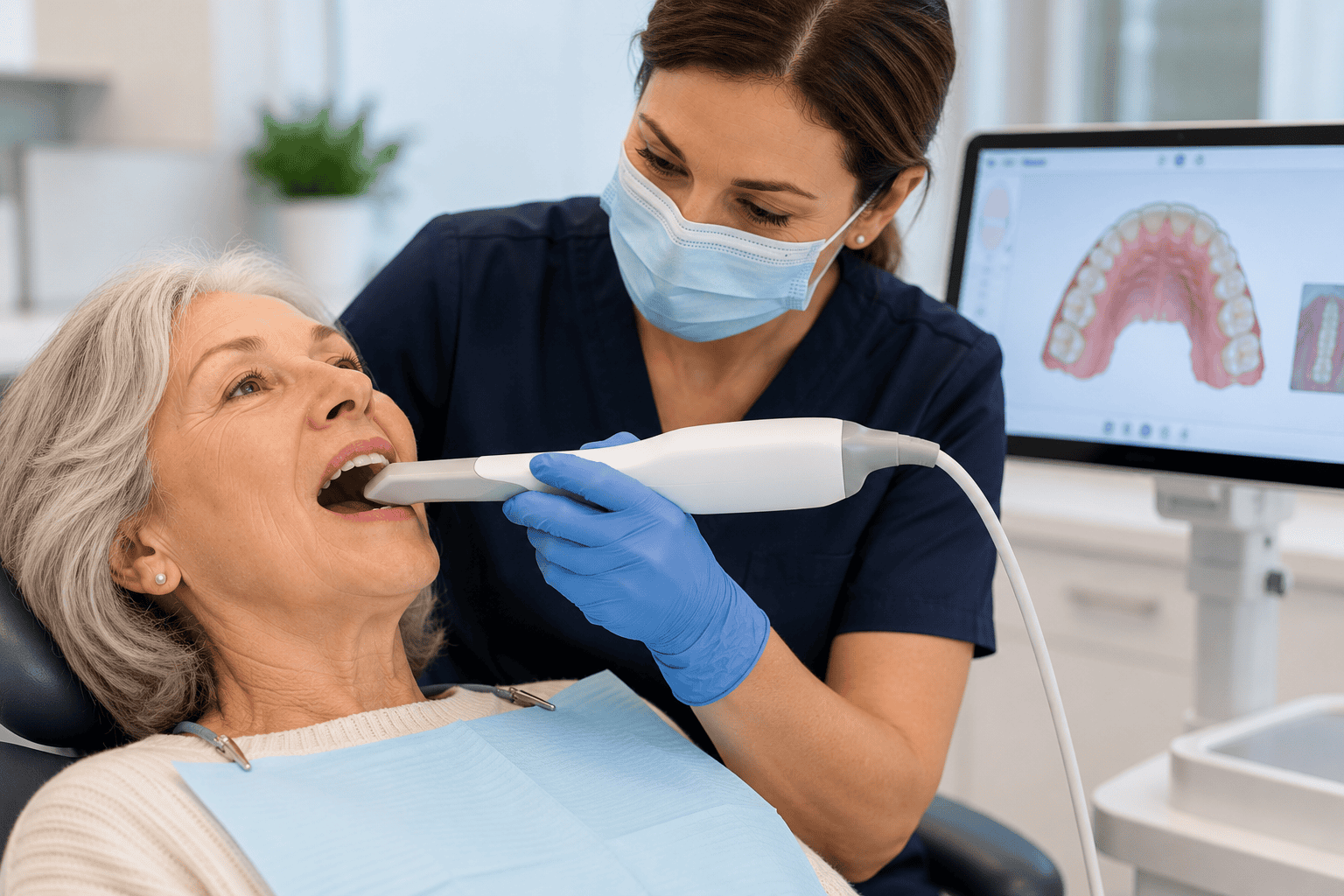
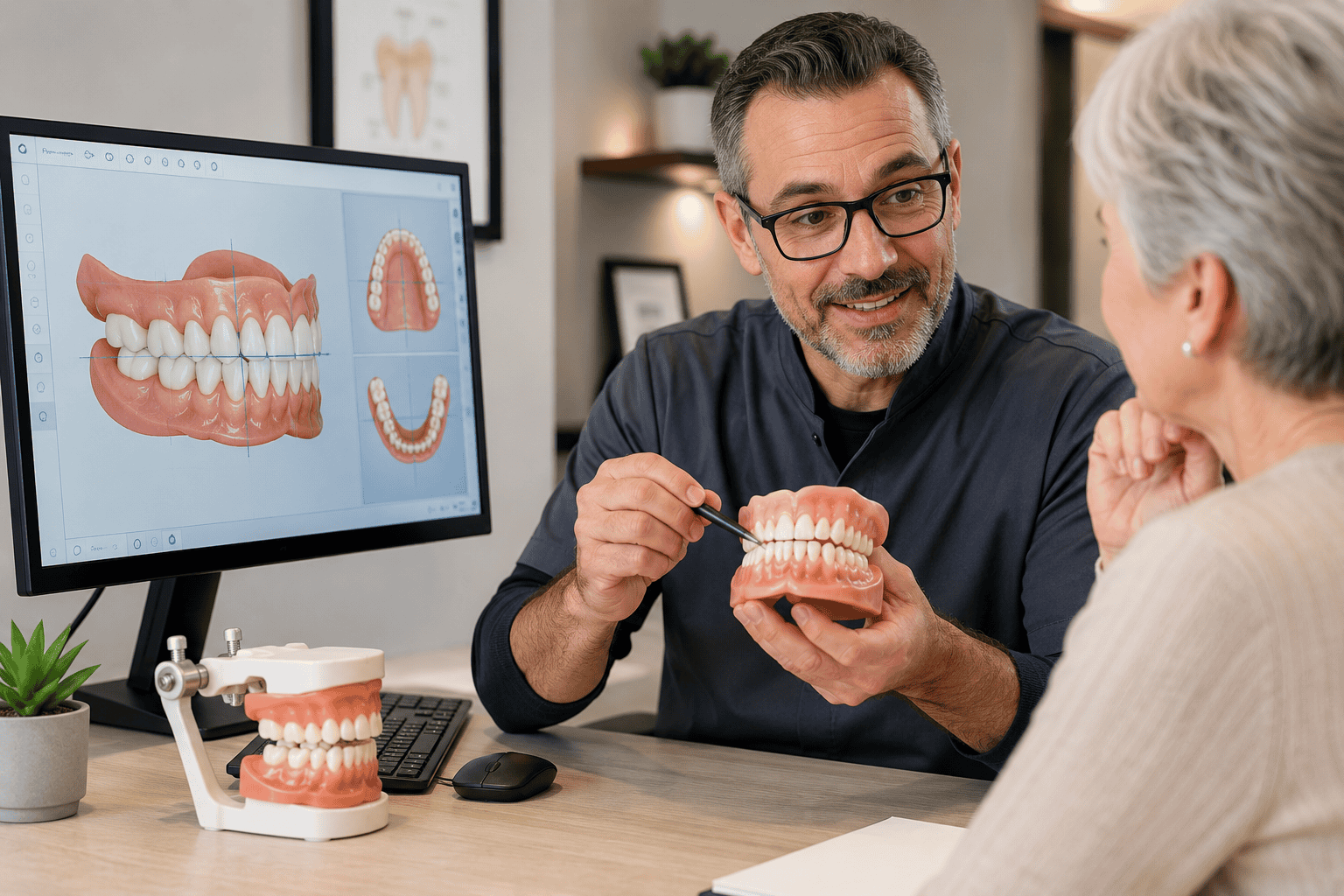
A new digital denture may provide a better foundation for implant support.
This allows the fit, bite, tooth position, appearance, and attachment design to be planned together.
Digital Dentures and Implant Support Can Work Together
Digital dentures and implant supported dentures solve different problems, but they can complement each other well.
Digital design can help improve the precision of the denture itself.
Implants can provide additional retention.
For a patient who has struggled with adhesive and movement for years, combining a new digital denture with implant support may create a more complete solution.
The denture can be designed around the current mouth, while the implants provide the added security the patient wants.
The Existing Denture May Still Be Usable
Not every patient needs a completely new denture when implants are added.
If the current denture is in good condition, fits appropriately, has a satisfactory bite, and has enough room for attachment components, it may sometimes be modified.
This can be a practical option in the right case.
The denture still needs to be assessed carefully.
If it is heavily worn or already due for replacement, modifying it may not provide the best long-term result.
Why the Fit Still Matters Even With Implants
Implants provide retention, but the denture base still rests against the tissues.
That means the fit continues to matter.
A denture that rocks or does not sit properly can create uneven pressure even if the attachments are secure.
Implant support should not be used as a substitute for proper denture design.
The best result comes from combining good fit with appropriate attachment retention.
Adhesive Use Can Sometimes Hide a Poor Bite
Patients may assume the denture moves because it is loose, but bite problems can also contribute.
If the upper and lower teeth contact unevenly, pressure can cause the denture to tip.
Adhesive may reduce some of that movement but cannot correct the bite.
A professional assessment should look at the entire denture, not just how tightly it sticks to the gums.
When Implant Support May Be Worth Discussing
Implants may be worth considering when a denture continues to move despite proper fit, especially if the movement affects eating, speaking, confidence, or daily comfort.
They may also be worth discussing if adhesive has become a major part of the patient’s routine and still does not provide reliable retention.
The key is that implant support should solve a real problem.
It should not be recommended simply because adhesive is being used.
The underlying cause of the looseness needs to be understood first.
Health and Bone Condition Also Matter
Implant supported dentures are not suitable for every patient.
Dental implants need adequate bone support and the ability to heal properly.
Overall health, medications, smoking, oral hygiene, and other factors may affect whether implant treatment is appropriate.
A consultation with the appropriate dental professional is needed to determine whether implants are a realistic option.
The denture portion of the treatment is then planned around those findings.
Age Alone Does Not Decide Implant Suitability
Some older adults assume implant dentures are only for younger patients.
That is not necessarily true.
Age is only one factor.
A patient in good health with appropriate bone and realistic treatment goals may still be a candidate for implant support.
The decision should be based on individual health and anatomy rather than age alone.
Maintenance Is Still Important
Implant supported dentures require ongoing care.
The denture needs to be cleaned.
The implant areas need to be kept clean.
Attachment components can wear over time and may need professional adjustment or replacement.
The denture fit and bite should also continue to be monitored.
Implants reduce dependence on adhesive, but they do not eliminate the need for maintenance.
What If You Are Happy With Adhesive?
There is nothing wrong with continuing to use adhesive if the denture fits well, feels comfortable, and the patient is satisfied.
Implant treatment is not automatically better for everyone.
Some patients prefer to stay with conventional dentures.
Others want more retention.
The right decision is the one that matches the patient’s needs and priorities.
More Retention Can Improve Confidence
The biggest benefit for many implant denture patients is not simply less adhesive.
It is confidence.
A denture that feels more secure can make it easier to eat around other people, speak without worrying about movement, laugh more freely, and go through the day without constantly checking whether the denture is still in place.
These small changes can have a meaningful effect on daily life.
Do Not Wait Until Adhesive Stops Working Completely
Patients often put off having their dentures assessed because adhesive is still making them usable.
There is no need to wait until the denture becomes completely unmanageable.
If the amount of adhesive you need is increasing or the denture is moving more than it used to, that is already a reason to have the fit checked.
The solution may be simple.
A reline may help.
A new digital denture may be appropriate.
Or implant support may finally make sense.
The important thing is understanding why the denture is changing.
Book an Implant Supported Denture Consultation
If denture adhesive is no longer giving you the confidence it once did, it may be time to explore other options.
Lower Mainland Denture Clinic offers implant supported dentures, dentures over implants, digital dentures, denture relines, repairs, and complete denture treatment based on individual needs.
Call 604-457-3763 to book a consultation and find out whether a reline, replacement denture, or implant supported solution could reduce your dependence on denture adhesive and provide greater everyday stability.