What Happens After Dental Implants Are Placed Before Your Implant Denture Is Ready?
Implant Supported Dentures Are a Process, Not a Single Appointment
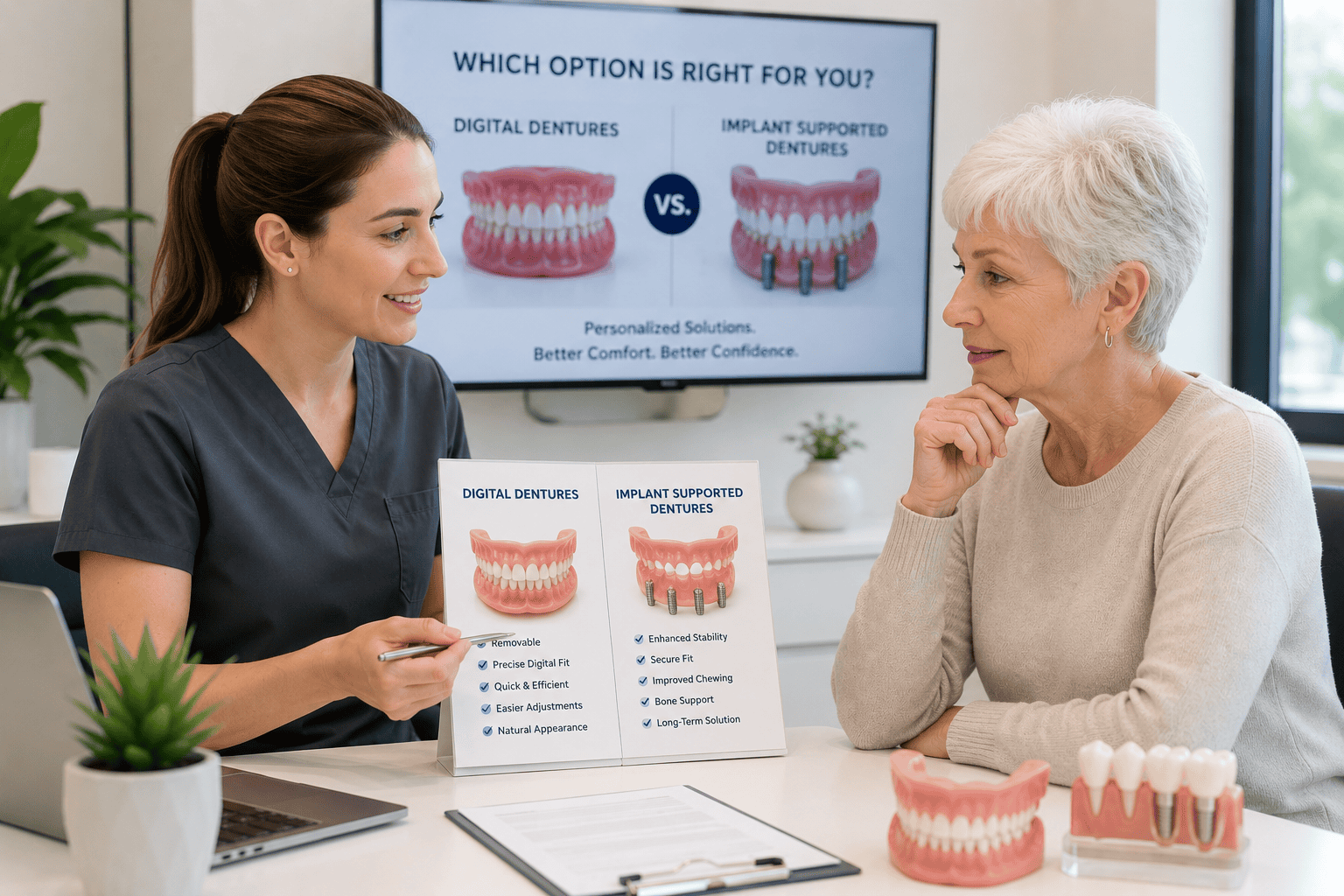
For patients considering implant supported dentures, one of the most common questions is what actually happens after the implants are placed.
The final denture may be the part people think about most, but there is an important healing period between implant placement and the point when the denture can be securely connected. Understanding that process can make treatment feel much less intimidating.
Implant supported dentures use dental implants placed in the jaw to provide additional retention and support for the denture. Once those implants have healed appropriately, the denture can be designed or modified to connect to them.
The exact timeline is different for every patient. Healing speed, bone quality, implant location, general health, the number of implants, and the treatment plan all influence how the process unfolds.
What matters most is allowing the implants to develop the stability needed to support the future denture safely.
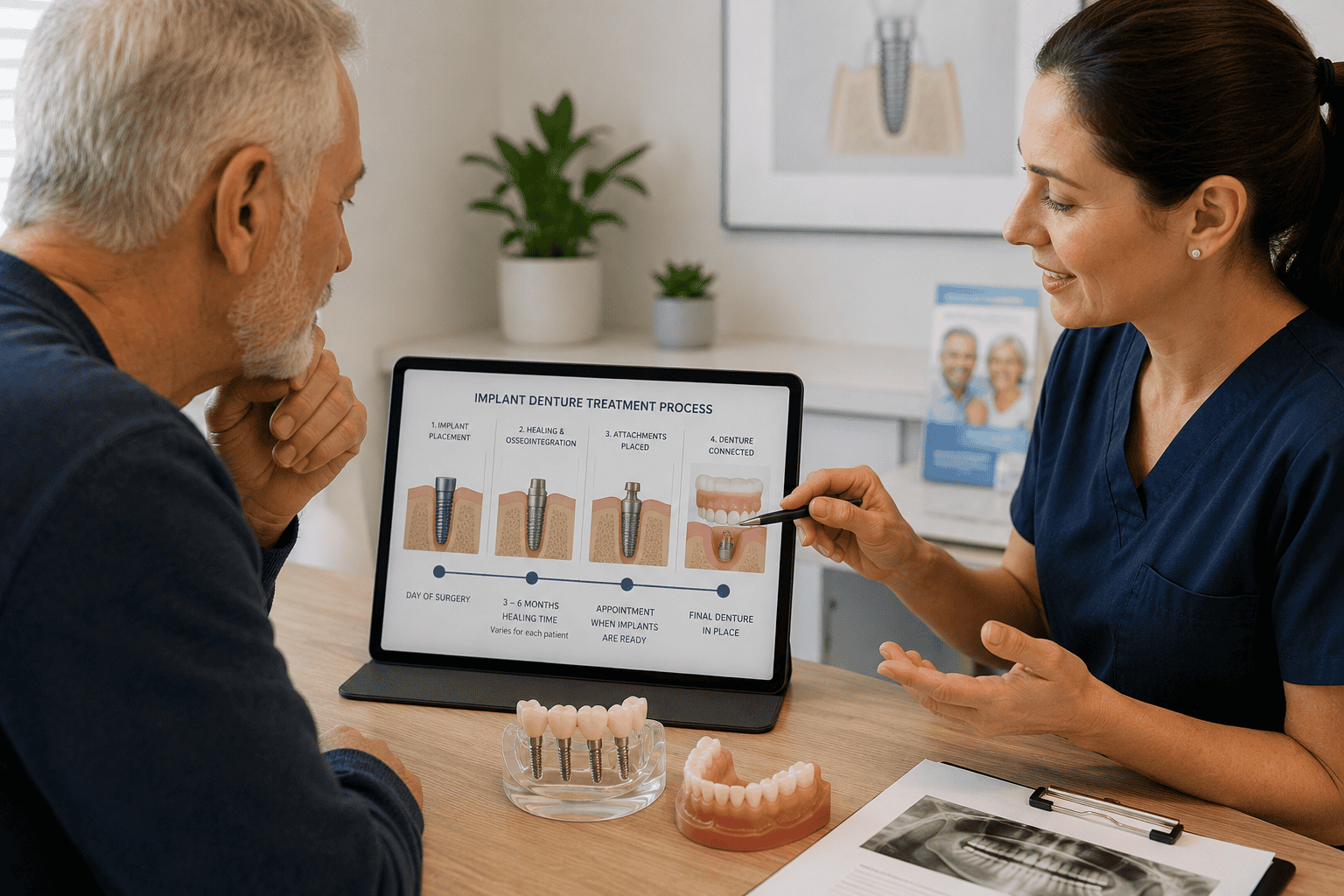
The First Stage Is Implant Placement
Dental implants are surgically placed into the jaw by the appropriate dental or surgical professional.
The implants act as anchoring points for the future denture. With removable implant retained dentures, the completed denture can eventually connect to attachment components associated with those implants.
Lower Mainland Denture Clinic coordinates implant denture treatment with the appropriate professionals and then completes the denture portion once the implants are ready. citeturn455029search0
Implant placement is therefore only one part of the overall treatment plan.
The next stage is healing.
What Is Osseointegration?
One of the most important terms patients may hear during implant treatment is osseointegration.
Osseointegration describes the process in which the implant becomes integrated with the surrounding jawbone.
This does not happen immediately after surgery. The bone needs time to heal around the implant and create a stable foundation.
That stability matters because an implant supporting a denture will eventually be exposed to forces from biting, chewing, inserting the denture, and removing it.
Trying to place too much functional pressure on an implant before it is ready could interfere with the healing process. That is why implant treatment is often completed in stages rather than rushing directly from surgery to the final denture.
Lower Mainland Denture Clinic specifically describes the denture stage as occurring after the implants have osseointegrated. citeturn455029search0
How Long Does Implant Healing Take?
There is no universal healing period that applies to every patient.
Some implant treatment plans allow earlier loading, while others require a longer healing period before the implants are connected to the final prosthesis.
Several factors can affect timing, including:
- bone quality and quantity
- where the implants are positioned
- the number of implants placed
- the type of implant system
- whether additional surgical procedures were necessary
- the patient’s overall health
- smoking or other risk factors
- how well healing progresses after placement
The important point is that the treatment team determines when the implants are ready based on the individual case.
Patients should avoid comparing their timeline too closely with someone else’s implant experience. Two people receiving implant supported dentures may follow completely different schedules.
What Happens During the Healing Period?
For much of the healing period, the most important job is simply allowing the body to heal.
Patients may have follow-up appointments so the surgical area and implants can be monitored. The treatment team checks that healing is progressing appropriately and that there are no signs of complications.
Lower Mainland Denture Clinic describes this stage as including regular check-ins while the jaw and implants heal. citeturn455029search1
Patients are usually given instructions relating to oral hygiene, eating, medication when applicable, and how to care for the surgical area.
Following those instructions carefully can help support a smoother recovery.
Will You Be Without Teeth During Implant Healing?
This is understandably one of the biggest concerns for denture patients.
In many cases, a patient may continue using a temporary denture or an existing denture during parts of the implant healing process. However, whether that is appropriate depends on the treatment plan and the surgical situation.
An existing denture may sometimes need to be adjusted so it does not place unwanted pressure over newly placed implants or healing tissues.
A denture that presses directly on a surgical site can create soreness and may interfere with comfort.
This is why patients should not simply put an old denture back in immediately after implant surgery unless their treatment provider has said it is appropriate.
The denture may require modification first.
Your Existing Denture May Be Modified
One useful aspect of implant supported treatment is that an existing denture does not always need to be discarded immediately.
Depending on its age, fit, condition, and the overall treatment plan, an existing denture may sometimes be modified during different stages of treatment.
Once the implants are ready, the denture may also be adapted to include the attachment components required to connect to the implants.
Lower Mainland Denture Clinic notes that once implants have integrated, a new denture can be created or an existing denture can be modified to include the implant components. citeturn455029search0
Whether modification or replacement is better depends on the denture itself.
A badly worn or poorly fitting denture may not be the best foundation for implant attachment simply because it already exists.
Temporary Comfort Is Important During Healing
Patients sometimes assume that discomfort during the healing period is something they simply have to tolerate.
Some tenderness after implant placement is expected, particularly during the early stages of recovery. Persistent pressure from a denture, however, should be assessed.
If a temporary or existing denture begins rubbing the surgical area, creating a sore spot, or feeling significantly different, contact the treatment provider.
Small adjustments can often make the healing period more manageable.
Trying to reshape the denture at home or adding thick layers of adhesive around a sensitive area is not a good substitute for professional adjustment.
Eating During the Implant Healing Period
Diet often needs to be modified temporarily after implant placement.
The exact recommendations depend on the surgical procedure, but patients may initially be advised to choose softer foods and avoid placing excessive pressure in the healing area.
Good options during the early period may include:
- eggs
- yogurt
- oatmeal
- softer cooked vegetables
- pasta
- fish
- soups that are not excessively hot
- smoothies consumed according to post-operative instructions
- soft rice dishes
- foods cut into small pieces
Very hard or crunchy foods may place unnecessary stress on healing areas.
As healing progresses, the diet can usually become more varied based on the recommendations of the surgical provider.
Patients receiving implants should follow the specific post-operative instructions they are given rather than treating a general food list as a replacement for individualized care.
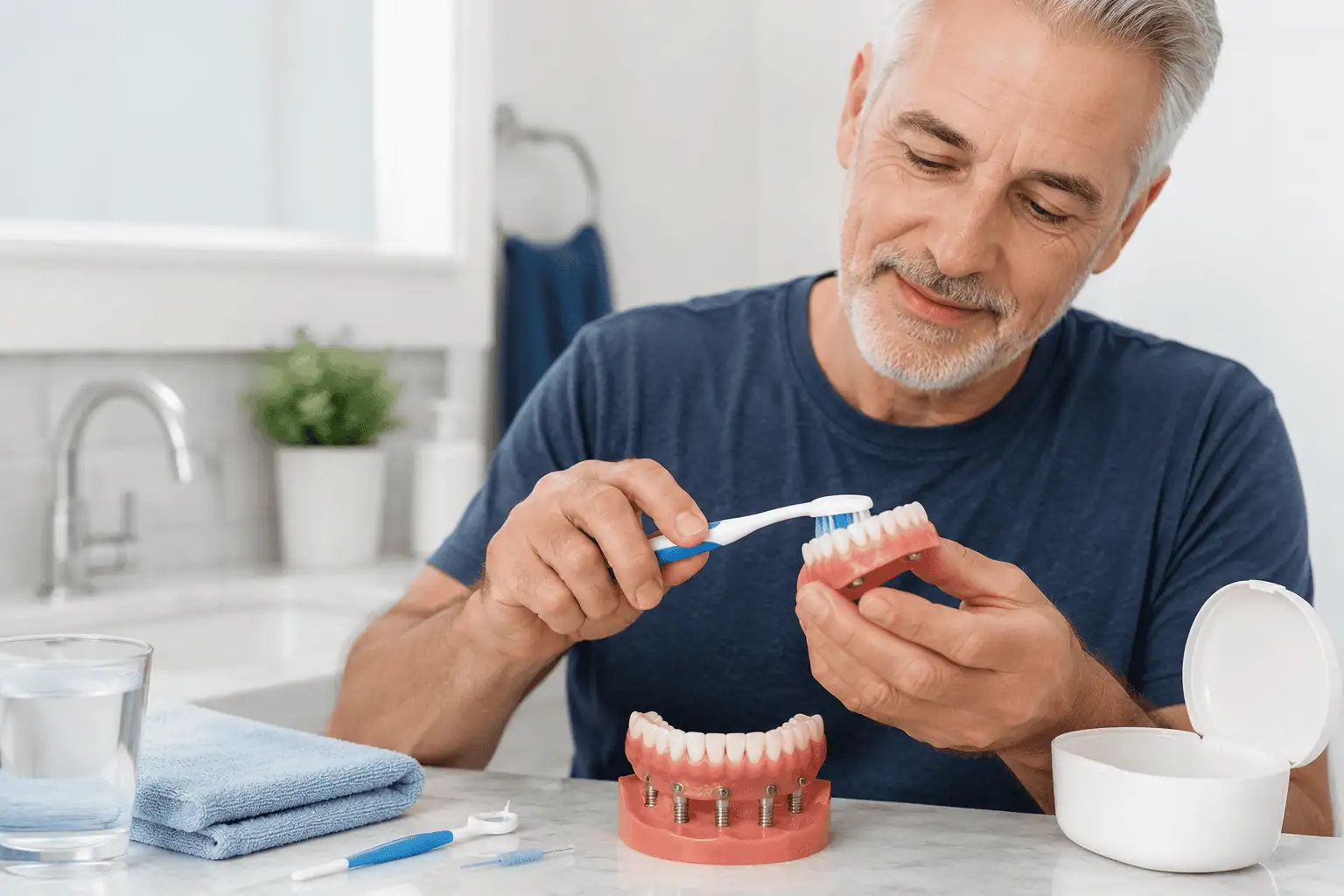
Keeping the Implant Area Clean
Good oral hygiene becomes especially important during implant healing.
Patients may be given specific instructions about brushing, rinsing, or cleaning around the surgical area. These instructions can change as healing progresses.
The goal is to keep the area clean without disturbing healing tissues.
Once the implants are eventually connected to the denture, long-term cleaning will continue to matter. Implant attachment systems create areas where plaque and food debris can collect, which is why implant supported dentures require ongoing home care and professional maintenance.
Good habits during the healing stage can make the transition into long-term implant denture care easier.
Follow-Up Appointments Are an Important Part of Treatment
Implant treatment involves more than waiting for a certain number of weeks or months.
Follow-up appointments allow the treatment team to confirm that the implants and surrounding tissues are progressing as expected.
During these visits, the provider may evaluate:
- healing of the gums
- comfort around the surgical areas
- stability of the implants
- cleanliness around the sites
- whether the temporary denture requires adjustment
- whether the patient is ready for the next stage
The decision to move forward should be based on healing and stability rather than the calendar alone.
What Happens When the Implants Are Ready?
Once the implants are sufficiently integrated and the surgical provider has cleared the patient for the next stage, attention turns toward the denture.
This is where the treatment begins to feel much closer to the final result.
The denture must be planned so that it connects correctly with the implant attachments while still providing appropriate fit, bite, appearance, and function.
Depending on the case, a new denture may be made or an existing one may be modified.
The attachment components need to line up accurately with the implants. The denture should seat properly without forcing the implants or placing uneven pressure on the surrounding tissues.
This stage requires precision.
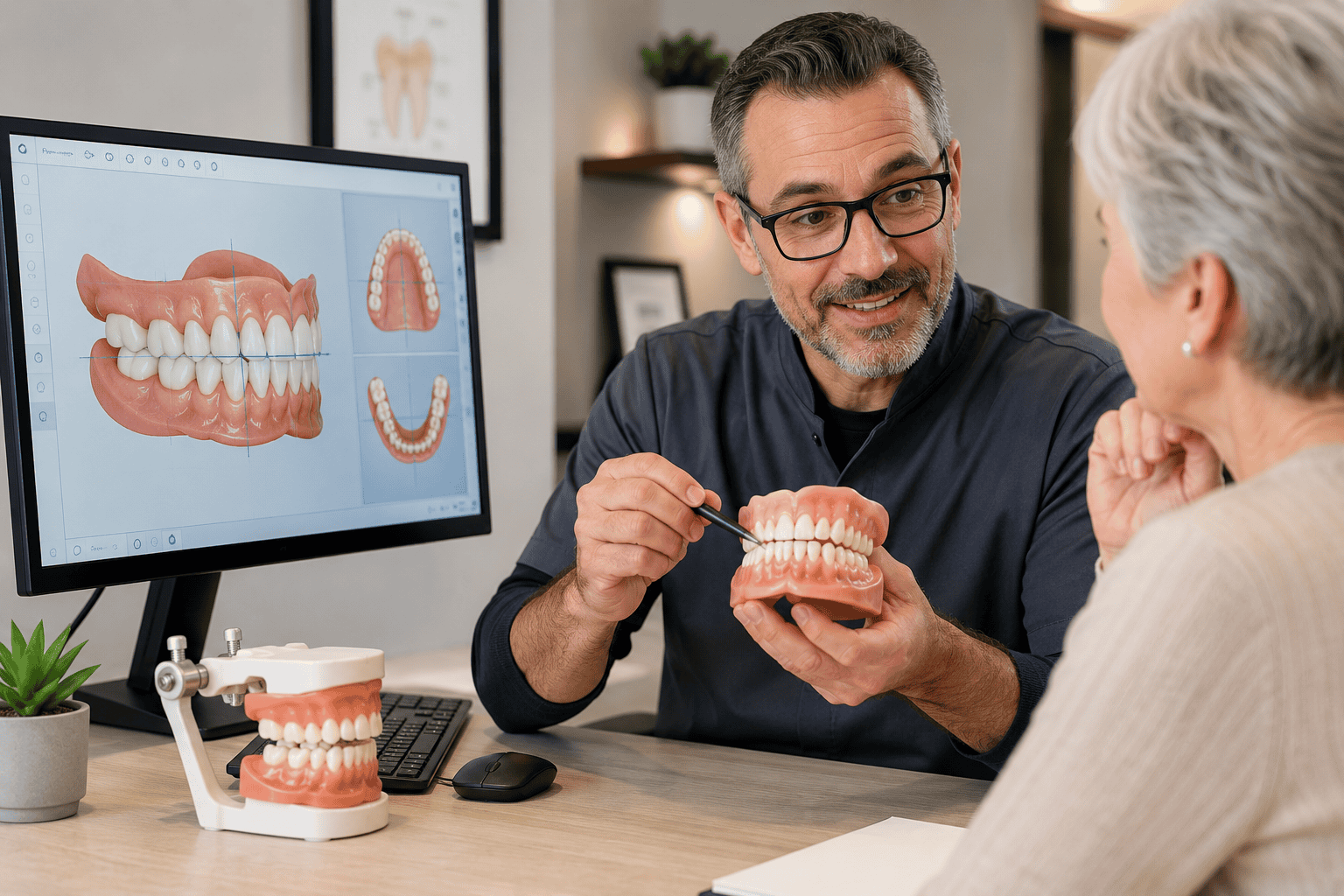
Digital Denture Technology Can Be Part of the Process
Modern denture treatment can also incorporate digital technology.
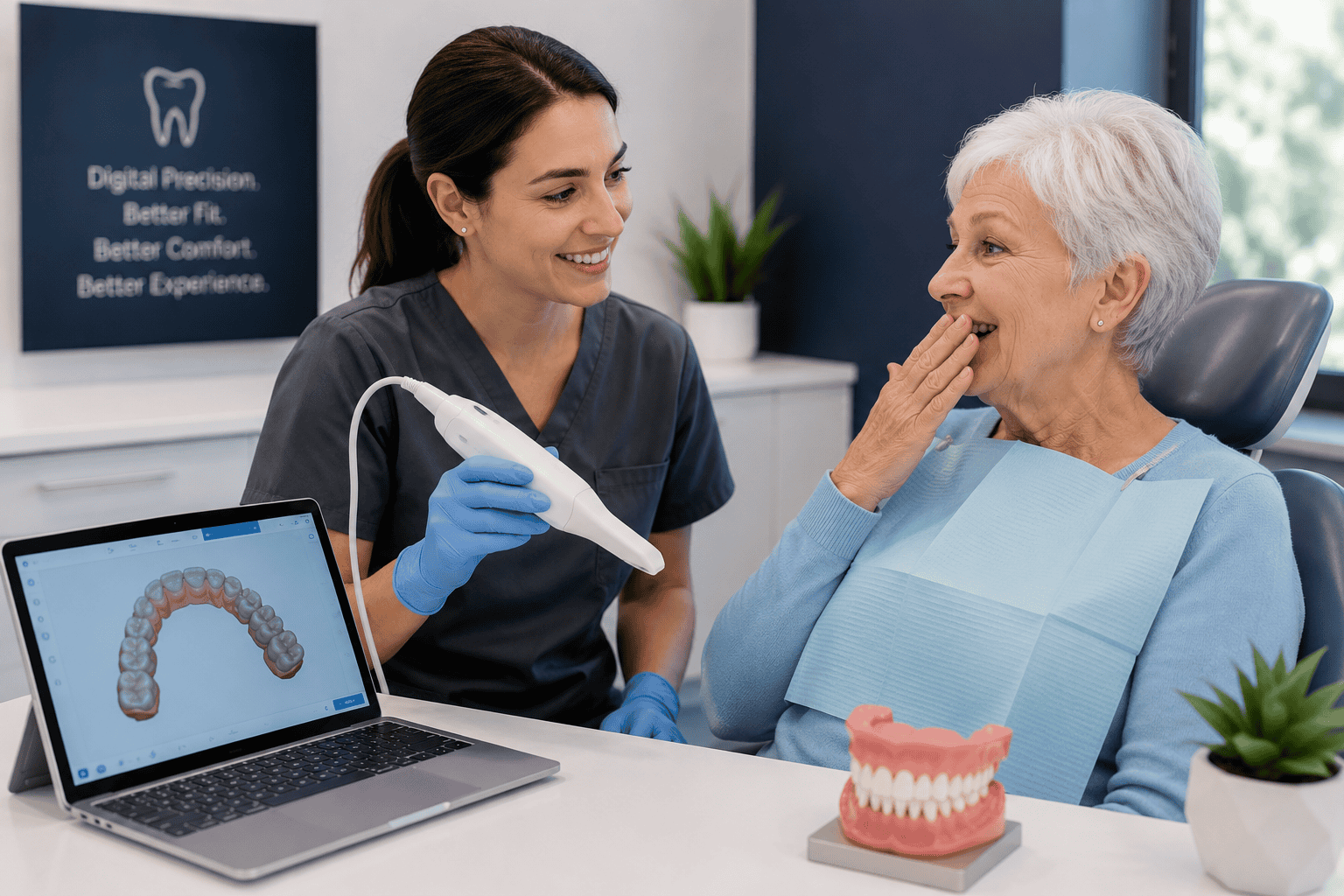
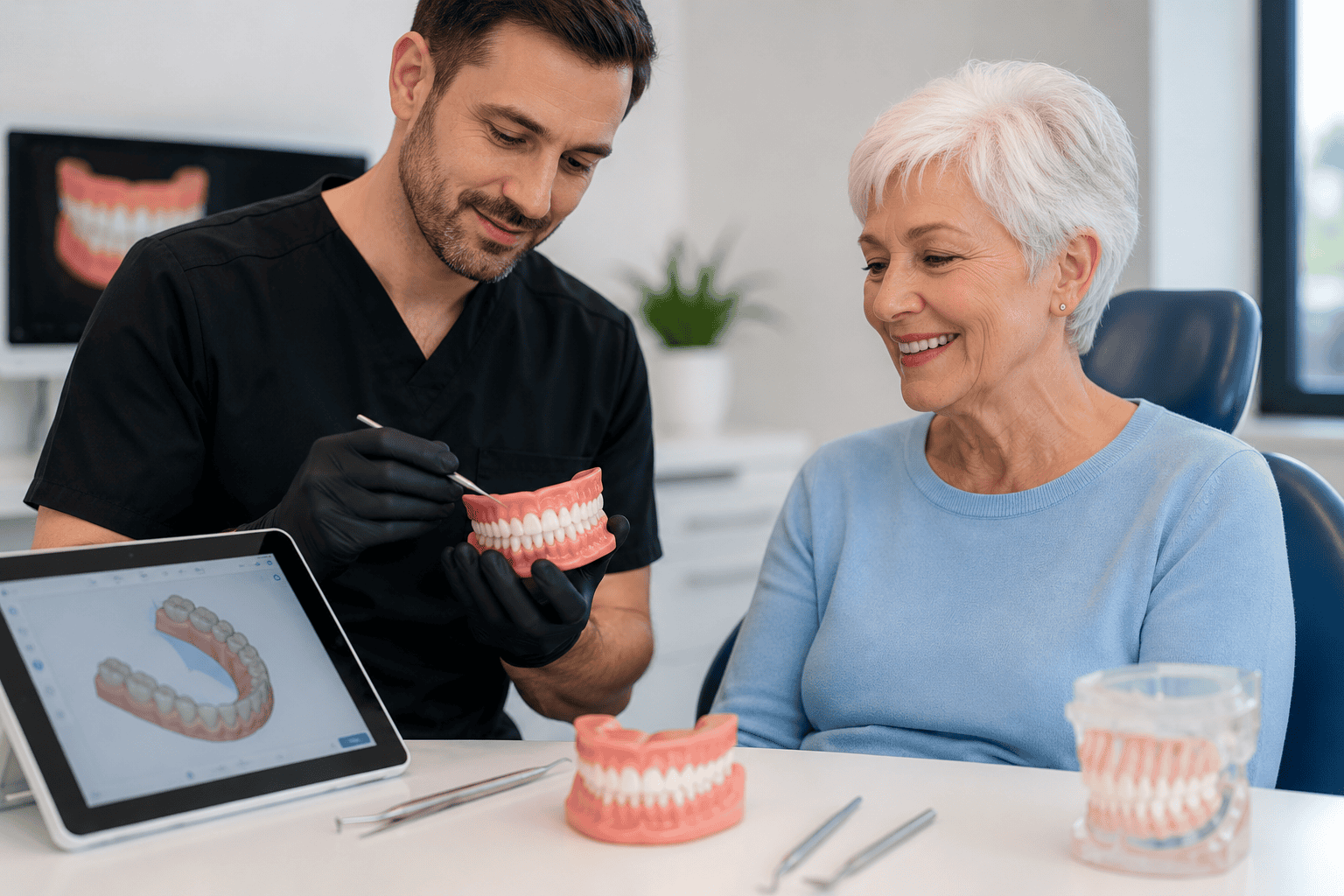
Lower Mainland Denture Clinic is increasingly using digital workflows, including intraoral scanning, as part of its denture care. For suitable cases, digital dentures can allow detailed records of the mouth to be captured without relying entirely on conventional impression techniques.
Digital planning can help with:
- denture design
- tooth positioning
- bite planning
- reproduction of important records
- communication during fabrication
- creating a more organized treatment workflow
Digital technology does not replace the healing requirements of dental implants. The implants still need time to become stable before they can safely support the denture.
What digital technology can improve is the way the denture itself is planned and fabricated.
The Attachment Stage
When the implants are ready, attachment components can be incorporated into the denture.
With many removable implant retained dentures, the patient will eventually feel the denture connect or “snap” into place.
That connection creates the additional retention that makes implant supported dentures so appealing to patients who have struggled with loose dentures.
Lower Mainland Denture Clinic describes this final connection as the denture snapping onto the implants to create a more secure fit. citeturn455029search0
The exact attachment design can vary. Different systems have different shapes, retention levels, and maintenance requirements.
Patients do not need to become experts in every implant attachment system. They do need to understand how their own denture should be inserted, removed, cleaned, and maintained.
The Final Denture Still Requires Adjustment
Receiving the implant supported denture does not necessarily mean treatment is finished forever.
Even a carefully planned denture may require small adjustments after delivery.
The patient is adapting to a new level of retention. Biting and chewing can feel different. Areas that were difficult to identify before the denture was worn throughout a normal day may become more noticeable.
Follow-up appointments allow the denture to be fine-tuned.
Patients should report:
- persistent sore areas
- difficulty inserting or removing the denture
- one side connecting differently
- rocking during meals
- unusual pressure
- bite problems
- attachment looseness
Small issues are generally easier to address when they are identified early.
Eating With the Final Implant Supported Denture
Once healing is complete and the denture has been properly connected, many patients notice that eating feels more secure.
The denture is no longer relying only on the gums for retention. The implant attachments help resist unwanted lifting and movement.
This can be particularly valuable for lower dentures, which are often more difficult to stabilize with conventional denture techniques alone.
Patients should still adapt gradually.
Start with manageable foods, chew slowly, and build confidence before attempting very hard or sticky textures.
Implant supported dentures improve retention, but the denture teeth, base, and attachment components still need to be treated sensibly.
Implant Supported Dentures Still Need Long-Term Maintenance
The healing stage ends, but maintenance does not.
The denture attachments are mechanical components and may wear over time. The tissues around the implants need to remain clean and healthy. The denture itself can also experience normal wear.
Patients should continue attending professional appointments to check:
- implant tissue health
- attachment retention
- denture fit
- bite
- wear on the teeth
- cracks or damage
- cleanliness around the implant components
If the denture begins feeling noticeably less secure, do not assume the implants are failing.
Sometimes an attachment insert has simply worn and needs professional attention.
What If Your Current Denture Is Loose While You Wait?
A patient undergoing implant treatment may already have a conventional denture that feels loose.
Depending on the condition of that denture, temporary adjustments may be possible during the treatment process.
A denture reline can sometimes improve the fit of a conventional denture against the gums. However, relining around healing implants requires special consideration, so patients should never use an over-the-counter reline material without professional guidance.
The priority during implant healing is protecting the surgical sites while maintaining reasonable comfort and function.
When to Contact Your Treatment Provider
Contact the appropriate provider promptly if you experience:
- increasing swelling rather than gradual improvement
- persistent or worsening pain
- unusual bleeding
- discharge around the implant area
- a denture pressing painfully on a healing site
- an implant area that feels unexpectedly mobile
- difficulty keeping the area clean
- a significant change in your bite
- a temporary denture that can no longer be worn comfortably
Not every concern indicates a serious problem, but early assessment is always better than trying to manage an implant issue at home.
Patience Is Part of Successful Implant Denture Treatment
For someone who has struggled with loose dentures for years, waiting through the implant healing period can feel frustrating.
However, the healing stage serves an important purpose.
The implants need to become a dependable foundation before the denture is expected to function on them. Rushing that process is not the goal. Creating a stable, comfortable, maintainable result is.
The final implant supported denture is the result of several coordinated stages:
implant planning, surgical placement, healing, denture design, attachment integration, fitting, adjustments, and ongoing maintenance.
Understanding those stages helps patients know what to expect and why each step matters.
Book an Implant Supported Denture Consultation
If loose dentures are affecting your comfort, eating, or confidence, implant supported dentures may provide a more secure treatment option.
Lower Mainland Denture Clinic works with the appropriate dental professionals during the implant process and provides the denture care needed before, during, and after treatment. The clinic also offers digital dentures, dentures over implants, complete dentures, relines, and denture repairs.
Call 604-457-3763 to book a consultation and learn what the implant supported denture process could look like for you.